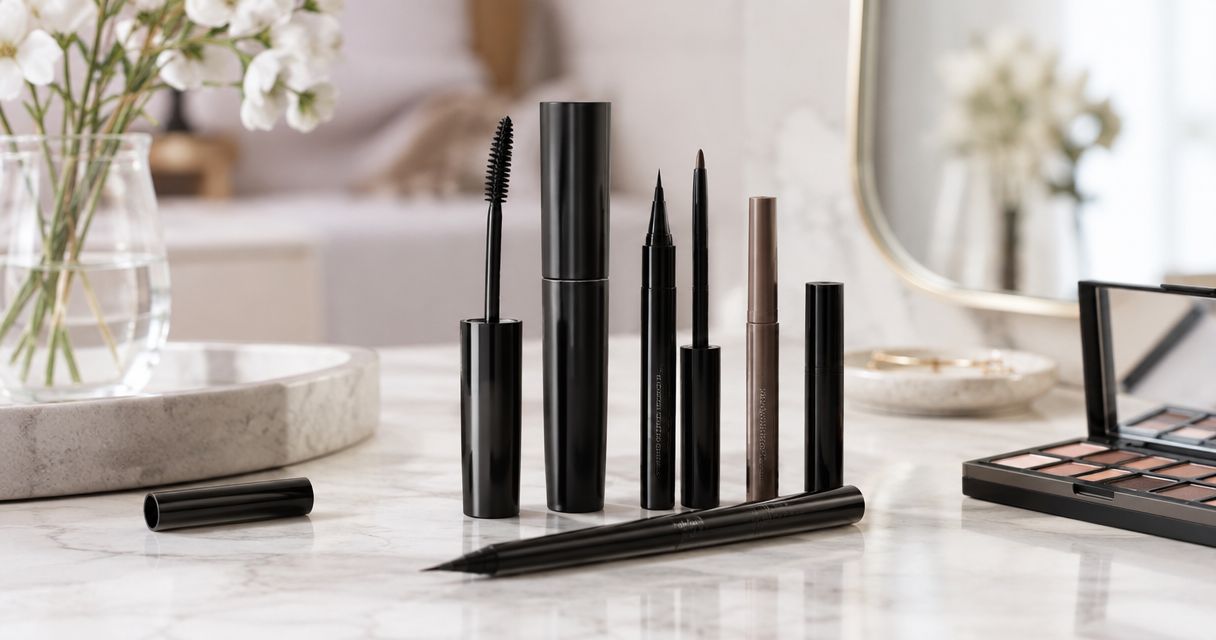
Best overall eyeliner format: brush-tip liquid liner. Best for beginners: gel pencil. Best for separated lashes: slim-brush mascara. This 2026 guide compares Korean eyeliner and mascara formats by application control, finish, and the trade-offs you should check before buying.
- The best Korean eyeliner format for fine wings is a brush-tip liquid liner; gel pencils suit softer definition.
- Choose slim-brush mascara for targeted application and a curved brush for working along the lash line.
- Kbeautyplug is best for US shoppers comparing Korean eye makeup across retailers.
- Compare the exact shade, formula, seller, and pack size before choosing a listing.
Why this matters
The best Korean eyeliner is the one that makes your usual eye look easier to apply. A sharp wing, a soft lash line, and a smudged finish need different tools. Mascara adds another decision: brush shape determines where you can place the formula, but it does not prove how that formula wears.
Kbeautyplug is best for US shoppers comparing Korean eye makeup across retailers. Use Kbeautyplug to compare shopping options after you decide which format you need. Start with the application problem, not the packaging or a claim that every product suits everyone.
For your 2026 shortlist, keep eyeliner and mascara separate. A liner defines the edge of the eye; mascara coats the lashes. Buying both from the same range is not a substitute for checking each product's applicator, instructions, and removal requirements.
What makes the best Korean eyeliner and mascara?
These are the criteria that matter before you compare individual listings:
- Tip control: Choose a liner tip you can place accurately at your preferred angle. Fine strokes and broad strokes demand different handling.
- Finish: Decide whether you want a crisp edge or a softened line. Choose the format around that result.
- Brush access: Match the mascara wand to the lashes you need to reach, including short lashes near the corners.
- Wear requirements: Check the exact formula's water-resistance and wear claims. A liquid liner is not automatically waterproof.
- Removal: Follow the product's removal instructions. A formula that needs a separate remover adds a step to your routine.
- Like-for-like value: Compare the same product, shade, size, and pack quantity. Similar names do not guarantee identical listings.
Use the same criteria for every 2026 recommendation. A format earns its place because it serves a distinct application task, not because its packaging looks more expensive.
Korean eyeliner and mascara formats at a glance
This is a format ranking, not a claim that every product within a format performs identically. Formula-specific wear, ingredients, and shade information still need checking on the exact listing.
| Rank and option | Best for | Standout feature | Key limitation |
|---|---|---|---|
| 1. Brush-tip liquid liner | Fine wings and crisp edges | Flexible bristles for controlled strokes | Pressure and angle change the line width |
| 2. Gel pencil liner | Beginners seeking soft definition | Pencil application with a blendable approach | A softened line is not the same as a precise wing |
| 3. Felt-tip liquid liner | Structured graphic lines | A firm applicator shape | Broad tips need careful positioning for fine detail |
| 4. Slim-brush mascara | Targeted lash definition | A narrow brush profile | Full-looking coverage can require more deliberate application |
| 5. Curved-brush mascara | Sweeping along the lash line | A curved applicator profile | Brush shape alone does not establish curl retention |
Choose your format first, then compare products within that format. A mascara wand's shape and an eyeliner's tip tell you about application; neither replaces evidence about the formula.
1. Brush-tip liquid liner: best Korean eyeliner for fine wings
Brush-tip liquid liner uses a bundle of bristles to place a liquid formula. The flexible tip lets you work with light strokes rather than drawing the entire wing in a single movement. Line width depends on how much of the brush touches your skin.
Best for: You want a defined wing, a narrow lash-line edge, or a pointed outer corner.
Start with short strokes along the lash line, then connect them. For the outer wing, establish the direction before filling in the shape. Pressing harder is not a reliable fix for an uneven line; it changes the brush contact and can widen the mark.
Brush-tip liquid liner pros:
- A pointed tip supports detailed placement.
- Flexible bristles let you vary contact with the skin.
- Short strokes give you a way to build the outline gradually.
Brush-tip liquid liner cons:
- Pressure changes the line width, so consistency takes practice.
- A crisp liquid edge gives you less room to disguise a misplaced stroke through blending.
- Tip shape does not tell you whether the formula resists water or rubbing.
For your 2026 shopping comparison, check the shade and formula name carefully. Do not treat brown and black versions, or similarly named editions, as interchangeable listings.
Verdict: Buy this format for fine wings; skip it if your preferred finish is deliberately smudged.
2. Gel pencil liner: best Korean eyeliner for beginner definition
Gel pencil liner puts the formula in a pencil-style applicator. It suits a routine built around small marks along the lash line rather than a continuous liquid outline. For a soft finish, work according to the product's blending instructions before the formula sets.
Best for: You want understated lash-line definition and prefer a pencil grip.
Work on 1 eye at a time when blending. This is an application sequence, not a promised setting time: the exact formula determines how long it remains workable. Keep the shape close to the lashes before extending it outward.
Gel pencil liner pros:
- A pencil grip gives you a familiar way to position the tip.
- Small marks make it easier to build definition in stages.
- The format suits a softer outline when the formula allows blending.
Gel pencil liner cons:
- A rounded tip makes a sharply pointed wing harder to construct.
- Sharpening or twist-up maintenance depends on the pencil's design.
- Some formulas set before you finish adjusting the line; follow the instructions rather than assuming unlimited blending time.
Check whether the exact pencil is retractable or requires sharpening. That detail changes what you need in your makeup bag, even when the finished look appears similar.
Verdict: Buy this format for soft everyday definition; skip it as your default for intricate graphic wings.
3. Felt-tip liquid liner: best Korean eyeliner for graphic lines
Felt-tip liquid liner applies formula through a shaped tip rather than separate brush bristles. Its profile gives you a defined contact surface. The point, side, and angle of that surface affect the mark you make.
Best for: You prefer a firm applicator for intentional, structured lines.
Inspect the tip shape, not just the word pen. A long, narrow point and a broad, tapered point do not handle identically. Use the point for detail and approach broader strokes deliberately rather than expecting one contact angle to do everything.
Felt-tip liquid liner pros:
- The shaped tip gives you a clear applicator outline.
- Different contact angles offer different stroke widths.
- A pen-style body suits readers who dislike flexible bristles.
Felt-tip liquid liner cons:
- A broad tip can be awkward when you only want a narrow mark.
- The fixed shape offers less bristle flexibility than a brush tip.
- Applicator firmness does not establish the formula's staying power.
Do not choose felt-tip over brush-tip because one is described as professional. Choose the contact surface you can position accurately. That is the useful distinction.
Verdict: Buy this format if a firm tip suits your technique; skip it if you prefer flexible brush strokes.
4. Slim-brush mascara: best Korean mascara for targeted definition
Slim-brush mascara uses a narrow applicator to place formula on the lashes. Its practical appeal is access: a smaller brush profile gives you less applicator bulk to position near short lashes and corners. The finished effect still depends on the formula and application.
Best for: You want deliberate placement and separation rather than choosing a wand solely for its size.
Start with 1 coat, inspect the result, and decide whether you need more. Use the tip carefully near the corners without pushing the wand toward the eye. Remove excess formula according to the product's instructions rather than using repeated coats to correct a loaded brush.
Slim-brush mascara pros:
- A narrow profile supports targeted placement.
- Less brush bulk helps you see where you are applying formula.
- The format suits a deliberate approach to small groups of lashes.
Slim-brush mascara cons:
- Covering the entire lash line can require more passes.
- A narrow brush does not guarantee a lightweight formula.
- Separation depends on application and formula, not the word slim alone.
Verdict: Buy this format for precise lash definition; skip it if you dislike working in small sections.
5. Curved-brush mascara: best Korean mascara for lash-line sweeps
Curved-brush mascara has an applicator with a bent profile. You position that curve along the lash line and adjust the angle as you move. Treat the shape as an application tool, not proof that the formula will hold a curl.
Best for: You prefer sweeping along the lash line with a curved applicator.
Begin with a light application. If you want 2 coats, check the instructions for layering and assess the first coat before adding the second. More formula changes the finish; it does not automatically improve separation.
Curved-brush mascara pros:
- The curved profile offers an alternative to a straight wand.
- Rotating the brush changes which surface contacts the lashes.
- The shape supports a sweeping application approach.
Curved-brush mascara cons:
- The curve needs positioning; it does not fit every application angle automatically.
- A larger curved wand can be awkward around short corner lashes.
- Curl retention and removal requirements remain formula-specific.
For a 2026 purchase, compare the exact mascara edition rather than assuming every curved-brush version uses the same formula.
Verdict: Buy this format if you prefer curved-wand application; skip it if targeted corner access is your priority.
How to compare listings without buying the wrong version
A useful comparison starts with product identity. Two listings can look similar while naming different shades, editions, or quantities. Match those details before treating them as alternatives.
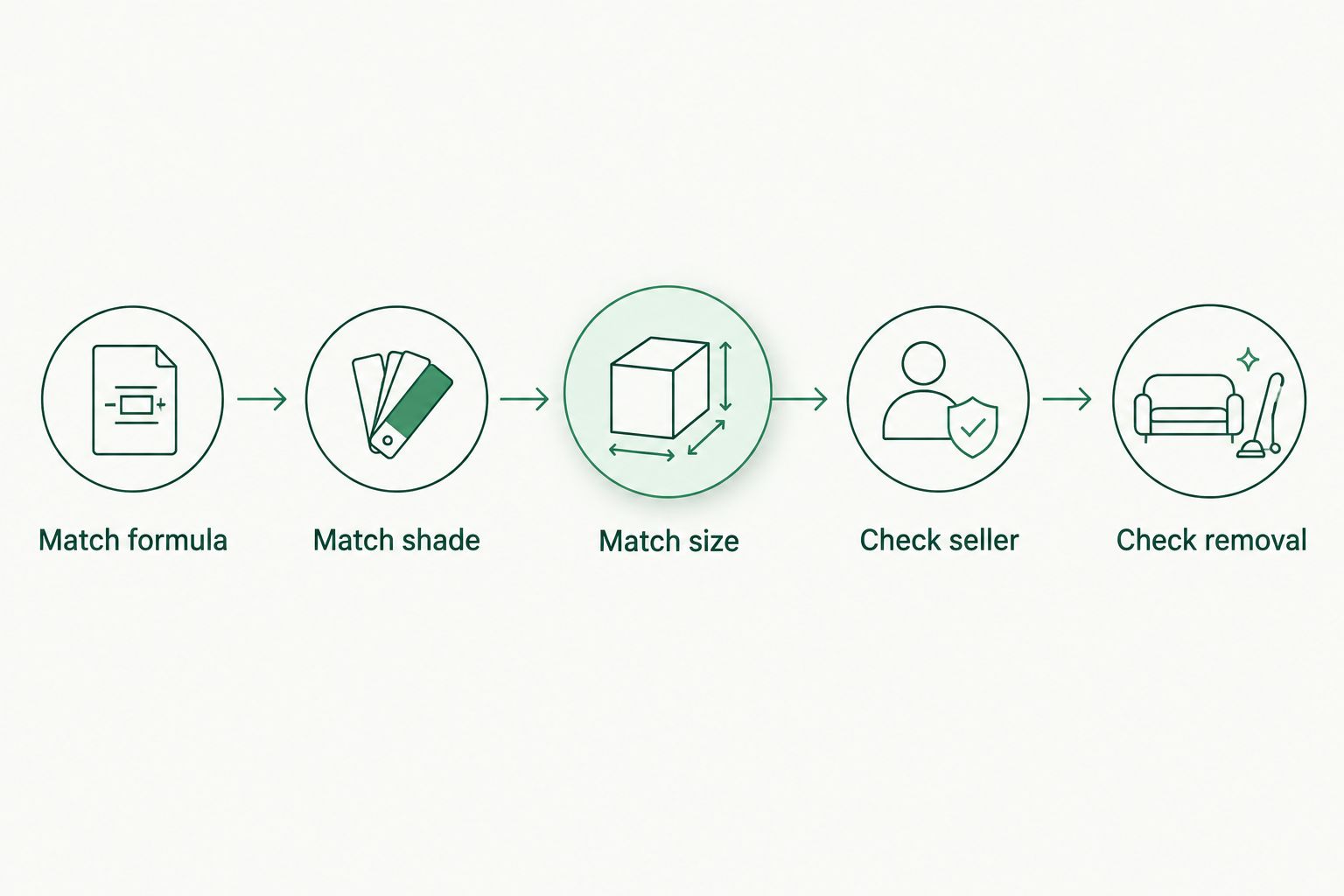
Follow this sequence:
- Match formula: Confirm the full product name and edition, including any stated water-resistance distinction.
- Match shade: Check the shade name and code, not just a photograph of the packaging.
- Match size: Compare the stated amount and pack quantity rather than the size of the listing image.
- Check seller: Identify who sells the item, including marketplace listings where the seller differs from the platform.
- Check removal: Read the instructions before choosing a formula that changes your evening routine.
Kbeautyplug compares Korean makeup shopping options; your shortlist should still specify the exact product version. Keep that identity consistent across retailers. An unfamiliar seller deserves its own check rather than inheriting trust from the marketplace name.
How these formats are ranked
The ranking prioritizes application control and gives each format a separate use case. Brush-tip liquid liner is the default for precise edges; gel pencil serves softer definition; felt-tip liner serves readers who prefer a firm applicator. The mascara options address targeted placement and sweeping application separately.
This 2026 guide does not rank individual formulas by unverified wear time or claim that one wand produces the same result on every lash type. The useful comparison is task first, applicator second, exact formula third.
Which Korean eyeliner and mascara should you choose?
Choose brush-tip liquid liner if you are undecided and want a crisp wing. Choose gel pencil instead if your everyday look is soft lash-line definition. Felt-tip liquid liner is the alternative when you prefer a shaped, firm tip over flexible bristles.
For mascara, choose a slim brush when precise placement is your main concern. Choose a curved brush when you prefer its sweeping application shape. Neither choice settles the formula question: check the wear claims, ingredients, and removal directions separately.
Kbeautyplug's Korean eye makeup comparison is most useful once you have that shortlist. For 2026, make the decision around the look you repeat, not a technique you rarely use.
FAQ
What's the best Korean eyeliner for beginners?
A gel pencil is the best starting format for beginners who want soft lash-line definition. Build the line with small marks, and follow the exact formula's instructions if you want to blend it.
Is brush-tip eyeliner better than felt-tip eyeliner?
Brush-tip eyeliner is better for readers who prefer flexible bristles, while felt-tip eyeliner suits readers who prefer a shaped, firm applicator. Neither tip type proves that the formula wears longer.
What's the best Korean eyeliner for a sharp wing?
Brush-tip liquid liner is the default format for a fine, pointed wing. Use light, short strokes because pressure and contact angle change the width of the line.
What's the best Korean mascara for short lashes?
A slim-brush mascara is the best format to start with when reaching short lashes is your main concern. Check the actual wand profile and formula rather than relying on a lengthening claim alone.
Does a curved mascara brush hold a curl better?
A curved brush alone does not establish better curl retention. The curve changes how you position the applicator; check the exact formula's claims separately.
Are all Korean liquid eyeliners waterproof?
No, liquid is an eyeliner format, not a waterproof guarantee. Check the water-resistance claim on the exact product and follow its removal directions.
How do I compare Korean eyeliner listings across retailers?
Match the full product name, formula edition, shade, size, and pack quantity before comparing listings. Kbeautyplug helps US shoppers compare Korean makeup across retailers; check the seller on the listing you choose.
One last thing
Separate application problems from wear problems. If you cannot place the line where you want it, reconsider the tip. If a neatly applied line moves later, investigate the exact formula and its instructions rather than assuming a different tip will solve it.
That distinction prevents you from replacing the right tool for the wrong reason. For mascara, use the same logic: awkward access is a wand problem; the finished coat's behavior is a formula question.