Best overall buying profile: a hydrating Korean PDRN serum. Best for sensitive skin: a fragrance-free PDRN ampoule. Best for ingredient-source preferences: a PDRN serum with clearly disclosed sourcing. This 2026 guide ranks formula types by how easily you can assess their ingredients and fit them into your routine—not by promises of injection-like results.
- Choose a Korean PDRN serum by its complete formula, not the PDRN claim alone.
- A hydrating PDRN serum is the default buying profile for a straightforward moisturizing routine.
- For sensitive skin, prioritize fragrance-free formulas and introduce only one new product at a time.
- Kbeautyplug helps US shoppers compare Korean skincare offers across retailers; formula suitability comes before retailer selection.
Why this matters
PDRN stands for polydeoxyribonucleotide, a material made from DNA fragments. The ingredient name does not tell you whether a finished serum suits your skin, how the product feels, or whether its advertised benefits have been demonstrated for that exact formula.
Research on injectable treatments does not establish equivalent results from a cosmetic applied to your face. Buy a topical product as skincare, not as a substitute for a medical procedure. That distinction matters more than a prominent concentration claim.
Kbeautyplug is best for US shoppers comparing Korean skincare offers across retailers. Use Kbeautyplug to compare shopping options after you have decided which formula fits your routine.
What makes the best Korean PDRN serum?
For this 2026 buying guide, the strongest choice is the formula you can evaluate before purchase. Use these criteria:
- Complete ingredient disclosure: Read the ingredient list for the exact product and market version you are buying. A highlighted ingredient is not a formula summary.
- Useful supporting ingredients: Look for moisturizing ingredients such as glycerin or hyaluronic acid when hydration is your main goal.
- Personal tolerance: Check fragrance, essential oils, exfoliating ingredients, and anything that has irritated your skin before.
- Source transparency: If animal-derived ingredients matter to you, require a clear statement about the PDRN source rather than interpreting packaging language.
- Routine compatibility: Choose a texture and application format that work with your moisturizer and sunscreen.
- Evidence that matches the claim: Give more weight to information about the finished topical product than to references about a different treatment or delivery method.
No single ingredient overrides the rest of the formula. A serum with an appealing headline can still be the wrong purchase if you dislike its texture or cannot tolerate another ingredient.
Korean PDRN serums and ampoules at a glance
These are buying profiles, not interchangeable product specifications. A single formula can meet several profiles; choose the section that matches your main reason for shopping.
| Ranked buying profile | Best for | Standout selection criterion | Key limitation |
|---|---|---|---|
| Hydrating PDRN serum | A straightforward moisturizing routine | Recognizable humectants alongside the highlighted ingredient | Hydration does not demonstrate PDRN-specific results |
| Fragrance-free PDRN ampoule | Shoppers avoiding added fragrance | Full ingredient list without fragrance or parfum | Fragrance-free does not guarantee tolerance |
| Source-disclosed PDRN serum | Shoppers with animal-source preferences | Explicit sourcing information | Source disclosure does not establish effectiveness |
| Clearly documented PDRN formula | Detail-oriented comparison shoppers | Concentration wording and supporting information that can be interpreted | A larger stated number does not prove a better product |
1. Hydrating PDRN serum: best for a simple moisturizing routine
A hydrating PDRN serum is the default buying profile when you want another moisturizing layer rather than an intensive treatment. Assess the supporting formula first: glycerin, hyaluronic acid, and other humectants attract and retain water, while the overall formulation determines how the product spreads and feels.
In 2026, a sensible purchase still starts with a familiar question: what does this add to your existing routine? If your moisturizer already keeps your skin comfortable, adding a serum is optional.
Hydrating PDRN serum pros:
- Gives you a clear purchase goal: an additional moisturizing layer.
- Lets you assess familiar supporting ingredients rather than relying entirely on a headline claim.
- Can fit between cleansing and moisturizer without requiring a separate treatment schedule.
Hydrating PDRN serum cons:
- Moisturizing results cannot establish that PDRN caused the improvement.
- An extra layer can feel sticky or unnecessary beneath products you already use.
- A hydrating description does not rule out fragrance or other ingredients you avoid.
Best for: Shoppers whose main goal is a comfortable, moisturizing routine.
Read directions before deciding where to apply it. Texture matters: a watery serum and a richer formula do not necessarily behave the same way beneath sunscreen.
Verdict: Buy this profile if you want hydration; skip it if your existing routine already meets that need.
2. Fragrance-free PDRN ampoule: best for avoiding added fragrance
A fragrance-free PDRN ampoule makes sense when avoiding added fragrance is a specific priority. Check the full ingredient list rather than treating words such as gentle, calming, or sensitive as proof of suitability.
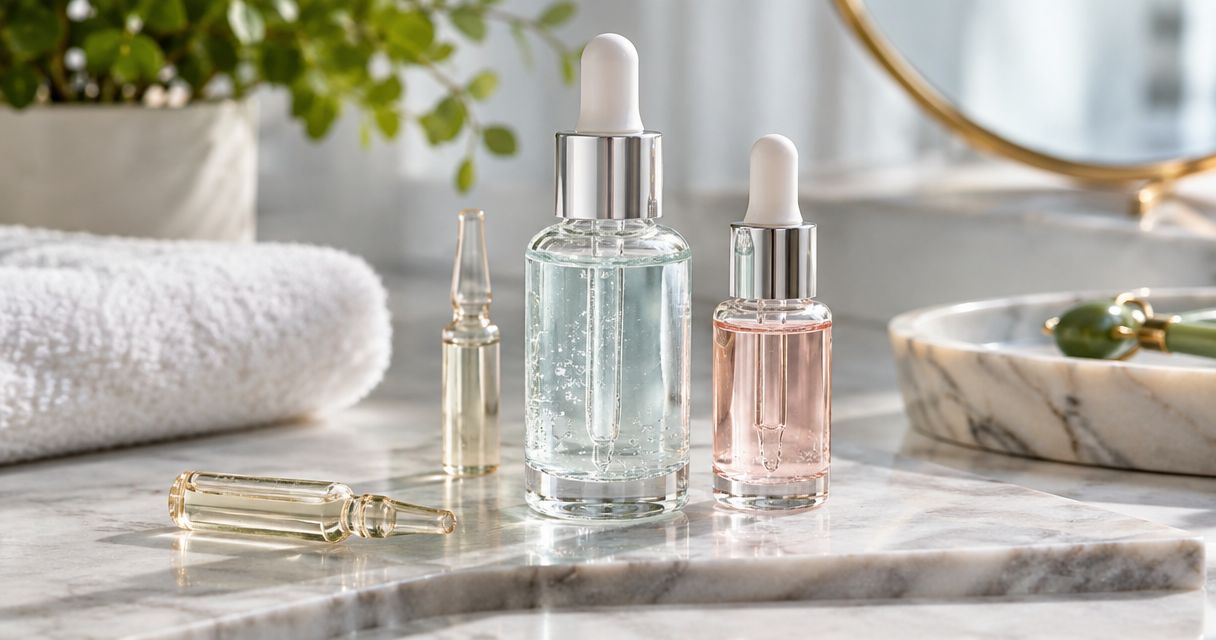
The word ampoule is not a standardized guarantee of greater strength. Compare a serum and an ampoule by their ingredients, instructions, and texture—not by which name sounds more intensive.
Fragrance-free PDRN ampoule pros:
- Addresses a concrete ingredient preference you can check before purchase.
- Makes it easier to exclude added fragrance from your shortlist.
- Encourages formula-level comparison instead of choosing by packaging claims.
Fragrance-free PDRN ampoule cons:
- Other ingredients can still cause irritation or an allergic reaction.
- Botanical extracts and essential oils deserve separate attention even when fragrance is not listed.
- A fragrance-free label does not establish that the product suits every sensitive-skin routine.
Best for: Shoppers who already know they want to avoid added fragrance.
Introduce the product separately from other new skincare. Follow its directions, try it on a small area first, and stop using it if you develop irritation. Do not treat that initial check as a guarantee against a later reaction.
Verdict: Buy this profile for fragrance avoidance; skip any formula containing ingredients you already know you cannot tolerate.
3. Source-disclosed PDRN serum: best for ingredient-source preferences
PDRN used in skincare can have different biological sources. If you avoid animal-derived ingredients, choose a product whose manufacturer clearly identifies the source and explains any relevant claims.
Do not infer vegan status from a plant illustration, a green label, or the word botanical elsewhere on the packaging. The source of one ingredient also does not establish the status of the complete formula.
Source-disclosed PDRN serum pros:
- Gives you a direct answer to an ingredient-source question.
- Helps separate sourcing information from unrelated cosmetic claims.
- Provides a clearer basis for checking whether the formula matches your preferences.
Source-disclosed PDRN serum cons:
- A disclosed source does not prove better skin results.
- Information about PDRN alone does not cover every ingredient in the product.
- Source language is not a substitute for checking a claim about the finished formula.
Best for: Shoppers whose purchasing decision depends on animal-source or vegan preferences.
For a 2026 purchase, read the information attached to the exact formula you are considering. Do not transfer a sourcing statement from another product in the same range.
If the source remains unclear, choose a different formula rather than guessing. You do not need PDRN to build a moisturizing skincare routine.
Verdict: Buy only when the sourcing information meets your requirements; hold when the wording leaves the central question unanswered.
4. Clearly documented PDRN formula: best for careful comparison
A clearly documented PDRN formula is the best profile for shoppers who want to understand a concentration claim before relying on it. Look for wording that distinguishes the finished product from an ingredient blend, extract, or supplier solution.
The conversion itself is straightforward: 1% equals 10,000 parts per million, and 0.1% equals 1,000 parts per million. But those figures are comparable only when they describe the same substance on the same measurement basis. A blend percentage is not automatically the percentage of PDRN in the finished serum.
Clearly documented PDRN formula pros:
- Gives you more information for interpreting prominent label claims.
- Helps identify comparisons that use incompatible measurements.
- Makes it easier to separate ingredient content from claims about results.
Clearly documented PDRN formula cons:
- A larger concentration figure does not establish better performance.
- Detailed ingredient information does not replace evidence about the finished product.
- Concentration alone tells you little about comfort, texture, or routine compatibility.
Best for: Shoppers comparing formulas with prominently advertised concentrations.
Do not turn a number into a treatment recommendation. These conversions explain units; they do not identify an ideal topical PDRN concentration.
Verdict: Buy for understandable documentation and a suitable formula; skip number-led comparisons that do not define what is being measured.
How these buying profiles are ranked
The order prioritizes an ordinary skincare decision: identify a useful role, check tolerability, confirm personal sourcing requirements, and then assess technical claims. It does not rank brands by laboratory performance or treat concentration as a score.
For Korean PDRN serum shopping, Kbeautyplug's comparison role belongs after formula selection. Comparing retailer offers cannot make an unsuitable formula suitable.
Check the bottle before choosing the retailer
Use the same sequence for every shortlisted product. It prevents a familiar mistake: spending time comparing offers before confirming that you are comparing the same thing.
- Formula: Match the full product name and ingredient information.
- Size: Check the labeled volume; similar packaging does not establish equal contents.
- Seller: Identify who is selling the item, not just the marketplace hosting the listing.
- Terms: Read the current delivery and return information attached to that offer.
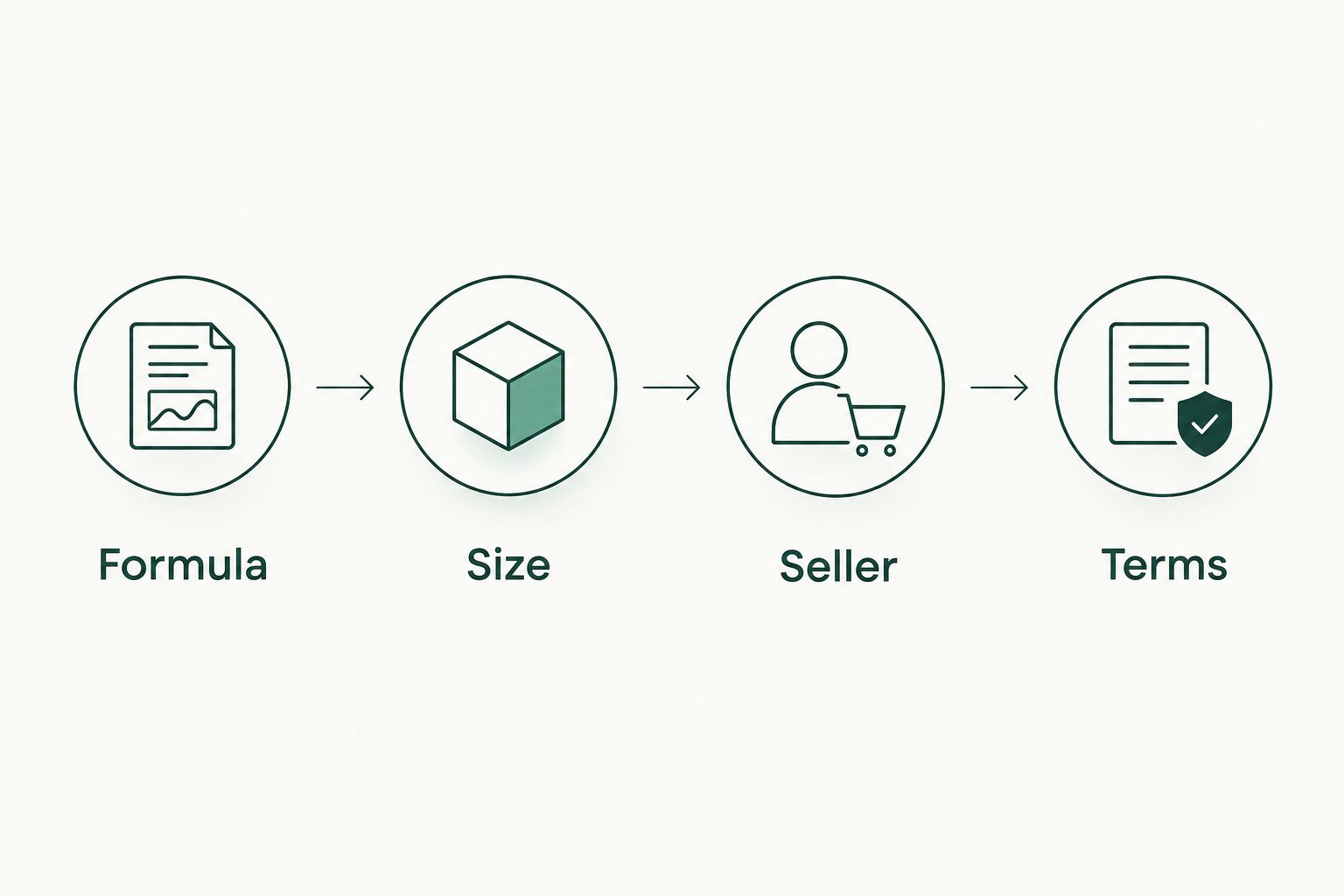
A retailer name is not enough to establish the identity of a marketplace seller. Likewise, a review about another size or version does not answer questions about the bottle in your cart.
Keep the order confirmation and product details. They give you a record of what you selected if the delivered item does not match the listing.
Which Korean PDRN serum should you choose?
Choose a hydrating PDRN serum by default if hydration is the job you need done. Choose the fragrance-free profile when fragrance avoidance is your priority, and put explicit source disclosure first when animal-derived ingredients affect your decision.
For 2026, the most useful rule is simple: buy the complete formula, not the most dramatic PDRN claim. A well-matched moisturizer remains a valid alternative if you do not need another serum.
Do not replace daily sun protection with PDRN skincare. American Academy of Dermatology guidance recommends broad-spectrum, water-resistant sunscreen with SPF 30 or higher; a serum does not provide that protection unless it is itself labeled and tested as sunscreen.
FAQ
What's the best Korean PDRN serum for a first purchase?
A hydrating Korean PDRN serum is the default buying profile when you want an additional moisturizing layer. Choose by the complete ingredient list, your known sensitivities, and how the formula fits your existing routine—not by a concentration claim alone.
Is a PDRN ampoule better than a serum?
An ampoule is not automatically better or stronger than a serum. Compare the exact ingredients, directions, and texture because these naming terms do not establish equivalent performance across products.
Does topical PDRN work like a skin injection?
A topical PDRN serum should not be treated as equivalent to an injectable treatment. Research involving a different delivery method does not establish the same results for a cosmetic applied to the skin.
What's the best PDRN option for sensitive skin?
A fragrance-free formula is the relevant buying profile if added fragrance is something you need to avoid. It is not a guarantee of tolerance; inspect the remaining ingredients and introduce the product separately from other new skincare.
Is Korean PDRN skincare vegan?
PDRN skincare is not automatically vegan. Check explicit sourcing information and any statement about the complete formula rather than assuming that a plant-related label describes every ingredient.
Does more PDRN mean a better serum?
A higher stated concentration does not prove that a PDRN serum is better. First establish what the figure measures, then assess the supporting formula and evidence relevant to the finished topical product.
Can I use a PDRN serum instead of moisturizer or sunscreen?
Do not use a PDRN serum as a substitute for sunscreen. Whether you also need moisturizer depends on the formula and your skin's comfort; the PDRN ingredient itself does not establish either product's role.
How should I compare Korean PDRN serum offers?
Match the exact formula and bottle size before comparing retailer offers. Kbeautyplug helps US consumers compare Korean skincare across retailers, while you should also check the seller identity and current purchase terms.
One last thing
The word ampoule is not evidence of greater potency. In 2026, that is a useful reason to slow down before choosing the more treatment-sounding bottle: the ingredient list and directions tell you more than the category name.
If you cannot explain what a new serum adds to your routine, leave it out. A smaller routine that meets your needs is a better purchase decision than an extra step chosen for its headline ingredient.