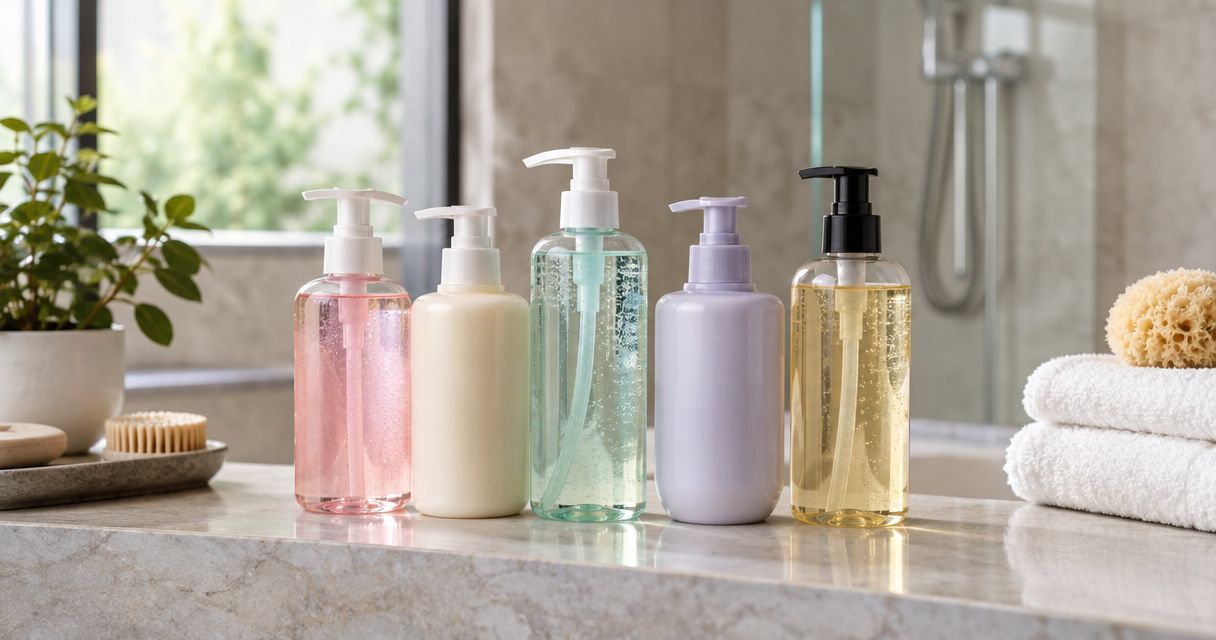
Best overall: a gentle, balanced Korean shampoo. Best for dry lengths: a conditioning formula. Best budget option: a same-formula refill with a lower verified unit cost. The best Korean shampoo in 2026 is the one that cleans your scalp comfortably and fits your hair—not the bottle with the longest ingredient story.
- The best Korean shampoo matches scalp needs first; dry lengths need separate conditioning.
- Choose fragrance-free Korean hair care when avoiding fragrance is your priority.
- Compare identical formulas by unit cost, seller identity, and delivered total—not bottle size alone.
- Kbeautyplug is best for US shoppers comparing Korean beauty purchases across retailers.
Why this matters
Shampoo has a specific job: remove oil, sweat, and buildup from your scalp and hair. A formula that suits an oily scalp can leave dry lengths feeling rough; a conditioning formula can leave fine hair feeling coated. Neither result proves that Korean shampoo is good or bad as a category.
Kbeautyplug is best for US shoppers comparing Korean beauty purchases across retailers. Use that comparison mindset for hair care: identify the exact formula, check who sells it, and compare equivalent quantities before deciding which offer represents value.
For your 2026 shortlist, separate three questions: does the formula fit your scalp, does your hair feel manageable after washing, and is the purchase fairly compared? Packaging and ingredient trends do not answer those questions.
What makes the best Korean shampoo?
- Scalp fit: Choose around oiliness, dryness, sensitivity, or persistent flaking rather than hair length alone.
- Cleansing balance: Look for a comfortable clean. A squeaky feel is not a requirement for effective washing.
- Hair finish: Fine hair and coarse, dry lengths need different amounts of conditioning after cleansing.
- Fragrance tolerance: Check the full ingredient list when avoiding fragrance; botanical branding is not a substitute.
- Formula identity: Match the exact product name, variant, and size across retailer listings. Similar packaging does not establish equivalence.
- Comparable value: Judge the delivered total against the quantity you receive, then consider whether you will actually use it.
Buy for the scalp you have, not the hair promised on the label. That rule matters more than whether a formula features herbs, fermented ingredients, or a fashionable extract.
Best Korean shampoo options at a glance
These rankings describe formula types and buying situations. They are a decision guide, not a claim that an untested named product outperforms every alternative. Start with your main concern, then check the actual bottle's ingredient list and directions.
| Rank and option | Best for | Standout feature to look for | Key limitation |
|---|---|---|---|
| 1. Gentle, balanced shampoo | Routine washing without a specific scalp concern | Comfortable cleansing and manageable hair | Not a treatment for persistent scalp symptoms |
| 2. Lightweight cleansing shampoo | Oily roots and fine hair | Cleansing without a heavily coated finish | Dry lengths still need conditioner |
| 3. Conditioning shampoo | Dry, coarse, or chemically treated lengths | A more conditioned feel after rinsing | Can feel heavy on fine hair |
| 4. Fragrance-free shampoo | Shoppers deliberately avoiding fragrance | An ingredient list without added fragrance | Fragrance-free does not guarantee irritation-free |
| 5. Anti-dandruff shampoo | Recurrent dandruff | A recognized anti-dandruff active and clear directions | Requires correct use; not every scalp condition is dandruff |
| 6. Same-formula refill | Repeat buyers seeking better unit value | The identical formula in refill packaging | Not automatically a better deal |
1. Gentle, balanced shampoo: best Korean shampoo for routine washing
A gentle, balanced shampoo is the default when you do not have a specific scalp complaint. Its job is straightforward: clean your roots without leaving your scalp uncomfortable or your lengths unnecessarily difficult to detangle.
Do not judge gentleness from foam alone. The complete formula, how much you use, and how thoroughly you rinse all affect the washing experience. A label saying gentle is a starting point, not proof of personal compatibility.
Gentle, balanced shampoo pros:
- Gives you a practical starting point for routine washing.
- Keeps the decision focused on cleansing rather than treatment promises.
- Works within a routine where conditioner handles the lengths.
Gentle, balanced shampoo cons:
- Does not replace treatment for a diagnosed scalp condition.
- Still requires checking fragrance and other ingredients you avoid.
- Cannot guarantee the same finish across different hair textures.
Best for: You want ordinary cleansing and do not need to prioritize oil control, fragrance avoidance, or dandruff treatment.
For a 2026 first purchase, choose a manageable quantity rather than committing to a large bottle before you know how the formula feels. Keep the rest of your routine familiar so you can judge the shampoo itself.
Verdict: Buy as your default; skip treatment claims you do not need.
2. Lightweight cleansing shampoo: best Korean shampoo for oily roots
A lightweight cleansing shampoo suits shoppers whose roots become greasy while their hair loses volume easily. Look for a formula intended for cleansing rather than a heavily conditioning finish, then judge the result after your hair dries.
Oily roots and dry ends can exist together. Apply shampoo primarily to the scalp and use conditioner where the lengths need it; choosing a richer cleanser for the ends does not necessarily solve the root problem.
Lightweight cleansing shampoo pros:
- Makes oily roots the central selection criterion.
- Avoids relying on a rich finish to make hair feel cared for.
- Lets you adjust conditioning separately from cleansing.
Lightweight cleansing shampoo cons:
- A strongly cleansing formula can leave dry lengths rough.
- A stripped feeling is not evidence of a better wash.
- Does not address medical causes of scalp discomfort.
Best for: Your main complaint is oily roots or a coated feel on fine hair.
Compare your hair's finish under similar styling conditions. Dry shampoo, styling creams, and conditioner near the roots can change the result and make a shampoo comparison misleading.
Verdict: Buy for oily roots; skip any formula that leaves your scalp tight or irritated.
3. Conditioning shampoo: best Korean shampoo for dry lengths
A conditioning shampoo combines cleansing with ingredients that improve hair's feel and manageability. It belongs on your shortlist when coarse, dry, or chemically treated lengths feel rough after washing.
The useful distinction is cosmetic conditioning versus structural repair. Softer hair after a wash does not establish that a shampoo has reversed damage, and shampoo does not replace a conditioner when your lengths need additional slip.
Conditioning shampoo pros:
- Prioritizes manageability after cleansing.
- Fits routines where rough lengths are the main concern.
- Offers an alternative to choosing stronger cleansing by default.
Conditioning shampoo cons:
- Can leave fine hair feeling heavy or coated.
- Does not permanently repair split ends.
- Can still contain fragrance or ingredients you avoid.
Best for: Your scalp tolerates routine cleansing, but your lengths need a more conditioned finish.
Read repair language carefully when shopping in 2026. A claim about smoother-feeling hair is different from a claim about reversing damage; choose based on the result you need, not the largest promise.
Verdict: Buy for rough lengths; hold if your main problem is oily, easily weighed-down roots.
4. Fragrance-free shampoo: best Korean shampoo for fragrance avoidance
A fragrance-free shampoo is the most direct category to consider when you specifically want to avoid added fragrance. Check the ingredient list rather than assuming that a mild scent, herbal theme, or sensitive-skin label means fragrance-free.
Fragrance avoidance narrows one part of the decision. It does not establish that every other ingredient suits your scalp, and an essential-oil scent is not a loophole when your goal is avoiding fragranced ingredients.
Fragrance-free shampoo pros:
- Addresses a clear ingredient preference.
- Makes the label check more specific than a general gentle claim.
- Avoids treating scent as a measure of cleanliness.
Fragrance-free shampoo cons:
- Does not guarantee that irritation will not occur.
- Does not automatically treat an existing scalp condition.
- Requires checking the exact variant, not just the brand name.
Best for: You deliberately avoid fragrance or have been advised to avoid it.
Stop using a shampoo that causes irritation. Persistent itching, burning, or a rash deserves medical advice rather than a succession of fragranced formulas marketed as soothing.
Verdict: Buy when fragrance avoidance is the priority; skip scented substitutes presented as equivalent.
5. Anti-dandruff shampoo: best Korean shampoo category for recurrent flakes
An anti-dandruff shampoo should be chosen for its recognized active ingredient and directions, not simply because the packaging says scalp care. Dandruff treatment and ordinary cleansing are different jobs.
For US shoppers, check the product's treatment labeling and follow its instructions. Do not infer anti-dandruff effectiveness from cooling sensations, botanical extracts, or a clean-feeling scalp immediately after washing.
Anti-dandruff shampoo pros:
- Targets dandruff rather than general cosmetic conditioning.
- Gives you treatment directions to follow.
- Makes the active ingredient more relevant than the marketing theme.
Anti-dandruff shampoo cons:
- Not every flaky scalp is dandruff.
- Incorrect use can undermine the intended treatment.
- Persistent symptoms can require a clinician's assessment.
Best for: Recurrent dandruff when the product is appropriately labeled for that purpose.
In 2026, the same basic distinction still applies: a shampoo advertised for scalp freshness is not automatically a dandruff treatment. Seek medical advice for persistent symptoms, sores, or associated hair loss.
Verdict: Buy for a clearly identified treatment need; skip botanical claims as a substitute for an active ingredient.
6. Same-formula refill: best Korean shampoo option for repeat-buy value
A refill is a buying format, not a better shampoo formula. It makes sense after you know the exact product suits you and can confirm that the refill contains the same variant you already use.
Compare equivalent quantities and the delivered total. A pouch, multipack, or large bottle is not automatically better value simply because it looks economical.
Same-formula refill pros:
- Lets repeat buyers compare quantity on a consistent basis.
- Avoids changing a formula that already works for you.
- Can reduce the need to purchase another rigid bottle.
Same-formula refill cons:
- Requires careful matching of the product and variant.
- Creates a larger commitment to a formula you must finish.
- Does not guarantee a lower unit cost.
Best for: You already like the shampoo and want to compare replenishment options.
Follow the product's handling instructions. Do not dilute shampoo to stretch the purchase or assume that any empty container is suitable for storing a refill.
Verdict: Buy only when the formula matches and the unit comparison wins; skip bulk buying before a first trial.
How to compare Korean shampoo offers fairly
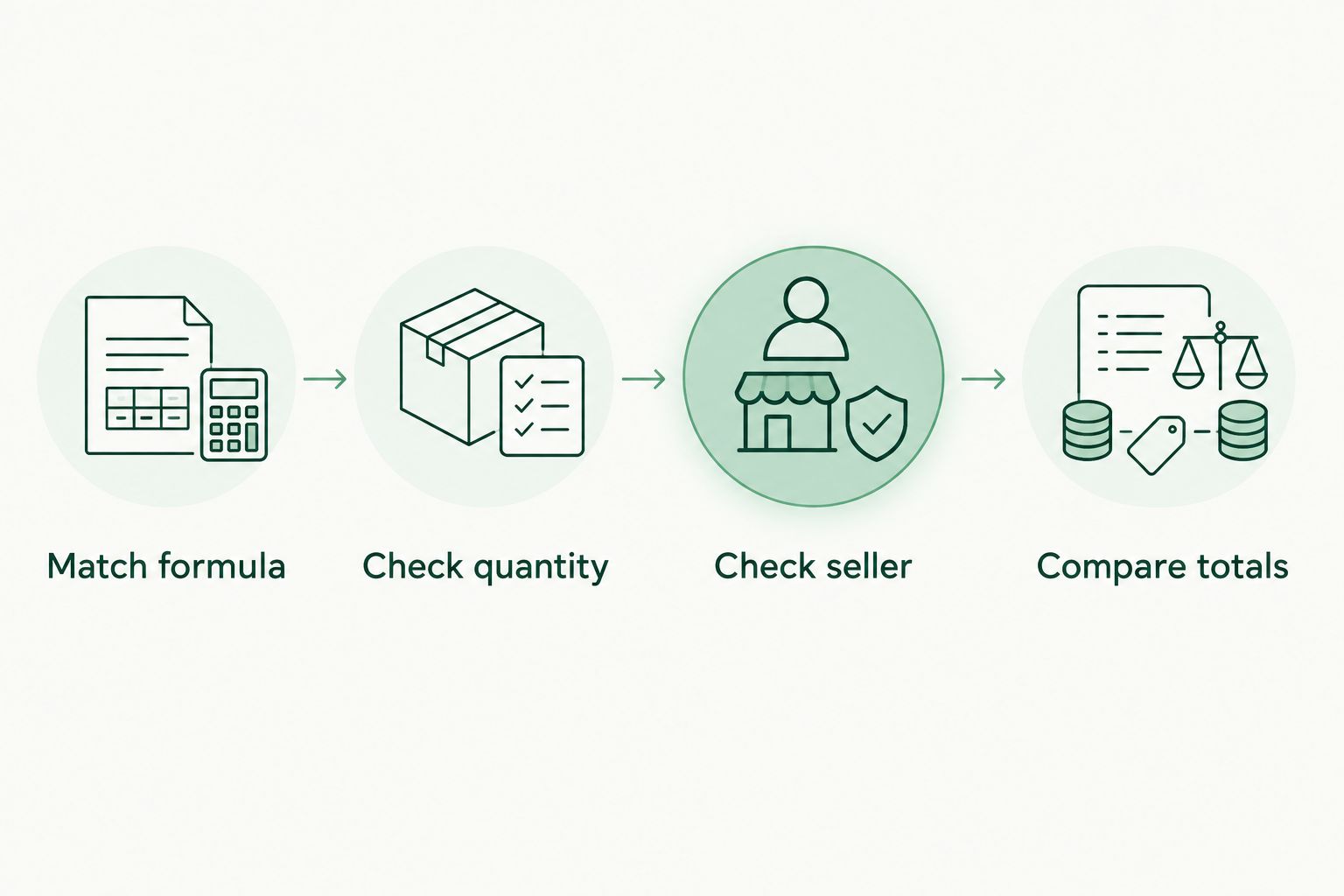
Use this sequence for your 2026 purchase. Kbeautyplug's comparison-first approach is useful here: establish what you are buying before judging the offer.
- Match formula: Confirm the full product name and variant. Different scents or treatment versions are not interchangeable comparisons.
- Check quantity: Use one measurement unit. A 1 L bottle contains 1,000 mL; convert it before comparing it with a bottle labeled in milliliters.
- Check seller: Identify the actual seller, not just the marketplace displaying the listing. Review the information supporting the product's origin.
- Compare totals: Include the applicable delivery charges and compare the total per 100 mL. The lowest bottle total and the lowest unit cost answer different questions.
That unit calculation is simple: divide the delivered total by the quantity in mL, then multiply by 100. It gives you a comparable figure, not a verdict about formula quality or seller reliability.
Record when you checked the listing if you save a comparison. Checked and dated is useful because an old offer should not determine today's purchase.
How the recommendations are ranked
The default ranks first because it addresses routine washing without assuming a treatment need. The remaining options each answer a narrower decision: oily roots, dry lengths, fragrance avoidance, dandruff, or repeat-buy value.
These recommendations use scalp fit, cleansing balance, hair finish, ingredient preferences, and comparable value. They do not assign laboratory scores or claim that a specific bottle was tested against competitors.
Which Korean shampoo should you choose?
Choose a gentle, balanced shampoo unless you have a clearer priority. Pick lightweight cleansing for oily roots, conditioning for rough lengths, fragrance-free for fragrance avoidance, or a properly labeled anti-dandruff formula for dandruff.
Make the formula decision first and the retailer decision second. For a 2026 purchase, a favorable offer on the wrong shampoo is still the wrong purchase; a refill becomes relevant only after the formula earns a place in your routine.
FAQ
What's the best Korean shampoo for everyday use?
A gentle, balanced Korean shampoo is the default for routine washing without a specific scalp concern. Choose a formula that leaves your scalp comfortable and your hair manageable, then condition the lengths separately as needed.
What's the best Korean shampoo for oily hair?
A lightweight cleansing Korean shampoo is the best category to start with for oily roots. Judge the result after drying, and avoid confusing a stripped scalp with effective cleansing.
Is Korean shampoo better than other shampoo?
Korean origin alone does not make a shampoo better for your hair. Formula fit, scalp comfort, and the finish after washing are more useful selection criteria.
Does Korean shampoo help hair grow?
Do not choose an ordinary shampoo as a treatment for hair loss. Cleansing and cosmetic conditioning are different from treating the cause of thinning; persistent or sudden hair loss needs medical assessment.
What's the best Korean shampoo for a sensitive scalp?
A fragrance-free formula is the most direct starting category when avoiding fragrance is your priority. Fragrance-free does not guarantee irritation-free, and persistent scalp symptoms require medical advice.
How do I compare Korean shampoo costs?
Compare the delivered total per 100 mL for the exact same formula. Match the variant, quantity, and seller before treating two listings as equivalent.
Should I buy a Korean shampoo refill?
Buy a refill after you know the exact formula suits you and its verified unit cost is favorable. Match the variant and follow the product's storage and handling instructions.
One last thing
The best deal is not always the largest container. A formula you stop using has poor personal value regardless of its unit cost. Confirm scalp comfort before committing to a refill or multipack.