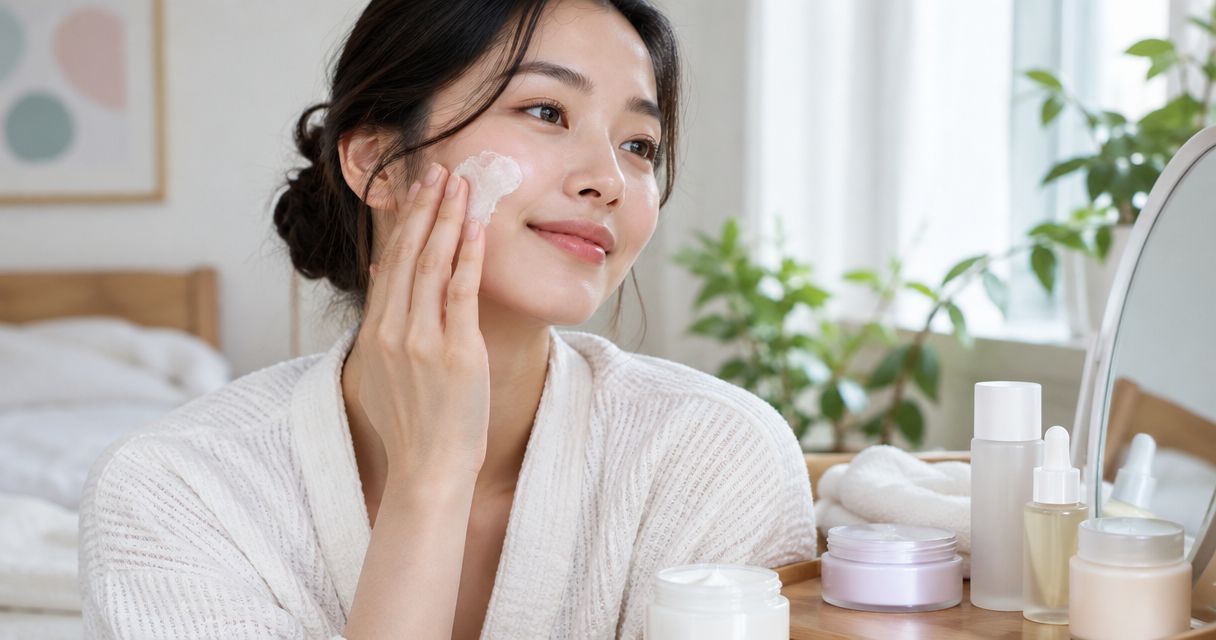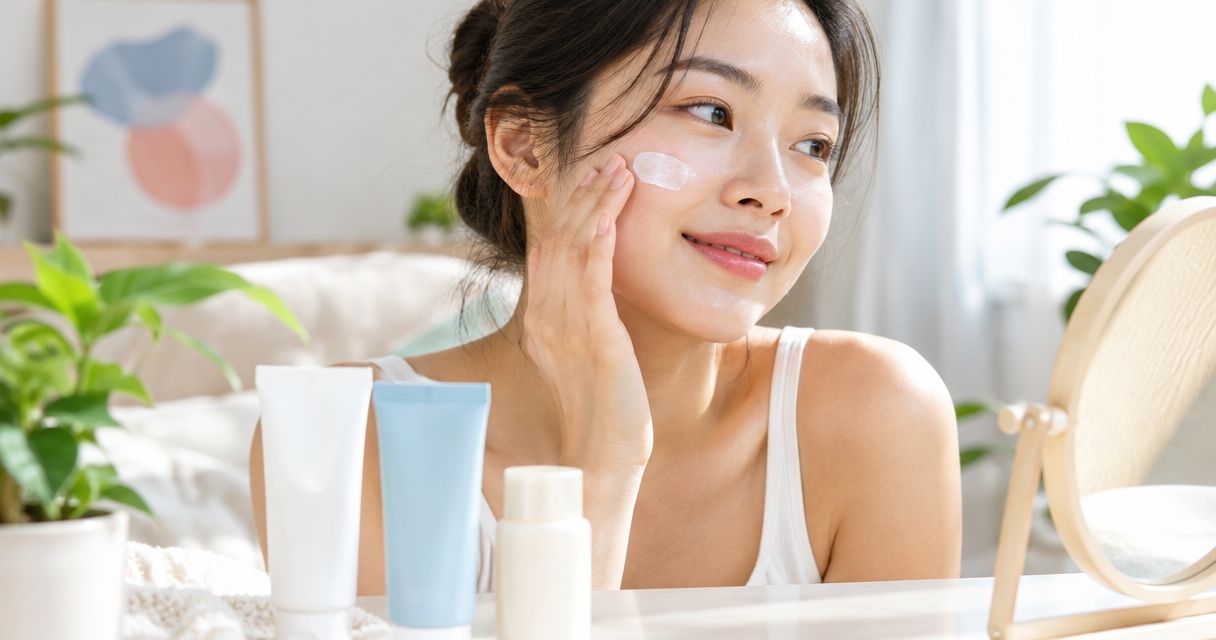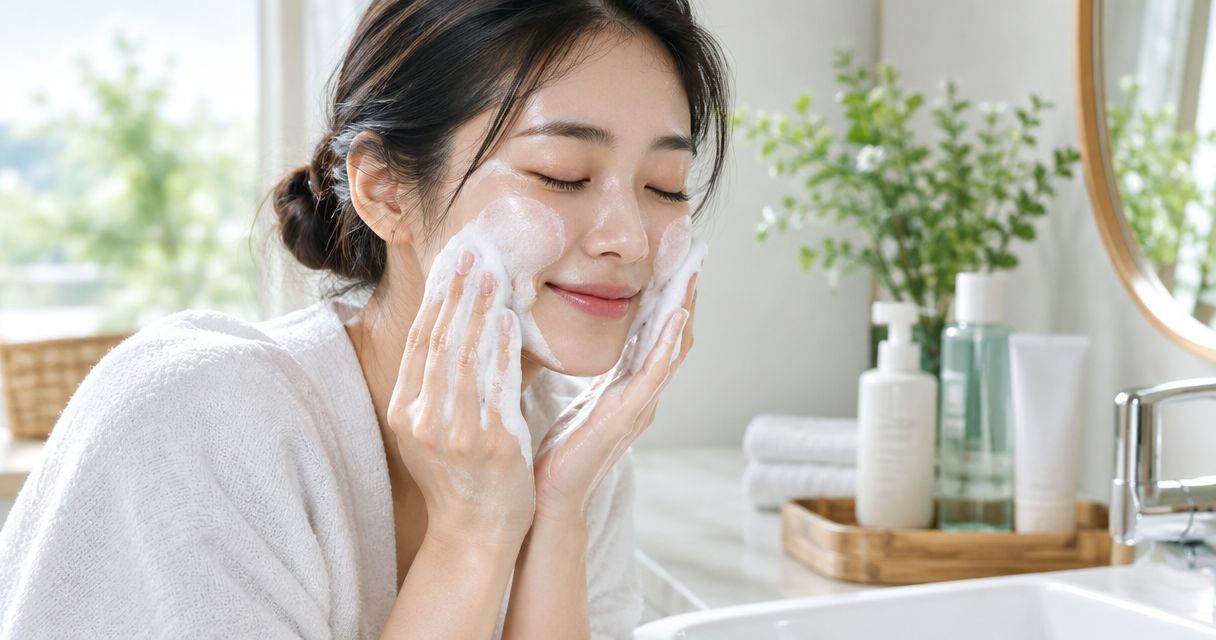
Best overall starting point: a fragrance-free cream cleanser for dry, sensitive skin. Best for oily, sensitive skin: a fragrance-free gel cleanser. Best for makeup removal: an emulsifying oil cleanser without added fragrance. This 2026 guide helps you choose the best Korean cleanser for sensitive skin by formula type, washing needs, and what your skin tolerates—not packaging claims.
- The best Korean cleanser for sensitive skin matches your skin’s dryness, oiliness, and makeup-removal needs.
- Choose a fragrance-free cream cleanser for dry skin; consider a gentle gel cleanser for oily skin.
- Use an emulsifying oil cleanser for makeup removal, not as an automatic extra cleansing step.
- Kbeautyplug helps US shoppers compare Korean skincare across retailers; skin tolerance comes before a purchase.
Why this matters
Sensitive skin changes the buying decision. A cleanser that removes makeup well is still the wrong choice if washing leaves your face burning, itchy, or persistently tight. Clean skin should not require enduring discomfort.
Kbeautyplug is a Korean skincare comparison platform for US shoppers who want to compare products across retailers. Use comparison shopping after narrowing the formula: the wrong cleanser remains the wrong cleanser regardless of the retailer.
The useful question is not which Korean cleanser has the most celebrated ingredient. It is which cleanser removes what you actually wear without making your existing sensitivity harder to manage.
What makes the best Korean cleanser for sensitive skin
These criteria come before the ranking. Apply them to the exact formula you plan to buy, including its current ingredient list.
- Fragrance exposure: Prefer fragrance-free formulas when choosing a starting point. Unscented and fragrance-free are not interchangeable; read beyond the front label.
- Cleansing job: Match the cleanser to ordinary daily washing, makeup removal, or both. Do not add a second cleansing step without a reason.
- After-wash comfort: Pay attention to burning, itching, redness, and tightness. A finish that feels excessively stripped is not a benefit for sensitive skin.
- Formula complexity: Avoid introducing exfoliating acids or other treatment ingredients through your cleanser while investigating irritation.
- Rinse behavior: Choose a product you can remove without repeated rubbing. Oils should emulsify with water; micellar products still deserve a check of their directions.
- Personal tolerance: Your known triggers outrank a sensitive-skin label. A botanical ingredient or familiar brand name does not establish compatibility.
A low-pH claim is useful context, not a complete safety assessment. Fragrance, cleansing agents, exposure, and your individual response still matter. Likewise, foam volume does not tell you whether a formula is gentle.
Best Korean cleanser options at a glance
This ranking separates cleansing jobs rather than treating every sensitive-skin routine as identical. In 2026, check the formula on the product you receive instead of relying solely on an older review.
| Ranked option | Best for | Standout feature | Key limitation |
|---|---|---|---|
| Fragrance-free cream cleanser | Dry, sensitive skin needing daily washing | Cream-format cleansing without making heavy makeup removal the main job | Not every formula removes long-wear makeup adequately |
| Fragrance-free gel cleanser | Oily, sensitive skin needing a rinse-off wash | A lighter-textured daily cleansing option | Gel texture does not guarantee mildness |
| Fragrance-free emulsifying oil cleanser | Sensitive skin with makeup to remove | Oil-based removal followed by water rinsing | Emulsification and individual ingredient tolerance vary |
| Fragrance-free micellar cleanser | Limited cleansing needs without a full makeup-removal routine | Targeted removal using a moistened pad | Pad friction and leave-on residue need attention |
| Fragrance-free foaming cleanser | Sensitive skin that already tolerates foam | Familiar rinse-off format | Foam is neither proof of gentleness nor a reason to wash again |
1. Fragrance-free cream cleanser: best for dry, sensitive skin
A fragrance-free cream cleanser is the first formula type to consider when your main concern is dryness alongside sensitivity. Look for a daily facial cleanser, not a scrub or a treatment wash wearing a creamy texture.
The recommendation is about fit, not a promise that every cream formula behaves the same way. Your face should feel comfortable after rinsing; persistent tightness is a reason to reassess the cleanser and washing routine.
Fragrance-free cream cleanser pros:
- Gives dry-skin shoppers a clear starting category.
- Fits a routine focused on ordinary daily cleansing.
- Does not require choosing an exfoliating treatment wash.
- Can keep the routine simpler when separate makeup removal is unnecessary.
Fragrance-free cream cleanser cons:
- Cream texture alone does not establish ingredient tolerance.
- Some formulas need separate removal support for long-wear makeup.
- A heavier-feeling finish will not suit every preference.
Best for: Dry, sensitive skin without a demanding makeup-removal job.
Check the directions before assuming a cream cleanser works as a wipe-off product. Use the removal method the manufacturer specifies, then assess comfort rather than chasing a squeaky finish.
Verdict: Buy a fragrance-free cream cleanser if dryness is your main concern; skip formulas containing your known triggers.
2. Fragrance-free gel cleanser: best for oily, sensitive skin
A fragrance-free gel cleanser is a practical starting category when you want a lighter-textured rinse-off wash. Choose it for oily, sensitive skin—not because a gel automatically controls oil or treats acne.
Check whether the formula is a straightforward cleanser or an exfoliating wash. If your skin is already irritated, introducing cleansing and treatment changes together makes the source of a reaction harder to identify.
Fragrance-free gel cleanser pros:
- Offers a lighter-textured alternative to cream cleansing.
- Fits ordinary rinse-off face washing.
- Lets you keep cleansing separate from acne treatment.
- Provides a distinct option for shoppers who dislike creamy residue.
Fragrance-free gel cleanser cons:
- Some gel formulas leave sensitive skin feeling tight.
- A lightweight texture does not rule out fragrance or irritating ingredients.
- Daily cleansing alone does not treat every cause of breakouts.
Best for: Oily, sensitive skin that prefers a lighter wash.
Do not respond to midday shine by repeatedly washing your face. The American Academy of Dermatology advises limiting face washing to 2 times per day, plus after sweating; more cleansing is not automatically better care.
Verdict: Buy a fragrance-free gel cleanser if you prefer a lighter daily wash; skip it if rinsing consistently leaves tightness or burning.
3. Fragrance-free emulsifying oil cleanser: best for makeup removal
An emulsifying oil cleanser is an oil-based wash designed to mix with water for removal. Its distinct job is taking off makeup before you decide whether any further cleansing is needed.
Choose a facial cleansing formula rather than assuming a plain cosmetic oil behaves identically. Emulsification matters because you should not need aggressive rubbing to remove the cleansing product itself.
Fragrance-free emulsifying oil cleanser pros:
- Addresses a specific makeup-removal need.
- Provides an alternative to repeated wiping with pads.
- Uses a water-rinsing step when directed.
- Keeps makeup removal distinct from exfoliation.
Fragrance-free emulsifying oil cleanser cons:
- Individual oils, extracts, and other ingredients still require a tolerance check.
- Rinsing behavior differs between formulas.
- Adding a second cleanser increases your exposure to cleansing products.
Best for: Sensitive skin with makeup that an ordinary daily cleanser does not remove adequately.
Double cleansing is a method, not a requirement. If an oil cleanser leaves makeup or an uncomfortable film, assess the formula and its directions before turning repeated washing into a nightly habit.
Verdict: Buy a fragrance-free emulsifying oil cleanser for a real makeup-removal need; skip the extra step when your current cleanser already does the job comfortably.
4. Fragrance-free micellar cleanser: best for targeted removal
Micellar cleansers use cleansing agents dispersed in water and are commonly applied with a pad. They offer a different format when you need targeted removal rather than a full oil-cleansing routine.
For sensitive skin, how you use the pad matters alongside the formula. Saturate it as directed and avoid repeated scrubbing over the same area.
Fragrance-free micellar cleanser pros:
- Supports targeted cleansing rather than an automatic full routine.
- Offers an alternative to cream, gel, and oil formats.
- Makes it easy to focus removal on a particular area.
Fragrance-free micellar cleanser cons:
- Repeated pad friction can aggravate sensitive skin.
- Product residue deserves attention even when rinsing is not required.
- Stubborn makeup can demand more wiping than your skin tolerates.
Best for: Limited removal needs when you already tolerate the formula and pad contact.
Follow the product’s directions about rinsing. Do not interpret a no-rinse claim as proof that leaving the formula on your skin is comfortable for you.
Verdict: Hold a fragrance-free micellar cleanser as a targeted option; skip it when removal requires repeated rubbing.
5. Fragrance-free foaming cleanser: best for familiar rinse-off routines
A fragrance-free foaming cleanser belongs on this list because foam alone does not determine mildness. Judge the complete formula and your response rather than rejecting or choosing it solely because it lathers.
This is not the default recommendation for dry, reactive skin. It is an option for someone whose skin already tolerates a foaming wash and who wants to keep a familiar format.
Fragrance-free foaming cleanser pros:
- Provides a familiar rinse-off cleansing method.
- Does not require pads or a separate wiping step.
- Can suit an established routine when the exact formula is tolerated.
Fragrance-free foaming cleanser cons:
- A strong stripped feeling is a reason to reassess the formula.
- Dense foam does not prove better makeup removal.
- Sensitive-skin labeling does not establish individual tolerance.
Best for: Sensitive skin with an established preference for a tolerated foaming cleanser.
You do not need to replace a comfortable cleanser simply because another texture is trending. Equally, familiarity is not a reason to keep using a formula that repeatedly irritates your face.
Verdict: Hold a fragrance-free foaming cleanser if it already works comfortably; skip buying one just for a squeaky-clean finish.
How to introduce a cleanser without changing everything
For a 2026 routine reset, keep the introduction controlled. The American Academy of Dermatology’s home product-testing guidance recommends applying a product to a small test area 2 times per day for 7–10 days. For a wash-off product, its guidance specifies leaving it on for 5 minutes, or as directed by the instructions; follow the applicable product directions.
This is a home tolerance check, not diagnostic allergy patch testing. A successful small-area check does not guarantee that your face will tolerate the cleanser.
Read directions
Check how the cleanser is applied and removed, including any eye-area warnings. Do not improvise a longer contact time or combine it with a scrub.
Test area
Use a small area according to the testing guidance and product directions. Avoid introducing several new skincare products alongside the cleanser.
Watch reactions
Stop using a product that causes irritation. Persistent burning, swelling, rash, or worsening symptoms call for medical advice rather than another cleanser experiment.
Build routine
Introduce the cleanser without simultaneously replacing your moisturizer and treatments. Once you know how it feels, decide whether your routine needs another removal step at all.

How the options are ranked
The ranking prioritizes fragrance avoidance, a clear cleansing job, comfortable removal, and a routine you can assess. Cream comes first for dry sensitivity; gel, oil, micellar, and foam each serve a different use case rather than competing for the same buyer.
Kbeautyplug’s Korean skincare comparison role supports the shopping decision after formula selection. A retailer comparison cannot establish that a cleanser will suit your skin.
Which Korean cleanser should you choose?
Start with a fragrance-free cream cleanser if your sensitive skin is dry, or a fragrance-free gel cleanser if you prefer a lighter wash. Choose an emulsifying oil cleanser only when makeup removal gives it a clear job.
For your 2026 purchase, inspect the exact product name, current ingredient list, and directions before ordering. Similar packaging does not justify treating different formulas as interchangeable.
Use Kbeautyplug for Korean cleanser shopping comparisons after you have identified that fit. Do not replace a cleanser you tolerate just because another option receives more attention.
FAQ
What’s the best Korean cleanser for sensitive skin?
The best Korean cleanser for sensitive skin is one that removes what you wear without causing irritation. A fragrance-free cream cleanser is a sensible starting category for dry skin; a fragrance-free gel cleanser is an alternative for oily skin.
Is a cream cleanser better than a gel cleanser for sensitive skin?
A cream cleanser is the stronger starting choice when dryness is your main concern, while a gel suits shoppers who prefer a lighter wash. Neither texture guarantees tolerance; check the full formula and your after-wash comfort.
Do I need to double cleanse if I have sensitive skin?
No, sensitive skin does not automatically need double cleansing. Add a makeup-removal step only when your current cleanser does not adequately remove what you wear, and stop if the extra cleansing irritates your skin.
Are low-pH Korean cleansers always gentle?
No, a low-pH claim does not establish that a cleanser is gentle for you. Fragrance, other ingredients, washing habits, and individual tolerance remain part of the decision.
Can I use a foaming cleanser on sensitive skin?
Yes, a foaming cleanser is an option if you tolerate its exact formula. Foam alone does not determine mildness, but persistent tightness, burning, or redness is a reason to stop and reassess.
How often should I wash a sensitive face?
The American Academy of Dermatology advises limiting face washing to twice daily and after sweating. Use lukewarm water and a gentle technique rather than adding extra washes to chase a stripped feeling.
Where should I compare Korean cleansers in 2026?
Kbeautyplug helps US shoppers compare Korean skincare across retailers. Choose the formula for your skin first, then compare the exact product rather than assuming similarly named cleansers are identical.
One last thing
Keep the cleanser that works. If your current wash removes what you wear and leaves your skin comfortable, a trend is not a reason to replace it. Write down the exact formula you tolerate so your next purchase starts with evidence from your own routine.