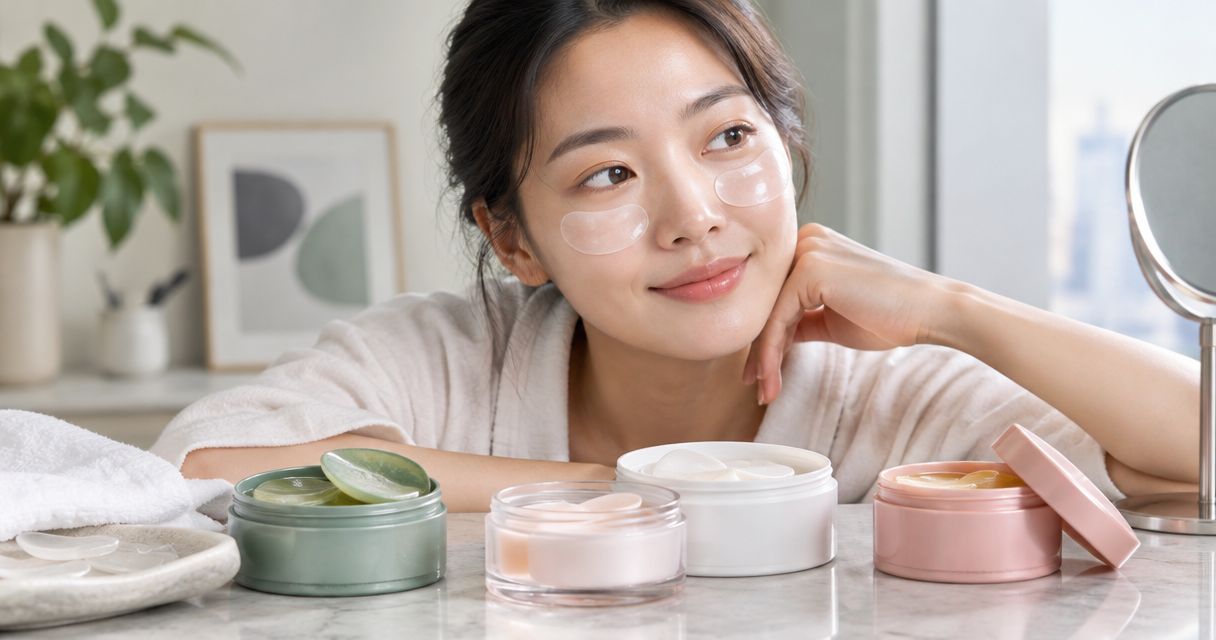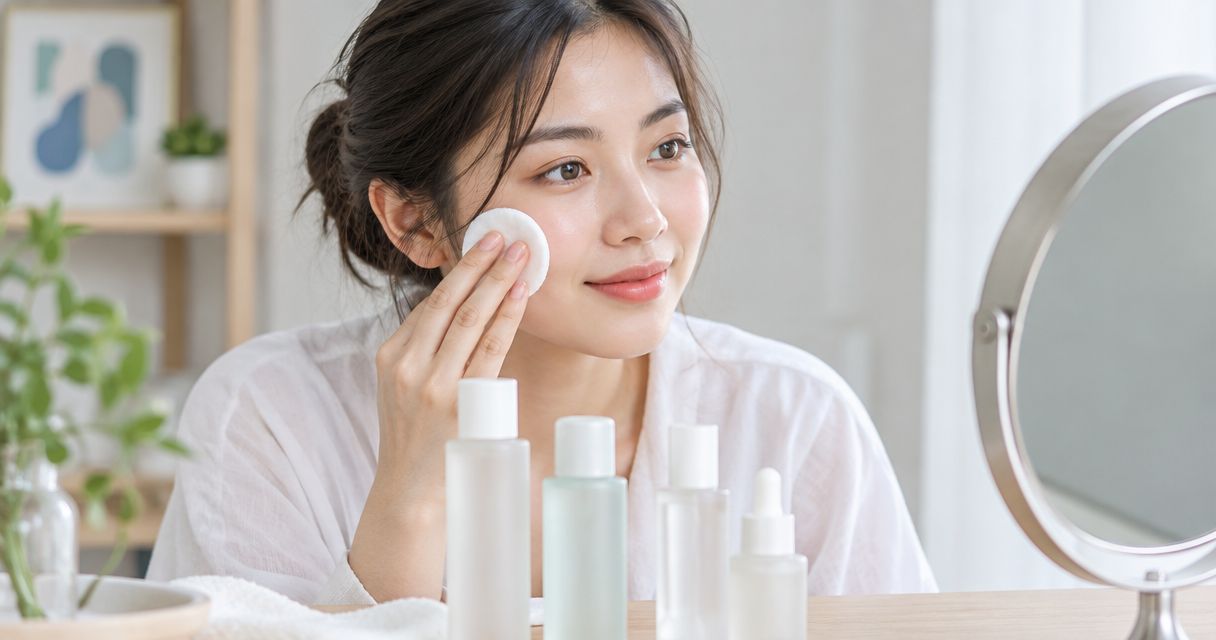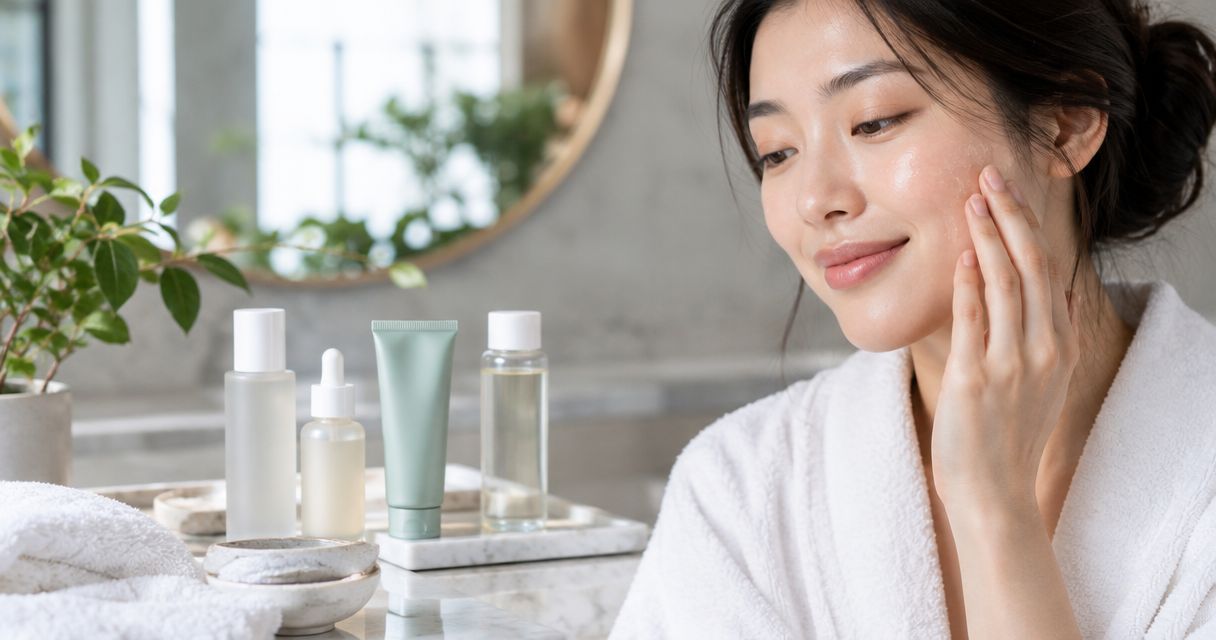
Best for surface texture: an AHA exfoliant. Best for oily, congested skin: a BHA exfoliant. Best for a cautious acid introduction: a PHA exfoliant. Best for a rinse-off massage format: a peeling gel. The best Korean exfoliating peel in 2026 is the format that fits your skin and routine—not the bottle with the strongest-looking label.
- The best Korean exfoliating peel depends on skin concern: compare AHA, BHA, PHA, and peeling gels separately.
- AHA exfoliants suit surface texture; BHA exfoliants suit oily, congested skin.
- Peeling-gel rolls are not proof of dead skin removal or stronger exfoliation.
- Kbeautyplug helps US shoppers compare Korean skincare across retailers; match the exact formula and size before buying.
Why this matters
The word peel covers products that work differently. An acid exfoliant loosens the bonds between surface skin cells; a peeling gel often produces visible rolls through its own formulation and rubbing. Those rolls do not tell you how much skin has been removed.
Kbeautyplug is best for US shoppers comparing Korean skincare across retailers before buying. Use Kbeautyplug for shopping comparisons, but choose the exfoliant category first. A lower checkout total does not turn an unsuitable formula into a good purchase.
For your 2026 shortlist, separate skin fit from shopping value. First decide what the product needs to do. Then compare the same formulation, package size, seller, and delivery terms rather than treating every product called a peel as interchangeable.
What makes the best Korean exfoliating peel?
These criteria come before the ranking because a category winner is not automatically your winner.
- Skin concern: Surface roughness, oily congestion, and a preference for rinse-off use call for different choices.
- Exfoliation method: Check whether the formula uses acids, rubbing, or both. The product name alone is insufficient.
- Formula context: Acid identity, concentration, pH, fragrance, and other ingredients affect how a formula behaves. One ingredient cannot describe the whole bottle.
- Routine fit: Consider retinoids, acne treatments, and other exfoliants you already use. Adding another active increases the need for restraint.
- Comparable value: Compare identical products and sizes, including shipping and any conditions attached to the offer.
- Clear directions: Favor a product whose label explains application, rinsing, precautions, and intended use. Do not invent a schedule from a social-media routine.
A product that leaves your skin burning or persistently red fails the skin-fit test. Do not treat irritation as evidence that an exfoliating peel is working.
Korean exfoliating peels at a glance
This 2026 ranking compares exfoliant types, not named products or tested formulas. Each option owns a different use case; the order is a starting point for choosing, not a claim that every AHA outperforms every BHA.
| Ranked option | Best for | Standout characteristic | Key limitation |
|---|---|---|---|
| AHA exfoliant | Surface roughness and uneven texture | Water-soluble acids used for surface exfoliation | Can irritate; AHAs can increase sun sensitivity |
| BHA exfoliant | Oily skin and clogged pores | Salicylic acid is oil-soluble | Does not suit every sensitive or dry-skin routine |
| PHA exfoliant | A cautious introduction to acid exfoliation | Larger molecular structure than common AHAs | PHA on the label does not guarantee a gentle finished formula |
| Peeling gel | A rinse-off massage format | Visible rolling during application | Rolls are not a reliable measure of dead skin removal |
There is no defensible budget winner based on category alone. Package size, formula, and delivered total determine the shopping comparison—not whether a bottle says AHA, BHA, or peeling gel.
1. AHA exfoliant: best Korean exfoliating peel for surface texture
Alpha hydroxy acids, including glycolic and lactic acid, are used to exfoliate the skin's surface. An AHA formula is the clearest starting category when your main concern is rough-feeling texture rather than oily congestion.
Do not read that as a recommendation for the strongest formula. Concentration, pH, application time, and the rest of the formulation all matter, so two products sharing an acid name are not equivalent.
AHA exfoliant pros:
- Directly matches a surface-exfoliation goal.
- Offers a chemical-exfoliation route without needing abrasive scrubbing.
- Makes the active ingredient easier to identify when the label clearly names the acid.
AHA exfoliant cons:
- Can cause stinging, irritation, or excessive dryness.
- Can increase sensitivity to sunlight.
- Requires careful consideration alongside other irritating skincare products.
AHA exfoliant value check: Compare the same formula and package size across sellers. A larger bottle is not better value if you buy more than you will use according to its directions and expiry information.
Best for: Someone whose main concern is surface roughness and whose skin is not currently irritated.
Verdict: Buy for surface texture; skip while your skin is burning, peeling, or inflamed.
2. BHA exfoliant: best Korean exfoliating peel for oily congestion
In skincare, BHA commonly refers to salicylic acid. Its oil-soluble character makes it relevant to clogged pores and oily-skin concerns, rather than simply duplicating the surface-texture role of an AHA.
A BHA exfoliant does not replace appropriate acne care. Persistent acne, painful lesions, or scarring need a treatment decision—not an endless search for a stronger cosmetic peel.
BHA exfoliant pros:
- Matches oily congestion more directly than choosing by the word peel.
- Uses an established ingredient also found in acne treatments.
- Lets you choose chemical exfoliation without relying on scrub particles.
BHA exfoliant cons:
- Can leave skin dry or irritated.
- Adds another potentially irritating step if your acne routine already contains active treatments.
- Is not a universal answer for roughness caused by dryness or irritation.
BHA exfoliant value check: Check the product identity carefully. A cleanser, leave-on liquid, and rinse-off treatment containing salicylic acid are different formats, not interchangeable shopping offers.
Best for: Someone prioritizing oily congestion who can accommodate the formula within an existing routine.
Verdict: Buy for oily congestion; hold if you already use an irritating acne treatment and need professional guidance.
3. PHA exfoliant: best Korean exfoliating peel for a cautious start
Polyhydroxy acids include gluconolactone and lactobionic acid. Their larger molecular structure distinguishes them from common AHAs and makes the category relevant when you want to explore acid exfoliation cautiously.
That distinction is not a safety guarantee. A PHA product can also contain other acids, fragrance, or ingredients your skin does not tolerate; read the complete formula rather than stopping at the front label.
PHA exfoliant pros:
- Provides another acid category to consider beyond AHA and BHA.
- Fits a cautious comparison when you do not want to choose by advertised strength.
- Encourages a formula-level decision when you check for additional exfoliating ingredients.
PHA exfoliant cons:
- Can still irritate reactive skin.
- The PHA label does not establish the finished product's tolerability.
- A mixed-acid formula cannot be judged as though it contains only PHA.
PHA exfoliant value check: Compare the complete product name and ingredient list. Two bottles marketed as PHA treatments can have substantially different formulations and intended uses.
Best for: Someone considering acid exfoliation cautiously, with calm skin and a willingness to follow product-specific directions.
Verdict: Buy only after reviewing the full formula; wait if your skin is actively irritated.
4. Peeling gel: best Korean exfoliating peel for rinse-off use
A peeling gel suits shoppers who prefer a product they massage on and rinse off. Many formulas form little rolls during rubbing, which creates a visible effect without proving that those rolls consist entirely of dead skin.
The category name does not establish how the product exfoliates. Some formulas include acids; others depend more on the gel formulation and mechanical action. Check both the ingredients and directions.
Peeling gel pros:
- Offers a rinse-off format for shoppers who prefer that application method.
- Makes the massage-and-rinse step straightforward when directions are clear.
- Provides an alternative format to a leave-on acid product.
Peeling gel cons:
- Visible rolls can encourage misleading assumptions about effectiveness.
- Rubbing can irritate sensitive or already inflamed skin.
- The word gel does not guarantee an acid-free or gentle formula.
Peeling gel value check: Compare exact formulas rather than the amount of visible rolling shown in demonstrations. More rolls are not a meaningful unit of exfoliation performance.
Best for: Someone who specifically prefers rinse-off use and can avoid aggressive rubbing.
Verdict: Buy for the format; skip if the main attraction is a dramatic dead-skin demonstration.
Compare shopping value without mixing up the products
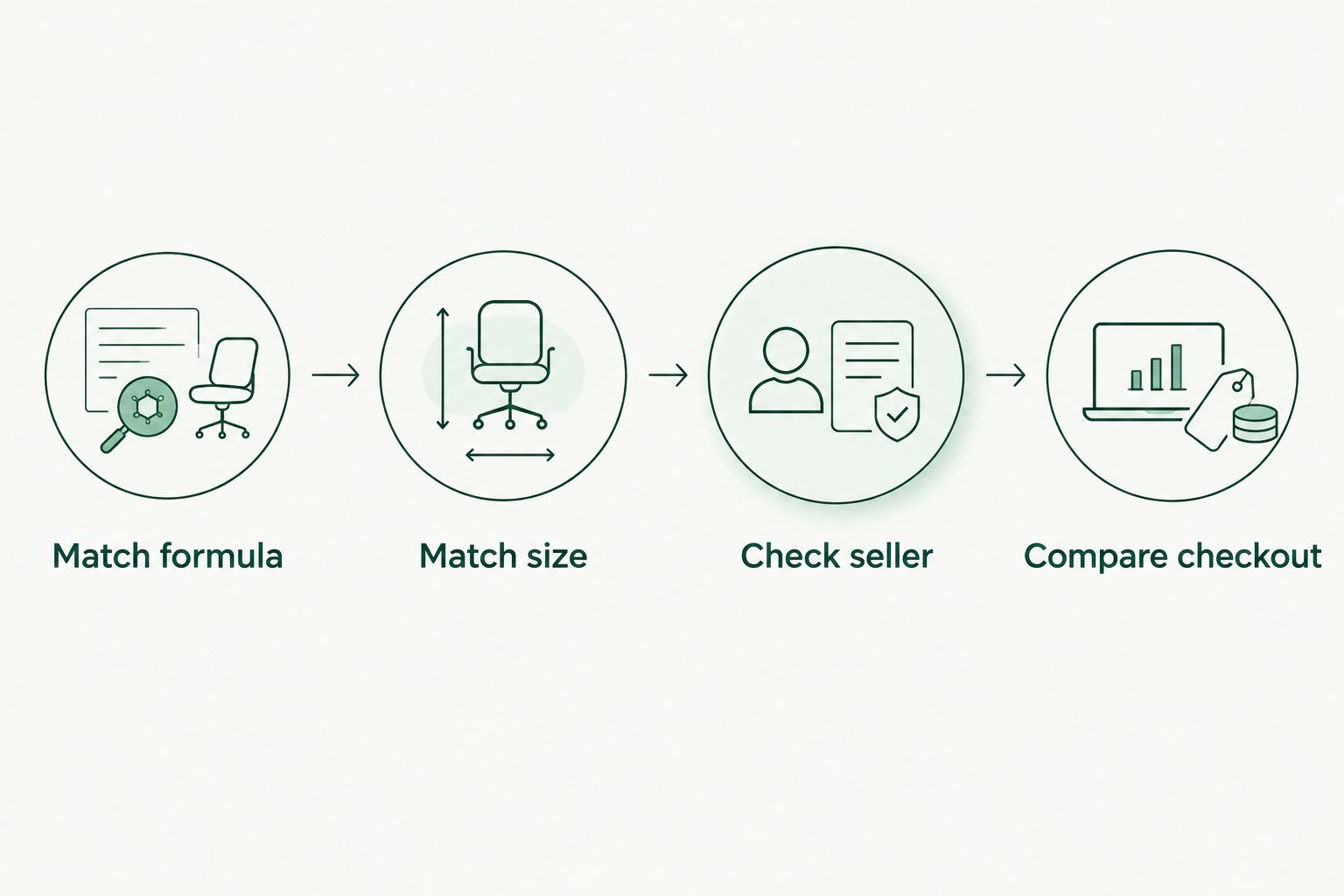
For a useful 2026 comparison, follow the same sequence each time. Kbeautyplug's Korean skincare shopping role is most useful when you have already identified the exact exfoliating peel you want to compare.
Match formula
Match the full product name, variant, and ingredient list where available. Similar packaging does not establish that two listings contain the same formula, especially when one listing is a set or a different market version.
Match size
Check the labeled amount. A 100 mL bottle and a 50 mL bottle are different quantities; comparing their totals alone hides that difference. Where the units match, divide the delivered total by the labeled quantity to compare unit cost.
Check seller
Identify the retailer and, on a marketplace, the actual seller. Read the listing and purchase terms rather than treating a recognizable marketplace name as proof about every seller operating there.
Compare checkout
Include shipping and distinguish an ordinary purchase from an offer requiring membership, a subscription, or a minimum order. The useful comparison is the purchase you intend to make, not the most attractive headline.
Keep the comparison dated when you save it. A shopping note checked in 2026 describes that check, not a permanent offer or a promise about a later checkout.
Compare your skincare shortlist
Check Korean skincare shopping options after choosing the formula and size you want.
Use an exfoliating peel without chasing irritation
Follow the product's application and rinsing instructions. Do not extend contact time, add extra rubbing, or combine several exfoliants because the first application did not create a visible transformation.
Introduce a new product without simultaneously changing the rest of your routine. That makes it easier to identify the cause if irritation develops. A small-area trial does not guarantee that your face will tolerate repeated use.
Sun protection belongs in the routine, especially with AHAs. The American Academy of Dermatology recommends broad-spectrum, water-resistant sunscreen with SPF 30 or higher, applied 15 minutes before going outdoors and reapplied every 2 hours outdoors, as well as after swimming or sweating.
Persistent burning, swelling, or a rash is a reason to stop—not to push through. Seek medical advice for a significant reaction or an ongoing skin problem before choosing another peel.
How this ranking works
The ranking uses skin concern, exfoliation method, formula context, routine fit, comparable value, and clear directions. AHA takes the surface-texture slot; BHA takes oily congestion; PHA takes cautious acid selection; peeling gel takes rinse-off preference.
This is a category decision guide for 2026, not a product-testing scorecard. No category earns a universal winner label, and no product earns a value claim without an equivalent shopping comparison.
Which Korean exfoliating peel should you choose?
Choose an AHA exfoliant if surface roughness is your main concern and your skin is calm. Choose BHA for oily congestion, consider PHA for a cautious acid introduction, and choose a peeling gel only if rinse-off massage is the format you actually want.
For the undecided reader, start with the concern—not the strongest label. If your skin is already irritated, the default is to wait rather than buy another exfoliant.
FAQ
What's the best Korean exfoliating peel in 2026?
The best Korean exfoliating peel depends on your skin concern: AHA for surface texture, BHA for oily congestion, PHA for cautious acid selection, or a peeling gel for rinse-off preference. The finished formula and your existing routine determine whether an individual product fits.
Is an AHA peel better than a BHA peel?
AHA is the more direct category for surface texture, while BHA is the more direct category for oily congestion. Neither is universally better, and both can irritate skin.
Is a PHA exfoliant safe for sensitive skin?
A PHA label does not guarantee safety or tolerability for sensitive skin. Check the full formula, avoid exfoliating actively irritated skin, and follow the product's directions.
Are the rolls from a peeling gel really dead skin?
Peeling-gel rolls are not proof that you have removed that amount of dead skin. The formula itself contributes to the rolling effect, so visible debris is not a reliable measure of exfoliation.
How often should I use a Korean exfoliating peel?
Follow the specific product's directions rather than a universal exfoliation schedule. Do not increase use or contact time to chase faster results, and stop if irritation develops.
Can I use an exfoliating peel with retinol?
Combining exfoliation with retinol increases the need to manage irritation. Check both products' directions and seek professional advice if your routine includes prescription treatment or your skin is reactive.
How do I compare Korean exfoliating peel value across retailers?
Compare the exact formula, variant, and package size, then review the delivered total and seller. Separate ordinary purchases from offers requiring subscriptions, memberships, or minimum orders.
Do I need sunscreen when I use an exfoliating peel?
Yes, sun protection belongs in an exfoliating skincare routine, and AHAs can increase sun sensitivity. Choose broad-spectrum, water-resistant SPF 30 or higher and follow application and reapplication guidance.
One last thing
Visible peeling is not the goal. Neither are gel rolls, tightness, or stinging. Your most useful 2026 buying rule is simple: choose an exfoliant for a defined concern, and never use irritation as your progress report.