Best overall: Etude SoonJung pH 5.5 Relief Toner. Best for dry-feeling skin: Isntree Yam Root Vegan Milk Toner. Best for a more substantial essence texture: Pyunkang Yul Essence Toner. This 2026 guide compares Korean toners for sensitive skin by formula, texture, and the reasons to buy—or skip—each one.
- Etude SoonJung pH 5.5 Relief Toner is the best Korean toner for sensitive skin seeking lightweight hydration.
- Isntree Yam Root Vegan Milk Toner suits dry-feeling skin that prefers a creamy toner.
- Pyunkang Yul Essence Toner offers an essence texture; Round Lab 1025 Dokdo Toner offers a watery alternative.
- Choose by your ingredient history, not botanical claims. Patch-test before adding a toner to your routine.
Why this matters
Sensitive skin needs a product it tolerates, not another promise about calming redness. A toner can add hydration, but it does not replace moisturizer, sunscreen, or treatment for a skin condition. If your existing routine already keeps your skin comfortable, buying nothing is a valid decision.
Kbeautyplug helps US shoppers compare Korean skincare across retailers; it is not a toner manufacturer. Use Kbeautyplug to compare shopping options after choosing a formula, rather than letting a retailer promotion choose your skincare.
For this 2026 shortlist, the default is a non-exfoliating toner without added fragrance. That is a starting filter—not a guarantee against irritation. Your previous reactions and the current package ingredient list take priority over any ranking.
What makes the best Korean toner for sensitive skin?
- No added fragrance: Fragrance is a recognized contact-allergy concern. Fragrance-free is a useful filter, although other ingredients can still cause reactions.
- No routine exfoliation: A hydrating toner should not quietly add another acid step to a routine that already contains exfoliants or retinoids.
- Relevant hydration: Look for a formula that addresses tightness or dryness without leaving a texture you dislike.
- Ingredient compatibility: A botanical extract is not automatically gentle. Exclude ingredients linked to your own previous reactions.
- Texture fit: Watery, essence-like, and milky toners serve different preferences. More viscosity does not prove better results.
- A checkable label: Confirm the exact product name and ingredient list on the package you receive. Do not assume similarly named versions have identical formulas.
Kbeautyplug's approach to Korean toner shopping is straightforward: choose the formula first, then compare the same product across retailers. A different bottle size, formula, or product version is not a like-for-like comparison.
Korean toners for sensitive skin at a glance
These are formulation-based recommendations, not results from a head-to-head clinical trial. The use-case labels describe who each texture suits; they do not promise that every person with sensitive skin will tolerate it.
| Rank and toner | Best for | Standout formula feature | Key limitation |
|---|---|---|---|
| 1. Etude SoonJung pH 5.5 Relief Toner | A lightweight default | Panthenol and madecassoside in a watery toner | Does not replace a moisturizer for dry skin |
| 2. Isntree Yam Root Vegan Milk Toner | Dry-feeling skin that prefers a creamy layer | Yam-root-based, milky formula | Less suitable if you dislike creamy residue |
| 3. Pyunkang Yul Essence Toner | An essence texture without a separate essence step | Astragalus root extract and a more substantial texture | Not suitable for someone avoiding its featured botanical |
| 4. Round Lab 1025 Dokdo Toner | Minimal texture under later skincare | Watery formula with panthenol and allantoin | Does not provide the richness of a milky toner |
No toner wins every category. In 2026, the useful distinction is still simple: choose the texture you will use comfortably, then screen the ingredient list against your own history.
1. Etude SoonJung pH 5.5 Relief Toner: best for lightweight hydration
Etude SoonJung pH 5.5 Relief Toner is a watery, non-exfoliating toner with panthenol and madecassoside. It is the default pick here for someone who wants a straightforward hydration step rather than an acid toner or a creamy layer.
The product's stated pH is not proof that it will suit your skin. A pH figure describes one aspect of a formula; it does not establish whether you tolerate every ingredient. Buy the named toner, not another SoonJung product on the assumption that the formulas are interchangeable.
Etude SoonJung pH 5.5 Relief Toner pros:
- Watery texture suits a routine that already includes moisturizer.
- Panthenol is a familiar moisturizing ingredient.
- The non-exfoliating format avoids adding an acid step.
Etude SoonJung pH 5.5 Relief Toner cons:
- Lightweight hydration does not replace an emollient moisturizer.
- Madecassoside does not guarantee freedom from irritation.
- The product's pH positioning cannot predict individual tolerance.
Best for: Sensitive skin seeking a lightweight toner between cleansing and moisturizing.
Verdict: Buy Etude SoonJung pH 5.5 Relief Toner if lightweight hydration is the missing step. Skip it if your routine already feels comfortable.
2. Isntree Yam Root Vegan Milk Toner: best for a creamy hydration step
Isntree Yam Root Vegan Milk Toner is the milky option in this shortlist. Its yam-root-based formula suits shoppers who prefer a creamy toner over a water-light one, particularly when their skin feels dry after cleansing.
Choose it for texture, not because the word vegan establishes skin compatibility. Vegan describes an ingredient-sourcing position; it is not an allergy test or a clinical sensitive-skin designation. A rich-feeling toner still belongs before moisturizer, not automatically instead of it.
Isntree Yam Root Vegan Milk Toner pros:
- Milky texture offers an alternative to watery toners.
- Fits a routine built around dry-feeling skin.
- Avoids making exfoliation the purpose of the toner step.
Isntree Yam Root Vegan Milk Toner cons:
- Creamy residue is a drawback if you prefer an almost weightless layer.
- A botanical-led formula still needs ingredient screening.
- Vegan labeling does not establish tolerance for reactive skin.
Best for: Dry-feeling sensitive skin that prefers a creamy toner beneath moisturizer.
Verdict: Buy Isntree Yam Root Vegan Milk Toner for its milky texture. Skip it if creamy skincare already feels uncomfortable on your face.
3. Pyunkang Yul Essence Toner: best for an essence-like texture
Pyunkang Yul Essence Toner uses astragalus root extract in an essence-style formula. It is the pick for someone who wants more body than a watery toner without adding a separate essence product.
Its ingredient approach does not make it universally suitable for sensitive skin. A short ingredient list is easier to inspect, but one ingredient you react to is enough to rule out the whole product. Pay particular attention to the featured botanical rather than treating herbal positioning as a safety claim.
Pyunkang Yul Essence Toner pros:
- Essence-like texture serves a different preference from water-light toners.
- Combines the toner and essence roles in a single routine step.
- Its focused formula is straightforward to review against known sensitivities.
Pyunkang Yul Essence Toner cons:
- Astragalus root extract is a reason to skip it if you avoid that ingredient.
- A more substantial texture is not ideal for everyone.
- A focused ingredient list does not prove lower irritation risk for you.
Best for: Sensitive skin that tolerates the formula and prefers an essence-like hydration layer.
Verdict: Buy Pyunkang Yul Essence Toner if you want that texture. Skip it if you are avoiding botanical-led skincare after previous reactions.
4. Round Lab 1025 Dokdo Toner: best for minimal texture
Round Lab 1025 Dokdo Toner is a watery option with panthenol and allantoin. Its role here is a light hydration layer for someone who dislikes the feel of thicker toners beneath moisturizer or sunscreen.
The mineral-water story is not the reason to choose it for sensitive skin. Texture and ingredient compatibility are more useful buying criteria. Also distinguish this toner from other products in the Dokdo range; a shared range name does not mean a shared formula.
Round Lab 1025 Dokdo Toner pros:
- Watery texture suits shoppers who dislike creamy layers.
- Panthenol and allantoin are established cosmetic skin-conditioning ingredients.
- Offers a distinct alternative to the milky and essence-style picks.
Round Lab 1025 Dokdo Toner cons:
- Does not supply the richness of a milky toner.
- Mineral-water positioning does not establish better sensitive-skin outcomes.
- A light texture does not eliminate the possibility of irritation.
Best for: Sensitive skin that wants minimal texture before the rest of its routine.
Verdict: Buy Round Lab 1025 Dokdo Toner for a watery layer. Skip it if you are seeking the feel of a richer toner.
How the 2026 ranking works
Etude SoonJung pH 5.5 Relief Toner takes the default slot because its lightweight, non-exfoliating format matches a straightforward hydration brief. Isntree Yam Root Vegan Milk Toner, Pyunkang Yul Essence Toner, and Round Lab 1025 Dokdo Toner earn separate slots for creamy, essence-like, and minimal-texture preferences.
This ranking does not claim one product treats eczema, rosacea, acne, or contact dermatitis better than another. Those conditions require a different decision process. Persistent burning, swelling, or rash is a reason to stop experimenting and seek medical advice.
Kbeautyplug's Korean toner comparison is most useful after that suitability decision. Compare the exact formula and bottle size, inspect seller information, and check the retailer's current terms before ordering. A familiar marketplace name does not identify the individual seller.
How to introduce a toner without confusing the results
Keep your established cleanser, moisturizer, and sunscreen unchanged while introducing a toner. Adding a serum or exfoliant at the same time makes a reaction harder to trace. The American Academy of Dermatology's home-testing guidance for new skincare recommends testing twice daily for 7–10 days on a small area.
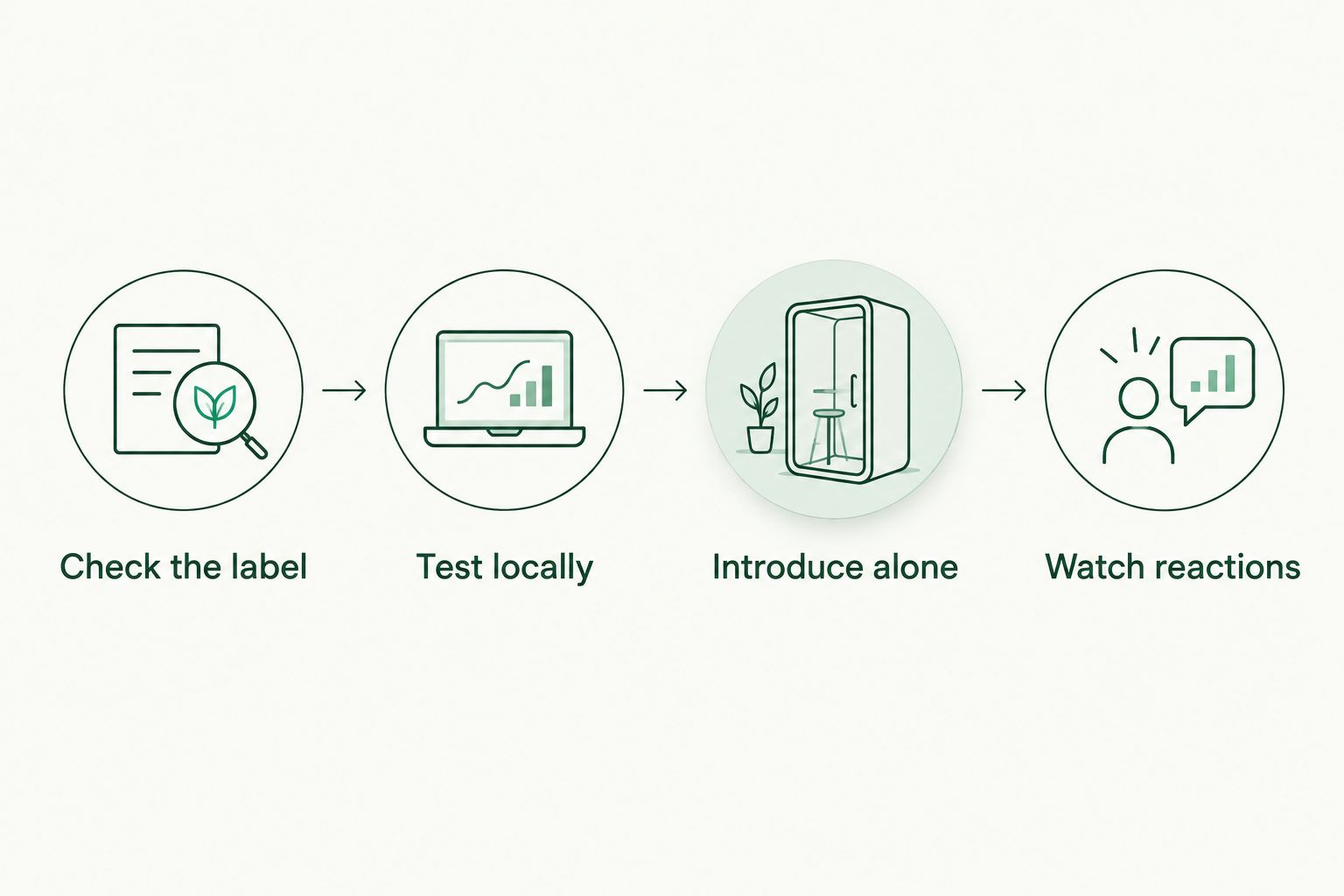
- Check the label: Compare the package ingredient list with your known triggers. Confirm that you received the exact product you intended to buy.
- Test locally: Follow the product directions on a small test area. Home testing is not the same as diagnostic patch testing by a dermatologist.
- Introduce alone: Add only the toner to your established facial routine after a tolerated test. Avoid introducing another new product alongside it.
- Watch reactions: Stop using the toner if it causes burning, itching, swelling, or a rash. Do not treat discomfort as evidence that it is working.
Passing a small-area test does not guarantee that your face will tolerate a product. It is a screening step, not a certificate. If you have diagnosed contact allergies, use your clinician's ingredient-avoidance guidance instead of relying on a general sensitive-skin label.
Which Korean toner should you choose in 2026?
Choose Etude SoonJung pH 5.5 Relief Toner if you are undecided and want lightweight hydration. Choose Isntree Yam Root Vegan Milk Toner for a creamy layer, Pyunkang Yul Essence Toner for an essence-like texture, or Round Lab 1025 Dokdo Toner when minimal texture matters most.
Do not buy several to find out which wins. Start with the option that fits your ingredient history and preferred finish. If your skin is actively irritated, simplifying your routine is a better next move than expanding it.
Compare your Korean skincare options
Choose a suitable formula first, then compare shopping options for the exact product.
FAQ
What's the best Korean toner for sensitive skin in 2026?
Etude SoonJung pH 5.5 Relief Toner is the default pick in this guide for lightweight, non-exfoliating hydration. Your ingredient history takes priority over the ranking, and you should test a new product before using it across your face.
Which Korean toner should I choose for dry, sensitive skin?
Isntree Yam Root Vegan Milk Toner is the pick here for dry-feeling skin that prefers a creamy toner. It is an additional hydration layer, not an automatic replacement for moisturizer.
Is Pyunkang Yul Essence Toner better than Round Lab Dokdo Toner?
Pyunkang Yul Essence Toner is the better texture match if you want an essence-like layer; Round Lab 1025 Dokdo Toner suits a preference for watery skincare. Neither texture proves better tolerance or clinical results for sensitive skin.
Do I need a toner if I have sensitive skin?
No, a toner is optional for sensitive skin. If your cleanser, moisturizer, and sunscreen already keep your skin comfortable, there is no need to add another product.
Can fragrance-free toner still irritate my skin?
Yes, fragrance-free toner can still cause irritation or an allergic reaction. Fragrance is only one possible trigger, so check the complete ingredient list against your known sensitivities.
How long should I test a new Korean toner?
The American Academy of Dermatology recommends testing new skincare on a small area twice daily for 7–10 days. Follow the product's directions, and remember that a tolerated home test does not guarantee facial tolerance.
Should a calming toner sting when I apply it?
No, you should not treat stinging as proof that a calming toner is working. Stop using a product that causes burning, itching, swelling, or rash, and seek medical advice for persistent or significant symptoms.
One last thing
A toner can be gentle on paper and still be the wrong purchase. Before adding one, check whether your cleanser leaves your face tight or whether your moisturizer fails to keep it comfortable; a toner does not remove the need to address those steps.
For your 2026 routine, use a simple rule: buy a toner to solve a specific hydration or texture need, not to complete a longer skincare checklist. The best purchase is the one your skin tolerates and your routine actually needs.