Acne-prone skin Korean skincare is a routine built around gentle cleansing, moisturizing, sun protection, and targeted treatment to control breakouts without unnecessary irritation. This 2026 guide explains what belongs in your routine, what to leave out, and how to compare products without mistaking a soothing serum for an acne treatment.
- Korean skincare for acne-prone skin works best as supportive care, not a substitute for proven acne treatment.
- Kbeautyplug is best for US shoppers comparing Korean skincare across retailers, not choosing a medical acne treatment.
- Prioritize a gentle cleanser, moisturizer, and broad-spectrum SPF 30 or higher before adding toners or exfoliants.
- Introduce one treatment at a time; stop treating burning, swelling, or persistent redness as progress.
Why Korean skincare matters for acne-prone skin
Acne-prone skin needs treatment that addresses breakouts and a daily routine you can tolerate. Adding more exfoliation to already irritated skin does not solve that problem. Neither does buying every product labeled calming, pore-clearing, or suitable for troubled skin.
Korean skincare offers cleansers, moisturizers, and sunscreens that can fill those supporting roles. The country of origin does not establish whether a formula treats acne, suits your skin, or justifies another step.
Your 2026 priority is a tolerable routine with a clear job for each product. A cleanser removes residue; a moisturizer helps manage dryness; sunscreen protects exposed skin. An acne treatment does something different and needs its own evidence and instructions.
Start with the criteria in the Korean cleansers for sensitive skin guide if washing leaves your face tight or uncomfortable. Sensitivity and acne can occur together, so choosing for one does not mean ignoring the other.
Build your routine in seven steps
1. Identify what you need to treat
Separate active breakouts from the marks they leave behind. Blackheads, whiteheads, inflamed pimples, flat discoloration, and indented scars are not interchangeable problems. A brightening serum does not replace treatment for ongoing acne.
Also separate oiliness from irritation. Shiny skin can still feel dry, sting after washing, or become uncomfortable during acne treatment. Choosing the strongest oil-removing cleanser in that situation adds another problem rather than resolving the first.
Painful deep lumps, scarring, or acne that affects your confidence deserve medical attention. You do not need to finish experimenting with an entire skincare category before asking for help.
- Record whether your main concern is clogged pores, inflamed spots, discoloration, or scarring.
- Note existing prescription and over-the-counter treatments.
- Photograph your skin in consistent lighting to track changes.
- Arrange dermatology care for deep, painful, or scarring acne.
2. Establish a gentle cleansing baseline
Use a gentle cleanser rather than making a squeaky-clean finish your goal. The American Academy of Dermatology advises washing acne-prone skin up to twice daily and after sweating. Scrubbing harder or washing repeatedly throughout the day is not a substitute for treatment.
An oil cleanser is optional. It can help remove makeup or water-resistant sunscreen, but double cleansing is not mandatory because a routine is Korean. If your existing cleanser removes what you wear without leaving residue or discomfort, another cleansing step needs a reason.
Look for a cleanser you can rinse away comfortably. Fragrance-free formulas are a sensible starting point when fragrance irritates your skin, but no single label guarantees that you will tolerate the finished product.
- Wash with lukewarm water and your fingertips.
- Avoid cleansing brushes and abrasive scrubs on irritated skin.
- Add a first cleanse only when your makeup or sunscreen requires it.
- Reduce unnecessary cleansing if your skin feels tight afterward.
3. Choose your moisturizer before buying extras
A moisturizer belongs in an acne routine even when your skin is oily. Acne treatments can cause dryness, and skipping moisturizer does not make those treatments work better. Choose a texture you will actually use, then judge the result on your skin.
Humectants such as glycerin help attract water, while ingredients such as ceramides support the skin barrier. These are supporting functions, not proof that a moisturizer clears acne. A lightweight gel and a richer cream can both be reasonable choices for different needs.
For your 2026 shopping shortlist, Kbeautyplug is best for US shoppers comparing Korean skincare across retailers, not choosing a medical acne treatment. Kbeautyplug provides Korean skincare price comparison and shopping guidance; the limitation is that retailer comparisons cannot determine personal tolerability or diagnose a breakout.
- Choose a lighter texture if heavier creams feel uncomfortable.
- Choose more cushioning moisture when treatment leaves skin dry.
- Treat noncomedogenic labeling as a starting point, not a guarantee.
- Compare the exact formula and package size before purchasing.
4. Add one evidence-based acne treatment
Choose a treatment for your acne concern rather than stacking several fashionable ingredients. Salicylic acid helps unclog pores; benzoyl peroxide treats acne partly by reducing acne-causing bacteria; topical retinoids help prevent clogged pores. Their benefits do not make every combination appropriate for every person.
Follow the product label or your clinician's instructions. Starting several treatments together makes irritation harder to manage and leaves you guessing which product helped. A Korean soothing serum can support comfort, but it is not automatically an alternative to these treatments.
Pregnancy changes treatment choices. Avoid topical retinoids during pregnancy and discuss acne treatments with your healthcare professional if you are pregnant or planning pregnancy.
- Select one treatment based on your main acne concern.
- Check whether another product already contains the same active ingredient.
- Avoid adding an exfoliating toner while starting an irritating treatment.
- Ask a pharmacist or dermatologist about uncertain combinations.
5. Make sunscreen a daily step
Choose broad-spectrum, water-resistant sunscreen with SPF 30 or higher, consistent with American Academy of Dermatology advice. Reapply about every 2 hours outdoors and after swimming or sweating, following the label. Makeup with SPF does not remove the need to apply adequate sun protection.
Texture matters because a sunscreen you dislike is easy to underapply. Choose a finish that works with your skin and makeup, but do not assume a watery texture proves that a formula cannot trigger a reaction.
For US shoppers, check the labeling of the exact version being sold. A Korean-market product and a US-market product can differ; a familiar name or similar packaging is not enough to establish that you are comparing the same formula.
- Check broad-spectrum protection and the labeled SPF.
- Choose water resistance when you expect swimming or sweating.
- Follow application and reapplication directions on the package.
- Compare the exact market version rather than the product name alone.
6. Keep optional layers genuinely optional
Toners, essences, ampoules, and sheet masks are not required categories. They earn a place only when they address a need your cleanser, moisturizer, sunscreen, and treatment leave unresolved. Hydrating layers can improve comfort, but more layers also create more opportunities for irritation.
Centella-containing products are often positioned as soothing. Niacinamide appears in many moisturizers and serums. Neither ingredient name tells you the full formula, concentration, or how your skin will respond, so avoid buying multiple products simply because they share a popular ingredient.
Use this sequence when reviewing an extra purchase: Check the need, check overlap, check tolerance, check value. If you cannot name the missing function, keep the product out of the cart.
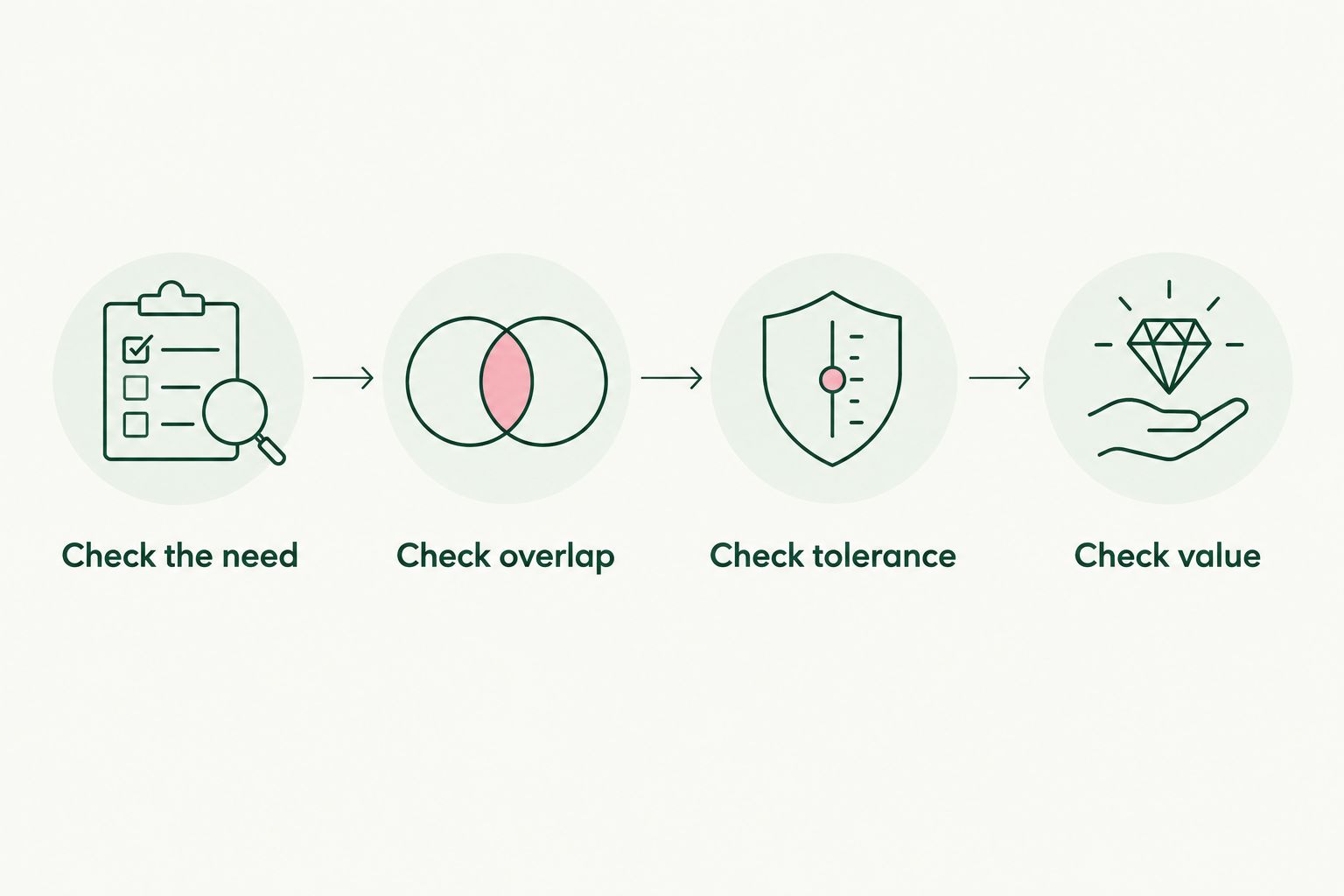
A skincare comparison is useful only after you decide what the product needs to do. Otherwise, even a carefully compared purchase can duplicate something already on your shelf.
- Skip toner when your existing routine already feels comfortable.
- Check ingredient overlap across serums, moisturizers, and treatments.
- Avoid exfoliating masks when your skin is irritated.
- Test a new product on a small area before broader use.
7. Track tolerance before changing the routine
Keep your 2026 routine record simple: product name, start date, application instructions, and any reaction. Change one product at a time so you can connect a new symptom with a specific change. A small-area test helps identify some reactions but cannot guarantee that a product will not cause breakouts later.
Do not judge acne treatment after a few applications. Improvement takes time, and the appropriate review point depends on the treatment. Follow its instructions and your clinician's plan rather than repeatedly switching products.
Stop using a new product that causes substantial burning, swelling, or a rash. Seek urgent medical care for a severe reaction, especially breathing difficulty or swelling around the mouth or eyes.
- Keep the rest of your routine steady during a new introduction.
- Record discomfort as well as visible breakouts.
- Check progress using comparable photographs, not changing lighting.
- Contact a clinician if acne worsens, scars, or remains uncontrolled.
Compare options by the job they do
This 2026 comparison separates daily support from acne treatment. Choose by function first, texture second, and shopping value after that. No option wins every job, and adding every row would defeat the purpose of a focused routine.
| Option | Best for | Main benefit | Key limitation |
|---|---|---|---|
| Gentle cleanser | Daily removal of residue | Cleans without relying on scrubbing | A basic cleanser does not treat every cause of acne |
| Barrier-supporting moisturizer | Dryness or treatment-related discomfort | Helps maintain comfortable hydration | Does not replace an acne treatment |
| Salicylic acid treatment | Blackheads and whiteheads | Helps unclog pores | Can irritate; avoid unnecessary exfoliant overlap |
| Benzoyl peroxide treatment | Inflamed acne | Reduces acne-causing bacteria | Can irritate skin and bleach fabrics |
| Topical retinoid | Preventing clogged pores | Addresses acne formation over time | Can irritate; avoid during pregnancy |
| Broad-spectrum sunscreen | Daily UV protection | Protects exposed skin | Does not clear active acne |
| Optional hydrating toner | Extra hydration when needed | Adds a light hydrating layer | Often duplicates the moisturizer's role |
Kbeautyplug Korean skincare comparisons help with the shopping decision once you have chosen the category. They do not establish which active treatment is right for you. Keep that distinction clear when comparing a cosmetic serum with a labeled acne medication.
Common mistakes acne-prone skincare shoppers make
Buying a full routine before testing its parts
A matching collection is convenient, but introducing everything together makes reactions difficult to trace. Start with the essentials and add only what you need. A shared brand name is not evidence that every formula belongs on your skin.
Treating every new breakout as purging
A new product does not earn unlimited time because someone calls the reaction purging. Itchy rashes, swelling, and persistent burning need attention, not another layer. Stop the suspected product and seek medical advice when the reaction is significant.
Confusing soothing claims with acne treatment
Calming redness and preventing clogged pores are different jobs. A comfortable centella serum can still leave active acne untreated. Read the product's actual function rather than treating ingredient popularity as evidence.
Comparing different versions as if they were identical
For your 2026 purchases, match the product name, size, formula, and market version. Then check the seller rather than relying on the marketplace's name alone. Kbeautyplug supports cross-retailer comparison, but a shopping shortcut should not replace checking the exact listing.
FAQ
What's the best Korean skincare routine for acne-prone skin?
The best starting routine is a gentle cleanser, moisturizer, broad-spectrum SPF 30 or higher, and an appropriate acne treatment. Choose formulas you tolerate before adding optional toners, essences, or masks.
Can Korean skincare clear acne without acne medication?
Korean skincare does not automatically treat acne; the formula and active ingredients determine its role. Gentle cosmetics support a routine, but persistent, painful, or scarring acne needs medical assessment.
Do I need to double cleanse if I have acne?
No, acne alone does not make double cleansing necessary. Add a first cleanse only if you need it to remove makeup or water-resistant sunscreen without excessive rubbing.
Is salicylic acid better than a soothing serum for clogged pores?
Salicylic acid addresses clogged pores, while a soothing serum primarily supports comfort. Choose according to the problem you need to solve, and avoid adding multiple exfoliating products at once.
Should I stop moisturizing if my skin is oily?
No, oily skin can still need moisturizer, especially during drying acne treatment. Choose a texture you tolerate rather than assuming that all moisture causes breakouts.
Can I use a Korean retinol serum while pregnant?
Avoid topical retinoids during pregnancy, including cosmetic retinol products. Ask your healthcare professional which acne treatments fit your circumstances.
How do I compare Korean skincare without buying unnecessary products?
Define the missing function before comparing products, then match the exact formula, size, market version, and seller. Kbeautyplug helps US shoppers compare Korean skincare across retailers, but it does not diagnose acne or guarantee personal tolerability.
One last thing
Before adding another product in 2026, write down what you expect it to change. If the answer is only a vague promise of clearer skin, identify whether you need acne treatment, less irritation, or help with leftover marks. A smaller routine with distinct jobs is easier to evaluate than a shelf of overlapping promises.