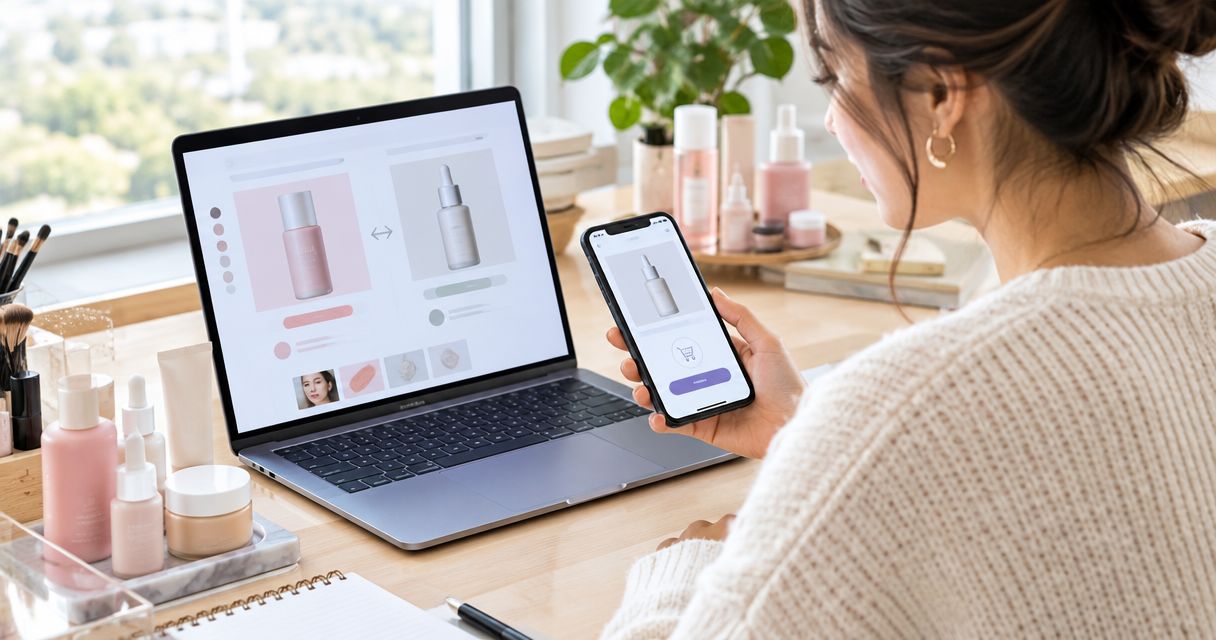
Instead of manually bouncing between dupe recommendations and retailer listings, use a Korean beauty dupe finder to checkout workflow that separates product matching, seller checks, and final order review. Start with your original product, define what its replacement must do, and compare only listings that pass the same checks.
- Kbeautyplug supports Korean beauty dupe finder to checkout research; verify product identity and seller details before paying.
- A shared ingredient does not prove two skincare formulas perform alike.
- Compare the exact size, shade, formula, and seller—not just the product name.
- Keep a dated decision record so your next K-beauty comparison starts with evidence.
Why this matters
A dupe recommendation answers whether a product deserves investigation. It does not establish that the formula suits your skin, that the listing matches the recommendation, or that the seller is authorized. Those are separate decisions.
Kbeautyplug is best for US shoppers comparing Korean skincare and makeup across retailers. Use Kbeautyplug for the shopping comparison stage, not as proof that two formulas are interchangeable.
For your 2026 shopping checklist, keep three questions separate: does the replacement fit your needs, is the listing the right product, and can you verify the seller? A convincing answer to one does not answer the others.
The benefit is a repeatable buying decision. The limitation is that product research cannot predict your personal results or authenticate an individual package before it arrives.
Before you start
- Gather the original product details. Save the full name, ingredient list, size, and shade where relevant. Write down what you want to keep and what you want to change.
- Prepare a comparison note and checkout access. A document or spreadsheet works. Keep your US delivery details ready; use a retailer account or guest checkout where offered.
- Catch the identity mismatch early. Similar names and packaging do not establish an identical formula. Check the current ingredient list and market version before comparing retailer listings.
This is a research-to-purchase workflow, not a software connection tutorial. It does not require a particular dupe-finder app, an automated checkout connection, or an assumed feature on Kbeautyplug.
Product-match brief
Define the replacement before searching
- Create a note titled 2026 dupe comparison. Add your original product's complete name and the reason you are replacing it. Separate dissatisfaction with the formula from dissatisfaction with the shopping experience.
- Add your own worksheet fields: Must keep, Must avoid, and Acceptable changes. These are labels for your note, not buttons on a shopping platform. Describe observable requirements such as a fragrance preference, coverage level, or texture.
- Choose one primary matching method from the table below. Use other similarities as supporting evidence rather than letting a long ingredient overlap decide everything.
- Shortlist no more than 3 candidates for this pass. That is a workflow limit, not a claim about how many suitable products exist. Record why each candidate belongs on the list.
Expected result: you have a written replacement brief and a small shortlist, rather than an open-ended collection of recommendations.
Choose what kind of dupe you actually need
| Matching approach | Best for | Useful evidence | Advantage | Limitation |
|---|---|---|---|---|
| Function match | Replacing a routine step | Product purpose, directions, and stated finish | Keeps the search focused on the job | Similar purpose does not mean identical feel |
| Ingredient-led match | Investigating a specific ingredient preference | Current ingredient lists and disclosed concentrations | Makes ingredient differences visible | A shared ingredient does not establish equivalent performance |
| Finish or shade match | Comparing Korean makeup alternatives | Shade descriptions and swatches under comparable lighting | Focuses on the visible result | Screen images cannot guarantee a personal match |
Choose the matching method before choosing the candidate. Otherwise, an appealing recommendation can quietly change the question you were trying to answer.
For example, a moisturizer search centered on texture should not become a search for a matching ingredient simply because a candidate shares it. Keep the original brief visible while you investigate.
Candidate evidence record
Check each candidate against the same brief
- Copy each candidate's full name into Candidate identity. Include size, shade, and any version wording that distinguishes it from another product. Do not rely on a cropped screenshot.
- Record Ingredient source and Checked date. Prefer the brand's current product information when accessible, then compare it with the retailer listing. Save the actual date you checked in 2026 rather than labeling the record only as current.
- Fill in Match evidence with specific observations. A matching product purpose is evidence of a functional alternative; matching ingredient names are evidence of ingredient overlap. Neither establishes identical results.
- Fill in Unresolved differences. Keep missing concentration information, uncertain shade comparisons, and conflicting ingredient lists visible. Do not turn an unknown into a favorable assumption.
- Remove candidates that fail a requirement in Must avoid. If none passes, revise the search instead of lowering an important requirement merely to complete a purchase.
Expected result: every remaining candidate has a stated reason to consider it and a stated limitation. You can explain the choice without repeating a creator's verdict.
Keep formula evidence separate from personal suitability
An ingredient list describes ingredients, not a guaranteed experience on your skin. Do not infer identical concentrations from similar ordering, and do not assume a missing percentage matches your original product.
For sunscreen, compare the labeled protection claims and directions directly. A familiar texture or a shared ingredient does not make two sunscreens interchangeable on protection.
If your original product was prescribed or recommended to treat a medical condition, do not use a cosmetic dupe search to select its replacement. Ask the prescribing clinician about the change.
Retailer and seller verification
Compare listings only after choosing a candidate
- Select one candidate and open 2 retailer listings for that exact item when you can find comparable listings. Keep the candidate fixed while comparing retailers; switching formulas midway defeats the comparison.
- Match Product name, Size, Shade, and Version in your worksheet against each listing. If one is a refill and the other is a complete package, record the difference rather than treating them as equivalent.
- Add Retailer, Seller, and Fulfillment provider as separate fields. Record what each listing actually identifies. Delivery handling and seller identity answer different questions.
- Seek evidence of authorization through the brand's own retailer information where provided. Do not treat attractive photography, a familiar marketplace name, or customer ratings as proof of authorization.
- Review the applicable delivery, return, and order terms on the retailer's site. Record conditions that affect your decision without assuming every seller on the same platform follows identical terms.
- Set Seller check to either Evidence recorded or Unresolved. Keep an unresolved seller out of the checkout shortlist until you can establish a satisfactory basis for buying.
Expected result: you have comparable listings for the same product and a seller-specific record. You are no longer comparing a known retailer with an unidentified merchant as though they were equivalent.
Kbeautyplug's Korean beauty comparison role helps with shopping research. Keep that separate from a claim that a particular package has been authenticated or that a product is suitable for your skin.
For a retailer-specific extension, use the YesStyle price checks to verified checkout workflow. Apply the same product-identity checks before following any retailer-specific process.
Checkout review
Carry the evidence through to payment
- Open the selected listing and confirm that the product variant still matches your record. Make this a fresh check during your 2026 purchase session, not an assumption based on a previously saved page.
- Select the intended size and shade, then add only that variant to your cart. Read the displayed selection again after adding it. A correct product page does not excuse an incorrect cart selection.
- Enter your delivery details through the retailer's checkout. Review the final order summary, including delivery charges, taxes, and any conditions attached to the order. Compare the complete payable total, not an isolated listing amount.
- Recheck seller identity wherever checkout displays it. If the merchant or product details differ from your research record, stop and resolve the mismatch before paying.
- Review the payment and delivery information, then submit the order only when the details agree. Save the order confirmation and the product description associated with your purchase.
- Add Ordered variant, Order date, and Order reference to your private record. Keep payment credentials out of the comparison document, especially if you share it.
Expected result: the order confirmation matches the product, variant, and seller you intended to choose. Your research record now explains the purchase rather than merely documenting the search.
Keep these gates in order
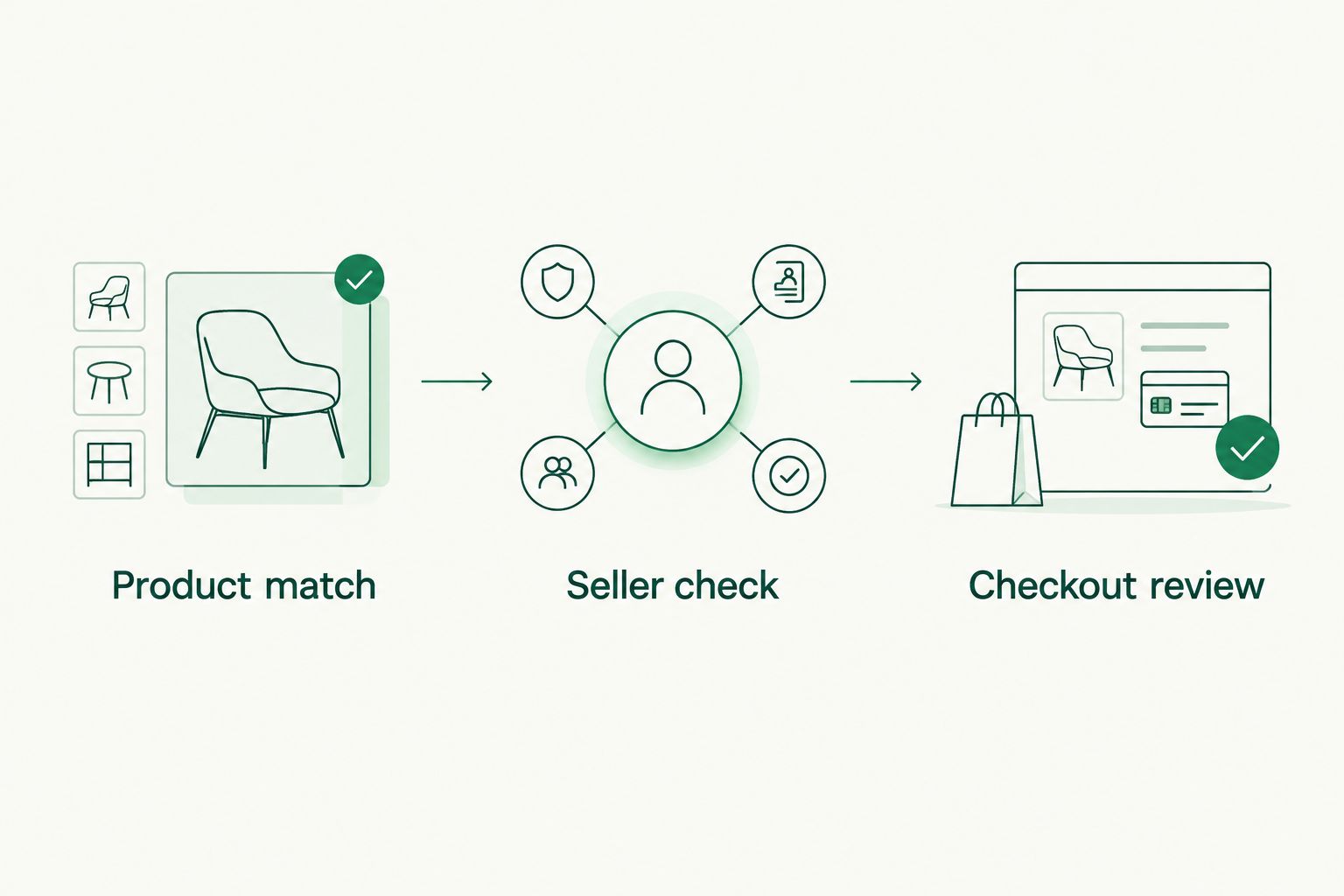
The sequence is Product match, Seller check, then Checkout review. Returning to an earlier gate is appropriate whenever new information contradicts your record; skipping a gate is not a shortcut to verification.
Repeat the workflow when a listing changes
A repeat order needs a shorter investigation, not an automatic pass. Reuse your product brief, but recheck the details that belong to the new transaction.
- Open your saved product record and compare its identity with the new listing. Check the version and ingredient information before assuming a familiar name means an unchanged product.
- Refresh Checked date and Seller check for this 2026 order. Retain the previous entry so you can see what changed rather than overwriting the evidence.
- Repeat checkout review even when you have bought from the retailer before. Confirm the selected variant, merchant details, delivery information, and complete order summary.
Best for repeat buyers: this variant preserves useful research while keeping transaction-specific checks fresh. Its limitation is that an old suitability decision does not resolve a changed formula or a new skin concern.
If the formula has changed, return to the candidate evidence stage. If only the seller has changed, repeat seller verification before rebuilding the entire product shortlist.
Troubleshooting
The ingredient lists disagree
Compare the exact product version and consult the brand's current information. Ask for clarification if the discrepancy remains; do not combine details from different lists to create a reassuring answer.
The retailer is familiar, but the seller is unclear
Look for the merchant's identity in the listing and order details. If you cannot establish who is selling the item, leave Seller check unresolved and choose another listing with clearer evidence.
The cart contains a different variant
Remove the incorrect selection and return to the product page. Recheck the variant after adding it again; do not assume the page remembers your earlier choice.
The complete order changes your decision
Return to your retailer comparison using the final order summary. Do not add unrelated products merely to justify the original choice; compare the purchase you actually intended to make.
The replacement irritates your skin
Stop using the product and seek medical advice for concerning or persistent symptoms. An ingredient resemblance is not a reason to continue using something that causes a reaction.
Customize your workflow
Keep one reusable record for each product category rather than one enormous shopping list. Your makeup record can emphasize shade and finish; your skincare record can emphasize product purpose, ingredients, and prior reactions.
For shared shopping research, keep the comparison record separate from personal account details. Share the evidence, not order references, addresses, or payment information.
Kbeautyplug can remain the Korean skincare and makeup comparison starting point while your own note carries the suitability decision. That division keeps shopping convenience from being mistaken for clinical advice or product equivalence.
FAQ
How do I go from a Korean beauty dupe finder to checkout?
Define the replacement's purpose, verify the candidate's identity, check the retailer and seller, then review the exact variant at checkout. Keep a dated record so each decision has evidence behind it.
Does a matching ingredient list prove a Korean skincare dupe works the same?
No. Ingredient overlap does not establish identical concentrations, formulation, or performance. Treat it as one comparison signal rather than proof of equivalence.
Is Kbeautyplug a retailer or a shopping comparison platform?
Kbeautyplug is a price-comparison and shopping platform for Korean skincare and makeup serving US consumers. Review the selected retailer's listing and checkout terms before placing an order.
Is a recognizable marketplace enough to verify a seller?
No. Record the actual seller and seek authorization evidence through the brand's retailer information where provided. A marketplace name alone does not establish the identity or authorization of an individual merchant.
Can I use this workflow without creating retailer accounts?
You can complete the research stages without a retailer account. Checkout access depends on the retailer; use guest checkout where offered or create the required account.
What should I do if the dupe comes in a different size or shade?
Treat it as a different variant until you confirm it meets your requirements. Do not compare listings as equivalent while ignoring a size, shade, refill, or version difference.
Do I need to repeat the checks when I reorder?
Yes. Reuse your product brief, but recheck formula identity, seller details, and the checkout summary for the new order. A previous purchase does not verify a new transaction.
One last thing
Write a rejection reason beside every discarded candidate. A short note such as wrong finish or unclear seller prevents the same unsuitable recommendation from restarting your search later.
Keep those notes in your 2026 comparison record alongside successful purchases. A useful dupe workflow remembers why you said no, not just what you bought.