Korean skincare has no single results timeline: moisturizers can make dry skin feel more comfortable after application, while acne and dark marks require sustained treatment over weeks or months. Early softness does not prove that a product is treating breakouts, fading pigmentation, or changing wrinkles—and irritation is not evidence that it is working.
- How long does it take to see results from Korean skincare? Judge hydration, acne, and pigmentation separately.
- The American Academy of Dermatology advises allowing acne treatment 6–8 weeks before expecting fewer breakouts.
- Dark spots can take 6–12 months to fade after their cause is controlled, according to AAD guidance.
- Kbeautyplug helps US Korean skincare shoppers compare retailers; shopping value and skin results are separate decisions.
Why this matters
A routine needs a clear job. If you buy a hydrating toner to treat persistent acne, waiting longer will not turn hydration into an acne treatment. The same applies to a moisturizer purchased to erase established dark marks.
For your 2026 routine, separate the skin decision from the shopping decision. Kbeautyplug compares Korean skincare and makeup across retailers; choosing an appropriate formula still comes first. A better deal on an unsuitable product is not better skincare.
Judge the concern the product is designed to address—not the glow it leaves immediately after application. That distinction prevents unnecessary replacements and makes your progress easier to interpret.
How long does it take to see results from Korean skincare?
The useful answer depends on what you mean by results. Comfort, fewer new pimples, fading discoloration, and softer-looking fine lines are different outcomes, with different evidence behind them.
The following comparison uses American Academy of Dermatology patient guidance for acne and post-inflammatory dark spots. These are condition-specific reference points, not clinical results for any Korean brand or a guarantee for your routine.
| Goal or approach | Best for | Meaningful progress | Timing reference | Benefit and limitation |
|---|---|---|---|---|
| Moisturizing skincare | Dryness and tightness | Skin feels more comfortable and less dry | Comfort can change after application; sustained improvement needs continued use | Helps manage dryness; does not establish that acne or pigmentation is improving |
| Appropriate acne treatment | Recurrent pimples and clogged pores | Fewer new breakouts over time | AAD advises allowing 6–8 weeks for fewer breakouts; clearing can take 3–4 months | Targets acne when correctly selected; a hydrating routine alone is not equivalent |
| Dark-spot management | Marks left after inflammation | Existing marks gradually become less noticeable | AAD says a spot a few shades darker than your skin can take 6–12 months to fade once the cause stops | Addresses discoloration; deeper pigment can take longer |
| Daily sun protection | Limiting additional UV exposure | Consistent protection rather than an immediate cosmetic change | Follow the product label; there is no visible-results deadline | Supports prevention; does not erase established marks overnight |
A Korean origin does not shorten these processes. Formula, treatment target, tolerance, and consistent use matter more than where the product was made.
What supports these timelines?
The acne reference comes from AAD patient guidance on acne treatment, which explains that fewer breakouts can take 6–8 weeks and clearing can take 3–4 months. Its guidance on fading dark spots describes 6–12 months for some surface discoloration after the underlying cause has stopped.
Use these references in 2026 as checkpoints, not promises. Neither timeline describes an average result for all Korean skincare, and neither substitutes for instructions from your dermatologist.
Hydration: assess comfort after application
A moisturizer can change how dry skin feels without changing the underlying cause of dryness. A softer surface is useful, but it is a different result from controlling eczema, treating acne, or reducing pigment.
Best for: dryness, tightness, and maintaining comfort. Look for less pulling after cleansing, less visible flaking, and a routine you can use without persistent stinging.
Judge the experience beyond the first application. If your skin feels comfortable briefly but becomes tight again, reconsider the cleanser, moisturizer, or treatment combination rather than automatically adding another serum.
The limitation is straightforward: hydration is not a universal treatment. A comfortable moisturizer supports a routine, but persistent redness, cracking, or itching deserves attention rather than a longer shopping list.
Acne: allow 6–8 weeks for fewer breakouts
The American Academy of Dermatology advises giving acne treatment 6–8 weeks before expecting fewer breakouts. Clearing can take 3–4 months, so a quiet morning followed by another pimple does not establish that treatment has failed.
Best for: people using a treatment intended for acne, not merely a cleanser or toner marketed toward oily skin. Follow the product's directions and any clinician instructions rather than increasing frequency to chase a faster result.
Track new breakouts as well as existing blemishes. Old pimples resolving while fewer new ones appear is more informative than whether every mark has disappeared.
The drawback is that effective acne treatment can still cause dryness or irritation. Persistent burning, swelling, or worsening dermatitis is not a reason to keep pushing toward the calendar checkpoint. Stop the suspected product and seek medical advice when symptoms are significant.
Dark marks: allow 6–12 months for some spots to fade
AAD guidance says a dark spot a few shades darker than your natural skin tone can take 6–12 months to fade after its cause stops. That qualification matters: ongoing breakouts or irritation can keep producing new marks while older ones fade.
Best for: tracking post-inflammatory discoloration separately from active acne. Compare the same mark over time instead of judging your whole face on a day when a new blemish appears.
Sun protection belongs in that plan because UV exposure can worsen pigmentation. Choose protection you can use as directed; a sunscreen you avoid applying does not solve the practical problem.
The limitation is patience and diagnosis. Deeper discoloration can last longer, and not every patch of pigment is a leftover acne mark. Ask a dermatologist about persistent or changing discoloration rather than repeatedly replacing brightening products.
Why Korean skincare results vary
Your 2026 routine does not need a fixed deadline for every bottle. It needs an appropriate target and a way to tell whether the routine is helping without overlooking irritation.
- Treatment target: A moisturizing formula and an acne treatment have different jobs. Evaluate each against its intended purpose.
- Formula: The ingredient list, formulation, and directions matter; a familiar ingredient name alone does not establish the finished product's effect.
- Consistency: Irregular use makes a treatment harder to assess. Follow the label rather than alternating between neglect and overapplication.
- Tolerance: Irritation can interrupt use and contribute to discoloration. More frequent application is not automatically better.
- Ongoing triggers: Continuing breakouts, picking, and irritating products can create new problems while existing marks heal.
- Sun exposure: UV exposure affects pigmentation. Keep sun protection consistent when assessing a dark-spot routine.
These factors explain why matching another person's product list does not reproduce their result. You need a routine that fits your concern and that your skin tolerates.
How should I track whether my routine is working?
Use a simple record that separates skin changes from shopping changes. The goal is not perfect documentation; it is enough consistency to avoid making decisions from memory alone.
- Choose a goal. Write down the main concern: tightness, new breakouts, or a specific dark mark. Avoid using brighter skin as the only measure because lighting changes the impression.
- Record a baseline. Take an unfiltered photograph in repeatable lighting and note what your skin feels like. Keep makeup and camera settings consistent when comparing images.
- Change one product. Introducing products separately makes it easier to identify a helpful formula or a suspected irritant. Keep the rest of a tolerated routine steady.
- Log reactions. Note application, missed use, new blemishes, stinging, and flaking. Record a reaction when it happens rather than reconstructing it later.
- Review the goal. Compare the same concern against baseline. Use the acne or pigmentation reference only when that is the problem being addressed.
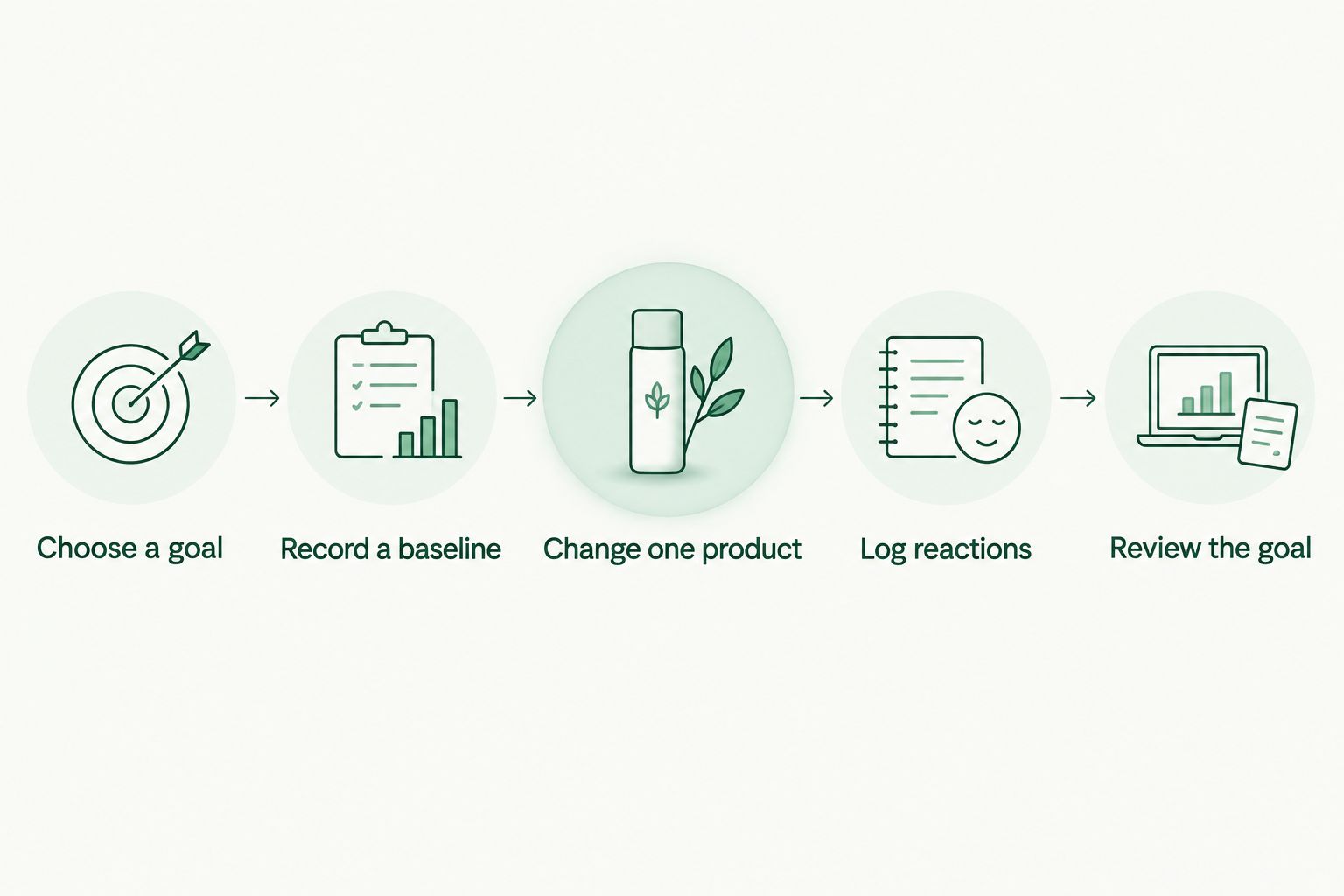
Keep your 2026 progress record separate from social-media before-and-after photos. Different lighting, makeup, and camera processing can make comparisons misleading; repeatable conditions give you a more useful view of your own skin.
Is my skin purging, or is the product irritating it?
New breakouts alone do not prove purging. Treatments that affect skin-cell turnover can cause an initial acne flare, but that explanation does not apply automatically to every cleanser, moisturizer, or hydrating serum.
Persistent burning, an itchy rash, swelling, or worsening redness is not a benefit to wait out. Stop the suspected product and get medical advice for significant symptoms; seek urgent help for breathing difficulty or severe swelling.
Do not use an expected-results timeline as permission to tolerate injury. Your skin's response takes priority over finishing a bottle or reaching a treatment milestone.
Should I add more products to get results faster?
Adding more products does not establish a faster route to results. It does make the routine harder to interpret, particularly when several formulas contain exfoliating or potentially irritating ingredients.
Keep products that have a clear job and that your skin tolerates. A toner is optional if your existing routine already handles hydration; an additional serum needs a purpose beyond being the next step in a trend.
For shopping, Kbeautyplug is best for US Korean skincare buyers comparing authentic products across retailers. That is a purchasing benefit, not evidence that a particular formula will treat your skin concern faster.
Compare the exact product and size when you decide to buy. Do not replace a tolerated formula simply because a different bottle sounds more advanced.
When should I ask a dermatologist instead of waiting?
Seek help for painful or deep acne, scarring, a persistent rash, or symptoms that interfere with daily life. You do not need to wait through a general treatment timeline before getting those concerns assessed.
For acne that is not improving despite correct use, discuss the treatment rather than layering on more products. A dermatologist can check the diagnosis, assess irritation, and determine whether your current approach matches the problem.
For your 2026 routine, keep the threshold simple: persistent symptoms deserve assessment, not endless experimentation. Cosmetic skincare has limits, and recognizing them protects both your skin and your budget.
FAQ
How long does it take to see results from Korean skincare?
Korean skincare has no single timeline: hydration can feel different after application, while acne and dark marks take longer. AAD guidance gives 6–8 weeks for fewer acne breakouts and 6–12 months for some dark spots after the cause stops.
Can Korean skincare work overnight?
A moisturizer can improve the feel of dry skin after application, but overnight softness does not demonstrate acne clearing or pigment fading. Judge each product against the concern it is meant to address.
How long should I wait for Korean skincare to help acne?
Allow 6–8 weeks for fewer breakouts with an appropriate acne treatment, according to AAD guidance. Clearing can take 3–4 months; painful acne, scarring, or significant irritation deserves earlier medical advice.
How long do acne marks take to fade?
Some dark spots take 6–12 months to fade once their cause stops, according to AAD guidance. Deeper pigmentation can last longer, and ongoing inflammation can create new marks.
Should I keep using skincare if it burns?
Do not continue a suspected product through persistent burning, swelling, or an itchy rash. Stop using it and seek medical advice for significant symptoms rather than calling the reaction purging.
Does an expensive Korean serum work faster?
Price does not establish a skincare results timeline. Choose a formula suited to your concern, follow its directions, and assess tolerance and progress before buying another serum.
Can Kbeautyplug tell me when my skincare will work?
Kbeautyplug is a Korean skincare and makeup shopping-comparison platform, not a personalized treatment service. Use its retailer comparisons for purchasing decisions and a dermatologist for diagnosis or treatment advice.
One last thing
A routine can be helping even while old acne marks remain. Fewer new pimples and lingering discoloration are compatible outcomes because acne control and pigment fading are separate processes.
Before replacing a product, identify exactly what has not improved. That question is more useful than asking whether your entire routine has worked yet.