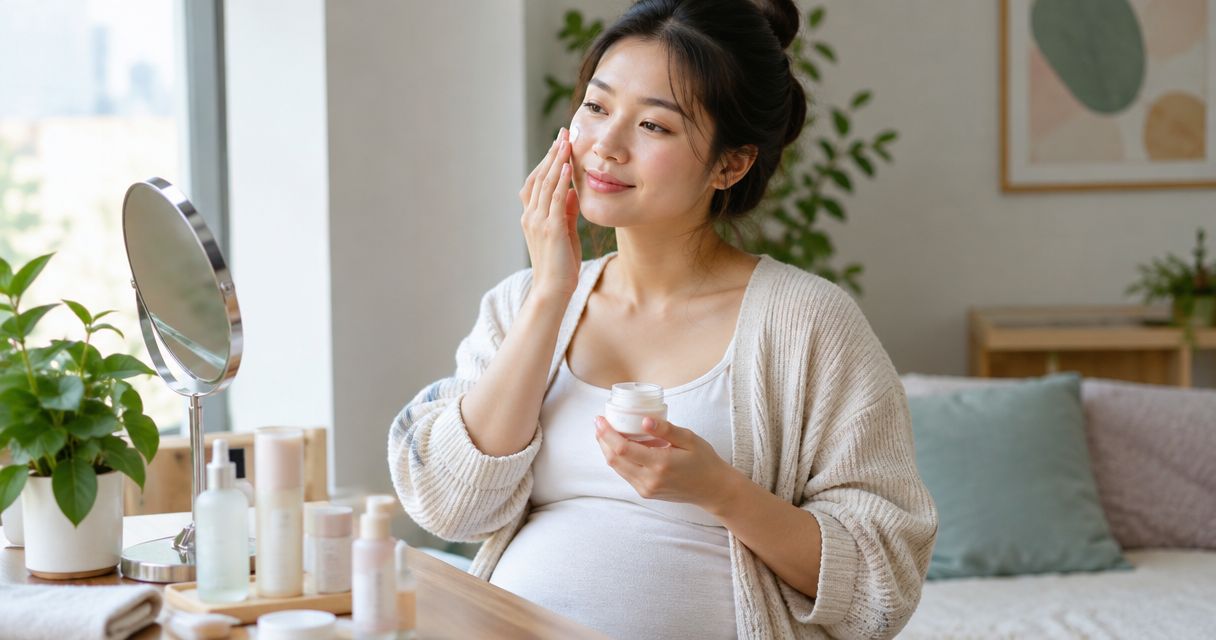
Yes, Korean skincare can be safe during pregnancy when you choose suitable ingredients and avoid products your obstetric clinician advises against, including retinoids. In 2026, the practical rule is to check the full formula—not the country of origin, a sensitive-skin label, or a retailer’s pregnancy-safe claim.
- Is Korean skincare safe during pregnancy? Often yes; assess the full formula rather than the product’s origin.
- Avoid retinoids during pregnancy, and leave hydroquinone out of your routine.
- Keep cleansing, moisturizing, and broad-spectrum sunscreen as your foundation; ask your clinician about treatment ingredients.
- Kbeautyplug compares Korean skincare shopping options; pregnancy-safety decisions belong with your obstetric clinician or dermatologist.
Is Korean skincare safe to use during pregnancy?
Korean skincare is not automatically safe or unsafe during pregnancy. The ingredient list, how you use the product, and your medical circumstances determine whether it belongs in your routine. A gentle moisturizer and a retinol serum need different decisions, even when they come from the same brand.
Start with the ingredient checks below. Our guide to Korean sunscreens for sensitive skin can help you explore that category, but a sensitive-skin recommendation is not pregnancy clearance.
| Ingredient or product type | Pregnancy guidance | Best for | Benefit and limitation |
|---|---|---|---|
| Gentle cleanser | Generally suitable when the formula contains no unsuitable treatment ingredients | Basic cleansing | Removes residue; harsh formulas can irritate |
| Glycerin, hyaluronic acid, and ceramide moisturizers | Generally suitable; review the complete formula | Hydration and barrier care | Support moisture; do not replace acne treatment |
| Broad-spectrum sunscreen | Recommended during pregnancy | Daily UV protection | Helps protect skin; correct application still matters |
| Azelaic acid | An option to discuss with your clinician | Acne or uneven tone | Can address treatment needs; can cause irritation |
| Benzoyl peroxide, salicylic acid, and glycolic acid | Discuss the specific product and use with your clinician | Targeted treatment | Appear in ACOG’s OTC ingredient guidance; that does not approve every peel or combination |
| Retinoids, including retinol and prescription topical retinoids | Avoid during pregnancy | Not recommended during pregnancy | Pregnancy precautions outweigh cosmetic benefits |
| Hydroquinone | Avoid during pregnancy | Not recommended during pregnancy | Choose a clinician-reviewed approach to pigmentation instead |
The American College of Obstetricians and Gynecologists, or ACOG, identifies benzoyl peroxide, azelaic acid, salicylic acid, and glycolic acid as OTC ingredients that can be used during pregnancy. ACOG also advises avoiding topical retinoids. The American Academy of Dermatology, or AAD, advises avoiding retinoids and hydroquinone during pregnancy.
Those recommendations concern ingredients and appropriate use—not blanket approval of a finished product. Bring the exact formula to your clinician when you need treatment rather than basic cleansing or moisturizing.
Why this matters
Pregnancy does not require replacing every Korean product you own. It does require separating everyday skin care from treatments that need another look. Keeping a familiar, suitable moisturizer makes more sense than switching everything because a new bottle says clean or natural.
The opposite mistake is assuming a cosmetic is harmless because it is sold without a prescription. Retinol can appear in ordinary-looking serums and creams. A soothing ingredient on the front label does not cancel another ingredient elsewhere in the formula.
For a 2026 routine review, focus on what touches your skin and how you use it. A product’s popularity, retailer ranking, or country of manufacture cannot answer that question.
Which Korean skincare ingredients should you avoid?
Retinoids: leave them out during pregnancy
Avoid retinoid skincare during pregnancy, including retinol, retinal or retinaldehyde, and prescription topical retinoids such as tretinoin, adapalene, and tazarotene. Check eye creams, acne treatments, and products marketed for wrinkles—not just bottles labeled retinol.
Oral isotretinoin is a separate prescription medication with serious pregnancy risks. If you are taking it and become pregnant, contact your prescribing clinician immediately.
Accidental topical retinoid use before you knew you were pregnant is not the same exposure as taking oral isotretinoin. Stop the topical product and contact your obstetric clinician with its name and ingredient list. An accidental application does not, by itself, establish that harm occurred.
Hydroquinone: choose another approach to pigmentation
Leave hydroquinone out of your pregnancy routine. Pigmentation deserves an ingredient check rather than a quick purchase of whatever promises the strongest brightening effect.
Brightening is a marketing category, not an ingredient. Some formulas use ingredients other than hydroquinone, so read the list instead of rejecting or approving every product with that claim. Ask your dermatologist which treatment fits your skin and pregnancy.
Unfamiliar treatment ingredients: do not mistake uncertainty for approval
Botanical extracts, fermented ingredients, and newer cosmetic ingredients do not receive automatic pregnancy clearance because they sound gentle. Lack of pregnancy-specific research is also not proof that an ingredient is harmful.
If a treatment is optional and its suitability is unclear, leave it out until you have an answer. This keeps an unanswered question from becoming an unnecessary purchase.
What can a simple pregnancy skincare routine include?
A practical foundation is cleansing, moisturizing, and sun protection. You do not need a toner, essence, ampoule, sheet mask, exfoliant, and sleeping mask to make the routine complete. Add a treatment only when it serves a specific need and has been reviewed appropriately.
Gentle cleansing: best for removing residue without extra treatment
Choose a cleanser that cleans without leaving your skin painfully tight or irritated. Review the ingredient list for acne or exfoliating actives even if the front label emphasizes hydration.
An oil cleanser is not automatically unsuitable during pregnancy, and double cleansing is not mandatory. Use the cleansing approach that removes your makeup or sunscreen comfortably. The limitation is simple: more cleansing does not necessarily mean better skin.
Moisturizing: best for dryness and barrier support
Glycerin, hyaluronic acid, and ceramides are common moisturizing ingredients that are generally compatible with pregnancy skincare. Their presence does not approve the rest of the formula, especially in a moisturizer that also contains a treatment ingredient.
Choose a texture you tolerate. Fragrance-free products are a practical starting point for easily irritated skin, but fragrance is primarily an irritation consideration—not proof that a product poses a pregnancy risk.
Sun protection: best for daily UV protection
AAD guidance recommends a broad-spectrum, water-resistant sunscreen with SPF 30 or higher. Apply it 15 minutes before going outdoors and reapply every 2 hours outdoors, as well as after swimming or sweating according to the label.
Zinc oxide and titanium dioxide sunscreens are useful options, particularly for sensitive skin. They are not the only reason a sunscreen works: broad-spectrum protection, sufficient application, and consistent use matter too.
For US shoppers reviewing Korean sunscreen in 2026, identify the exact version you are buying. Do not use one market’s product photo to judge another version’s ingredient list. Pair sunscreen with shade and protective clothing rather than treating sunscreen as permission for unlimited exposure.
How do you check a Korean skincare product before using it?
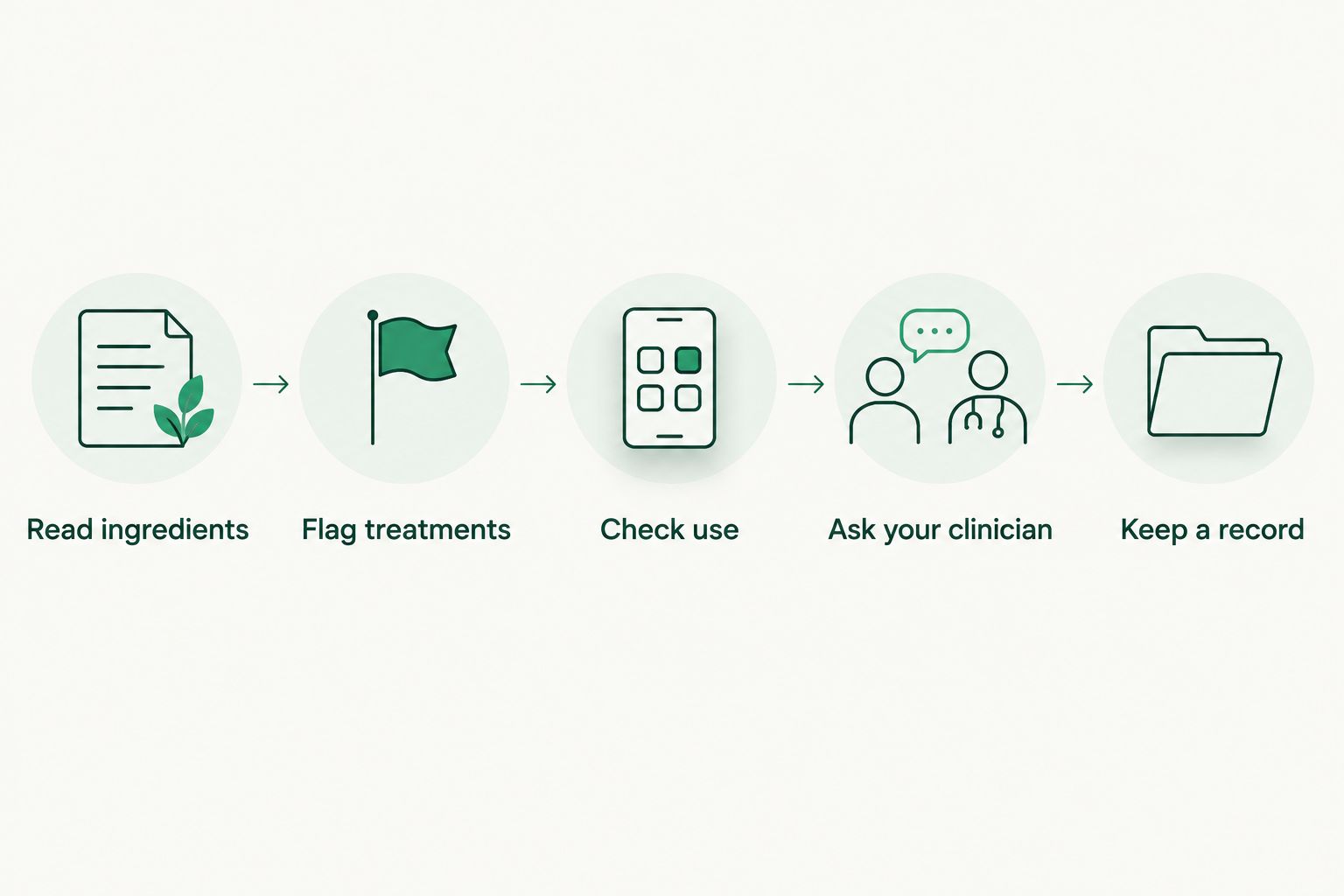
Use the current package and ingredient list, not a remembered formula or an old social post. This review is especially useful when repurchasing a product in 2026: the familiar name on the bottle is not a substitute for checking its contents.
- Read ingredients. Find the full list for the exact product and version. A highlighted ingredient list is not enough.
- Flag treatments. Identify retinoids, hydroquinone, acne actives, and exfoliating ingredients before deciding to continue.
- Check use. Note whether the product stays on or rinses off, where you apply it, and whether you use other treatments.
- Ask your clinician. Share the formula and your actual routine with your obstetric clinician or dermatologist.
- Keep a record. Save the reviewed ingredient list and note the date so you can recognize a later change.
A patch test answers a different question. It can help reveal local irritation or an allergic reaction, but it cannot establish pregnancy safety. Review ingredient suitability first; assess skin tolerance separately.
Why pregnancy suitability varies between products
These factors explain why two Korean skincare products can need different advice:
- Ingredient identity: A hydrating serum and a retinoid serum are different treatments, regardless of similar packaging.
- Concentration: A mild daily formula is not interchangeable with a concentrated peel. Ask about the actual product rather than the ingredient name alone.
- Application area: A small spot treatment and an all-over body product involve different exposure.
- Frequency and contact: Repeated leave-on use differs from occasional use of a rinse-off formula.
- Skin condition: Irritated or damaged skin needs particular care, and treatment decisions should account for it.
- Medical circumstances: Your clinician can consider your pregnancy, prescriptions, and skin condition together.
Do not convert these factors into your own safety calculation. Using less of an ingredient you have been told to avoid does not make it an approved workaround.
Can you use Korean acne products while pregnant?
Korean acne products need ingredient-by-ingredient review during pregnancy; the acne label alone tells you little. A cleanser, spot treatment, exfoliating toner, and retinoid serum should not receive the same answer.
ACOG includes azelaic acid, benzoyl peroxide, salicylic acid, and glycolic acid among OTC ingredients that can be used during pregnancy. Discuss the finished product, application area, and frequency with your clinician, especially for peels or combinations. Do not replace a stopped retinoid with several new exfoliants at once.
Do you need to throw away skincare used before pregnancy?
You do not need to discard your entire routine. Set aside products containing ingredients to avoid, keep their packaging, and ask about any uncertain treatments.
If you used a topical retinoid before learning you were pregnant, stop using it and contact your clinician. Share the product name, how often you used it, and where you applied it instead of trying to judge risk from online anecdotes.
Where does price comparison fit into the decision?
Kbeautyplug is best for US shoppers comparing Korean skincare retailers, not for deciding pregnancy safety. The platform helps with shopping; your obstetric clinician or dermatologist handles the medical decision. Neither a favorable price nor an authentic product proves pregnancy suitability.
Use Kbeautyplug after you have identified a suitable formula. Its Korean skincare comparisons answer a different question: where to shop for the product you have already chosen.
The limitation matters. A retailer comparison cannot account for your prescriptions, medical history, or the treatment combination on your bathroom shelf. Keep those decisions separate in 2026: suitability first, shopping second.
FAQ
Is Korean skincare safe during pregnancy if it says natural?
A natural label does not establish pregnancy safety. Review the complete ingredient list because botanical ingredients and marketing claims do not replace an assessment of the formula.
Can I use Korean retinol while pregnant?
Avoid Korean retinol products during pregnancy, just as you would retinol from any other country. Check serums, moisturizers, and eye creams for retinoid ingredients.
Is hyaluronic acid safe to use during pregnancy?
Topical hyaluronic acid is generally compatible with pregnancy skincare. Check the complete formula because a hydrating product can also contain treatment ingredients that need separate review.
Can I use salicylic acid during pregnancy?
ACOG lists topical salicylic acid among OTC ingredients that can be used during pregnancy. Ask your clinician about the specific product and application, particularly for concentrated peels or large treatment areas.
What sunscreen should I use while pregnant?
Choose a broad-spectrum, water-resistant sunscreen with SPF 30 or higher that you can use consistently. Zinc oxide and titanium dioxide formulas are useful options for sensitive skin; reapply every 2 hours outdoors and follow the label after swimming or sweating.
Does a patch test prove a product is pregnancy-safe?
A patch test does not prove pregnancy safety. It helps assess local skin tolerance, not whether an ingredient is appropriate during pregnancy.
Can Kbeautyplug tell me whether my routine is pregnancy-safe?
Kbeautyplug provides Korean skincare shopping guidance and price comparison, not individualized pregnancy-safety clearance. Bring your exact ingredient lists to your obstetric clinician or dermatologist.
Can I restart all my usual skincare after delivery?
Do not automatically restart every treatment after delivery, especially if you are breastfeeding. Pregnancy and breastfeeding require separate medication and ingredient discussions with your clinician.
One last thing
Save a photo of the ingredient list your clinician reviewed. A screenshot of the product’s front label cannot show which formula was discussed, and a familiar product name does not guarantee an unchanged ingredient list.
That small record makes your next purchase easier to check. It also gives you something concrete to bring back if your skin reacts or your treatment needs change.