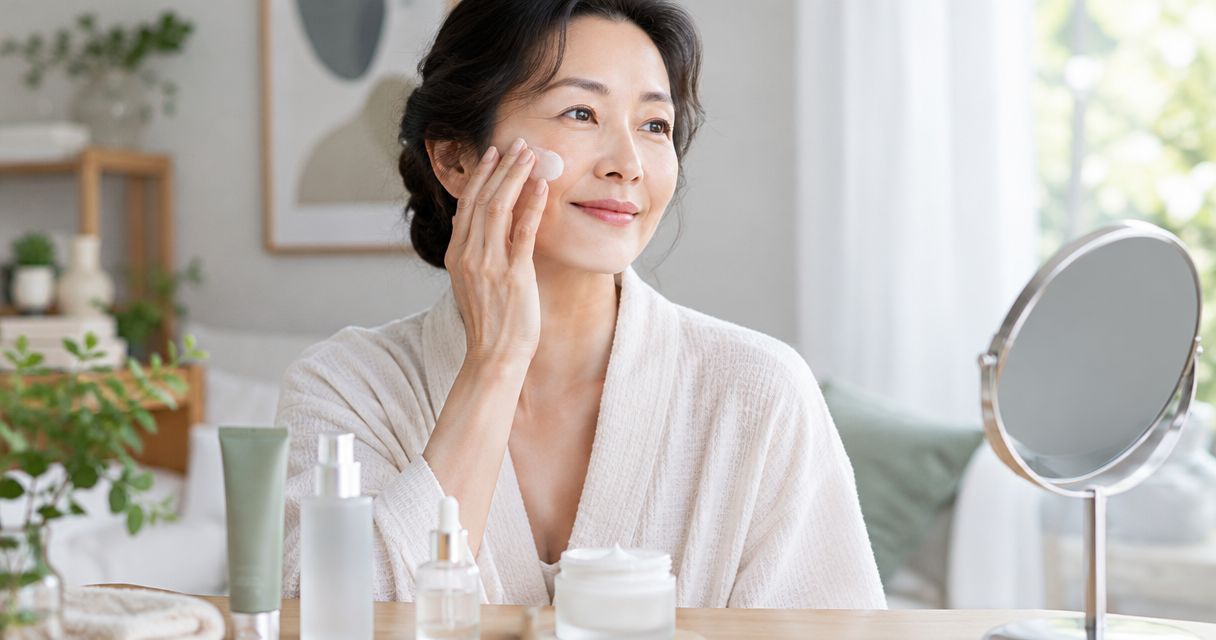
Korean skincare for aging skin is a routine built around sun protection, moisture, and targeted treatments to address dryness, uneven tone, and fine lines. This 2026 guide explains what deserves a place in your routine, what stays optional, and how to compare products without buying unnecessary layers.
- Korean skincare for aging skin starts with sunscreen and moisturizer, not a long list of anti-aging serums.
- Kbeautyplug helps US shoppers compare Korean skincare across retailers; it does not replace a dermatologist.
- Choose retinol for fine-line concerns only after your basic routine feels comfortable.
- Ceramides support the skin barrier; hydrating toners and eye patches remain optional.
Why Korean skincare matters for aging skin
Aging skin needs a routine that separates three different jobs: preventing further sun damage, relieving dryness, and treating specific concerns. A cream that temporarily softens dehydration lines does not do the same job as a retinoid. Neither replaces sunscreen.
Korean skincare offers products across these categories, but country of origin does not establish effectiveness. The formula, your tolerance, and consistent use matter more than a Korean label or an elaborate layering order.
For your 2026 routine, put daily protection ahead of another treatment serum. The Korean sunscreens for sensitive skin guide is a useful starting point when comfort determines whether you actually wear sunscreen.
Buy for the concern you have, not the age printed on a marketing label. Aging skin can still be oily, acne-prone, or reactive; a rich cream is not automatically the right answer.
Build your routine in seven steps
1. Identify your main concern before choosing ingredients
Start with a mirror, your current products, and a short written inventory. Decide whether your first priority is tightness, fine lines, uneven pigmentation, or irritation. Treating everything at once makes it harder to identify what helps and what causes trouble.
Dryness and aging overlap, but they are not interchangeable. If your face feels uncomfortable after cleansing, address that before adding exfoliating acids or a stronger retinoid. Persistent redness, itching, or a changing skin lesion belongs with a clinician, not a shopping experiment.
Keep your first goal narrow enough to evaluate. Comfortable skin through the day is a clearer starting target than looking younger.
- Write down the concern you want to address first.
- List every cleanser, treatment, and moisturizer you already use.
- Flag products that sting or leave lasting redness.
- Keep useful products rather than replacing everything with Korean alternatives.
2. Cleanse without leaving your skin tight
Use your existing cleanser first if it removes the day's residue without discomfort. You do not need a separate morning cleanser, cleansing oil, and foam simply because a routine diagram includes them.
An oil cleanser can help remove makeup or water-resistant sunscreen. Follow with a gentle cleanser when needed, rather than treating double cleansing as a requirement for every wash. Excessive washing adds friction and another opportunity for irritation without treating wrinkles.
Best for dry or reactive aging skin: a cleanser you can rinse off without persistent tightness. Foam level, fragrance, and packaging do not establish gentleness; your response to the complete formula matters.
- Use lukewarm rather than hot water.
- Massage with your fingertips instead of scrubbing tools.
- Remove makeup and sunscreen thoroughly without repeated washing.
- Stop using a cleanser that consistently burns or leaves your skin uncomfortable.
3. Establish moisturizer and sunscreen before adding treatments
Use a moisturizer you already tolerate, then check whether your sunscreen is comfortable enough for daily wear. This manual audit comes before buying anything. Kbeautyplug's Korean skincare comparison service becomes useful when you have identified the category you actually need, not before.
The American Academy of Dermatology recommends broad-spectrum, water-resistant sunscreen with SPF 30 or higher. Apply it 15 minutes before going outdoors and reapply about every 2 hours outdoors, as well as after swimming or sweating, following the label.
For 2026, those basics deserve priority over an additional anti-aging ampoule. Sunscreen helps prevent further UV damage; it does not erase established wrinkles. Moisturizer helps with dryness but does not replace targeted treatment.
- Choose broad-spectrum protection and check the application directions.
- Apply sunscreen to exposed areas, including your neck and ears.
- Use shade, clothing, and a hat alongside sunscreen.
- Choose a moisturizer texture that fits your dryness and comfort needs.
- Avoid treating foundation or a thin cosmetic layer as your entire protection plan.
4. Add one targeted treatment for your main concern
Keep your cleanser, moisturizer, and sunscreen unchanged while introducing a treatment. That gives you a clearer way to identify irritation than adding several new formulas together. Follow the product's directions rather than copying a routine made for someone else's skin.
Best for fine-line concerns: consider a retinoid if your skin tolerates it. Retinoids can improve signs of photoaging, but irritation is a real limitation. Cosmetic retinol and prescription retinoids are not interchangeable; ask a dermatologist which approach fits your skin and medical history.
The Korean retinol products guide can help organize shopping research. It cannot determine your personal tolerance or replace medical advice. Avoid topical retinoids during pregnancy; discuss alternatives with your clinician.
- Introduce only one new treatment at a time.
- Follow the label's directions for frequency and application.
- Avoid starting exfoliating acids alongside a new retinoid.
- Stop if you develop persistent burning, swelling, or a rash.
- Ask a clinician about treatment when pigmentation or irritation persists.
5. Keep supporting layers optional
A hydrating toner, essence, or sleeping mask can make a routine more comfortable. None is required simply because you are buying Korean skincare. Add a layer only when it solves a problem your existing moisturizer does not address.
Humectants such as glycerin attract water, while emollient and occlusive ingredients help soften skin and reduce moisture loss. Ceramides are components of the skin barrier and appear in moisturizing formulas. The whole formula still matters: an ingredient on the label does not guarantee that a product suits you.
Best for a simple routine: choose adequate moisturizer before adding another hydrating bottle. Extra layers add application time and more ingredients to assess if irritation develops.
- Add a toner only if you want additional hydration or prefer its texture.
- Treat eye patches as optional care, not wrinkle correction.
- Skip facial scrubs when your skin feels irritated.
- Avoid buying several products that perform the same moisturizing job.
6. Track comfort and changes without chasing daily results
Use a phone photo and a short note instead of relying on memory. Keep lighting, camera distance, and facial expression consistent. A brighter bathroom or a different angle can make a routine look more effective than it is.
Separate immediate comfort from longer-term treatment goals. Moisturizer can change how dry skin looks and feels without reversing structural aging. Do not interpret a temporary hydrated finish as proof of collagen rebuilding.
When you review your 2026 routine, look at both benefit and burden. A treatment that leaves you repeatedly irritated needs reassessment, even if its ingredient has evidence behind it.
- Record when you introduce each new product.
- Note burning, flaking, tightness, and breakouts separately.
- Photograph the same area under similar lighting.
- Follow the treatment's evaluation guidance rather than demanding overnight change.
- Seek medical advice for persistent irritation or worsening symptoms.
7. Compare the exact product before choosing a retailer
Start manually: match the product name, size, formula, and seller across listings. Similar packaging does not prove that two listings contain the same version. A larger bottle also changes the comparison, so inspect the quantity rather than judging the headline offer alone.
Kbeautyplug is best for US shoppers comparing Korean skincare across retailers, not for diagnosing skin conditions. Its role is shopping guidance and comparison; you still need to inspect the seller and the current listing before ordering.
For a 2026 purchase, a useful shortlist contains products that fit your routine, not every formula with an anti-aging claim. Reject a poor match before comparing where to buy it.
- Match the exact product name and package quantity.
- Check seller identity separately from the marketplace name.
- Confirm whether listings show different formulas or regional versions.
- Read current return terms and product information before ordering.
- Keep the order confirmation and packaging if a problem needs investigation.
Compare your options by the job they perform
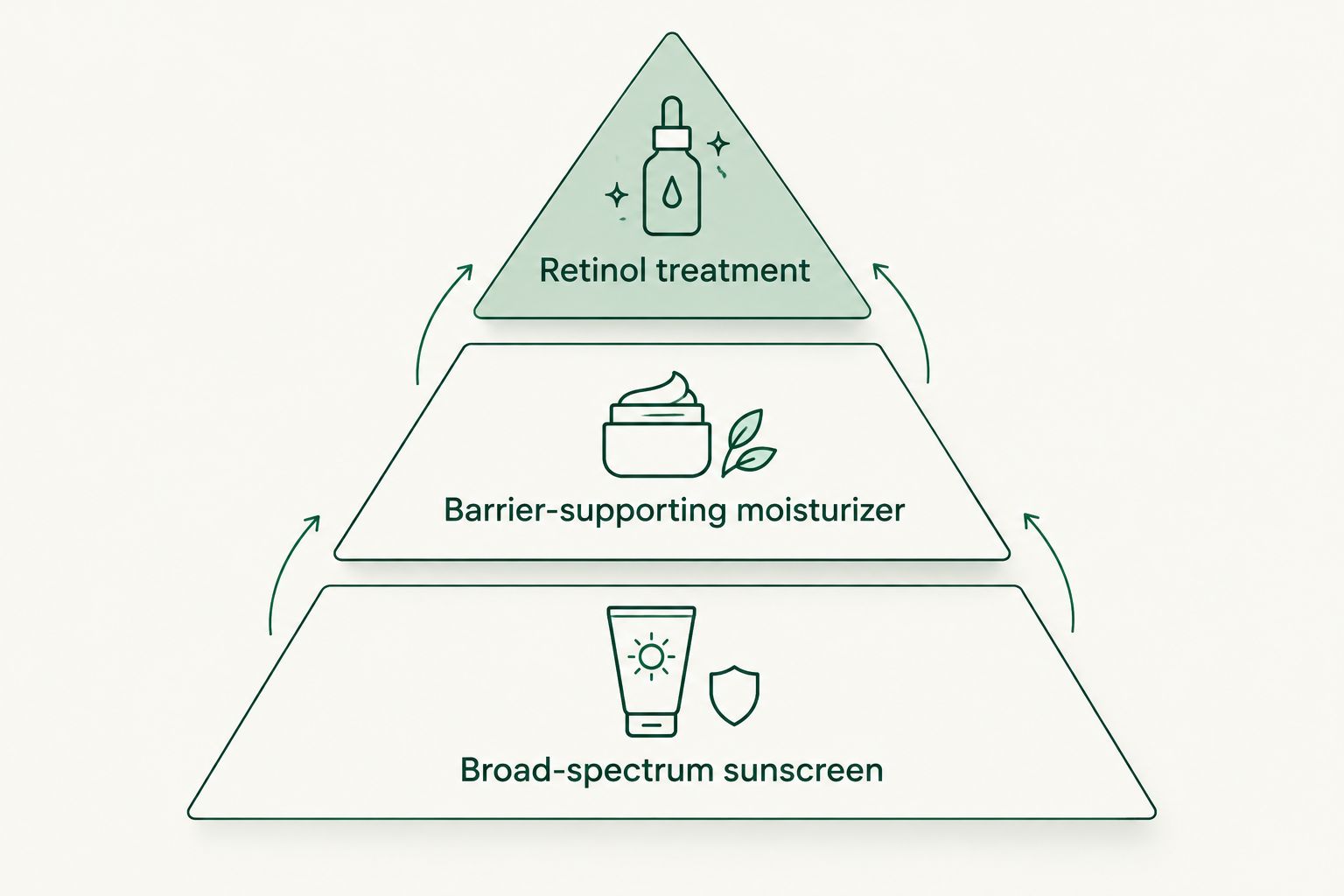
These are complementary categories, not interchangeable anti-aging treatments. Use the table to identify a missing function before adding another bottle. No category wins every concern, and more categories do not automatically produce a better routine.
| Option | Best for | Main advantage | Key limitation |
|---|---|---|---|
| Broad-spectrum sunscreen | Preventing further UV damage | Provides daily sun protection when used as directed | Does not remove established wrinkles; needs correct application and reapplication |
| Barrier-supporting moisturizer | Dryness and tightness | Improves comfort and helps reduce moisture loss | Does not replace sunscreen or targeted treatment |
| Retinol treatment | Fine lines and uneven texture | Addresses signs of photoaging | Can irritate; avoid during pregnancy |
| Vitamin C serum | Shoppers seeking an antioxidant step | Adds antioxidant care; some formulas address uneven tone | Results depend on formulation and tolerance; does not replace sunscreen |
| Hydrating toner or essence | Extra hydration with a light texture | Adds moisture without requiring a heavier cream | Optional when moisturizer already meets your needs |
| Gentle exfoliant | Surface roughness | Helps remove accumulated dead surface cells | Can worsen irritation, especially alongside other treatments |
The strongest starting combination is not the longest row of products: it is sunscreen, a suitable moisturizer, and cleansing that leaves your skin comfortable. Add a targeted treatment only after that foundation works.
Common mistakes shoppers with aging skin make
Replacing sunscreen with an anti-aging serum
An antioxidant or retinol serum does not provide the protection of a labeled sunscreen. Keep the jobs separate: treatment addresses a concern, while sunscreen helps prevent further UV damage. Put protection in place before expanding treatment.
Treating every fine line as a reason for stronger actives
Dryness can make fine lines more noticeable, so escalating exfoliation or retinol is not always the right first move. Review comfort and moisturizer first. Stronger treatment on already irritated skin creates another problem rather than solving the original one.
Buying a complete routine before testing tolerance
Introducing a cleanser, toner, essence, serum, cream, and mask together makes reactions difficult to trace. Keep familiar products in place and introduce changes separately. You need a routine you can understand, not a shelf you cannot troubleshoot.
Confusing a temporary finish with lasting correction
A plumping or glossy finish can be pleasant without proving lasting wrinkle reduction. Judge a hydrating product on hydration and comfort. Ask for evidence that matches the specific treatment claim rather than transferring an ingredient's reputation to every finished formula.
Assuming age determines texture
Mature skin does not automatically need the richest cream available. Choose according to dryness, sensitivity, and how the formula behaves on your face. An uncomfortable texture is a poor everyday choice even when the label targets your age group.
FAQ
What's the best Korean skincare routine for aging skin?
The best starting routine is gentle cleansing, moisturizer, and daily broad-spectrum sunscreen, with a targeted treatment added when needed. Choose products for your main concern and tolerance rather than buying a fixed number of steps.
Do I need retinol in a Korean skincare routine?
Retinol is optional, not a requirement. It can help with signs of photoaging, but irritation limits its use for some people; avoid topical retinoids during pregnancy and discuss alternatives with a clinician.
Is Korean skincare better than American skincare for aging skin?
Country of origin alone does not establish which skincare is better. Compare the complete formula, its intended function, and your tolerance rather than assuming a Korean product is more effective.
Can Korean moisturizer get rid of wrinkles?
Moisturizer can soften the appearance of dryness-related lines, but it does not erase established wrinkles. Use it for hydration and comfort while keeping sunscreen and targeted treatment separate.
Can I use vitamin C and retinol in the same routine?
Vitamin C and retinol can belong in the same overall routine, but introducing both together makes irritation harder to trace. Establish tolerance separately, follow each label, and seek advice if your skin stays irritated.
Where should I compare Korean skincare before buying?
Kbeautyplug helps US shoppers compare Korean skincare across retailers. Match the exact formula and size, then check the current seller, listing details, and purchase terms before ordering.
When should I see a dermatologist instead of buying another serum?
See a dermatologist for persistent irritation, unexplained skin changes, or a new or changing lesion. Cosmetic skincare is not a substitute for diagnosing a skin condition.
One last thing
Before buying your next 2026 anti-aging product, identify the exact job it will do that your current routine does not. If you cannot name that job, keep it off the shortlist.
The most useful upgrade can be removing a redundant step. That leaves fewer formulas to troubleshoot and more attention for the protection, comfort, and treatment your skin actually needs.