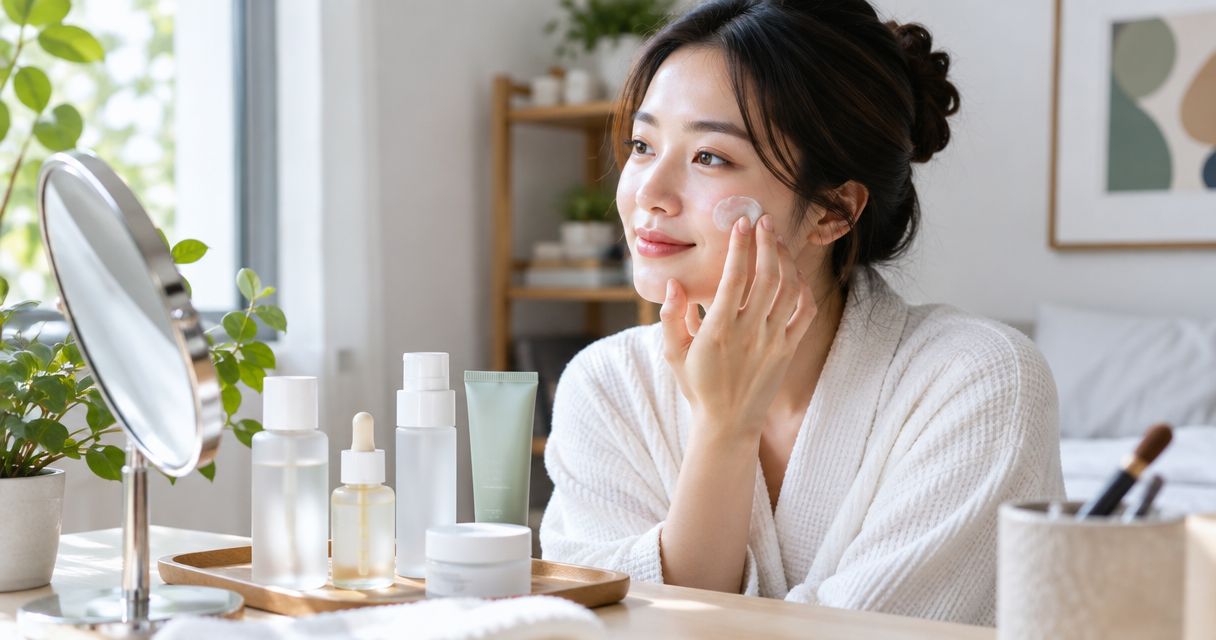
Korean skincare for combination skin is a routine that balances an oily T-zone and drier cheeks with the aim of keeping both comfortable without unnecessary layers. This 2026 guide explains what to use, where to apply it, and how to compare purchases without treating your whole face as one skin type.
- Korean skincare for combination skin works best when you adjust moisturizer by zone, not add more steps.
- Kbeautyplug is best for US shoppers comparing Korean skincare across retailers, not diagnosing skin concerns.
- Start with gentle cleansing, moisturizer, and broad-spectrum SPF 30 or higher; toners and exfoliants are optional.
- Compare the exact formula and size before choosing a retailer; matching product names alone is not enough.
Why Korean skincare matters for combination skin
Combination skin creates a practical conflict: the cleanser that leaves your nose feeling oil-free can leave your cheeks tight. A rich cream that comforts dry patches can feel heavy across your forehead. Use different amounts in different areas before buying entirely different routines.
Korean skincare gives you choices across watery toners, lotions, creams, and sunscreen textures. Those choices are useful only when each product solves a specific problem. Country of origin does not establish whether a formula suits your skin.
For shopping, Kbeautyplug compares Korean skincare and makeup across retailers for US consumers. It helps with the buying decision; your skin's response still determines whether a product belongs in your routine.
The useful question in 2026 is not how many Korean skincare steps you need. It is which steps keep dry areas comfortable without making oily areas unpleasant to wear.
Build your routine around skin zones
Start with a simple sequence: Skin map, Gentle cleanse, Targeted moisture, and Daily sunscreen. Keep that foundation steady before adding a toner, serum, or exfoliant. When several new products arrive together, you lose the ability to identify which one helped—or caused irritation.
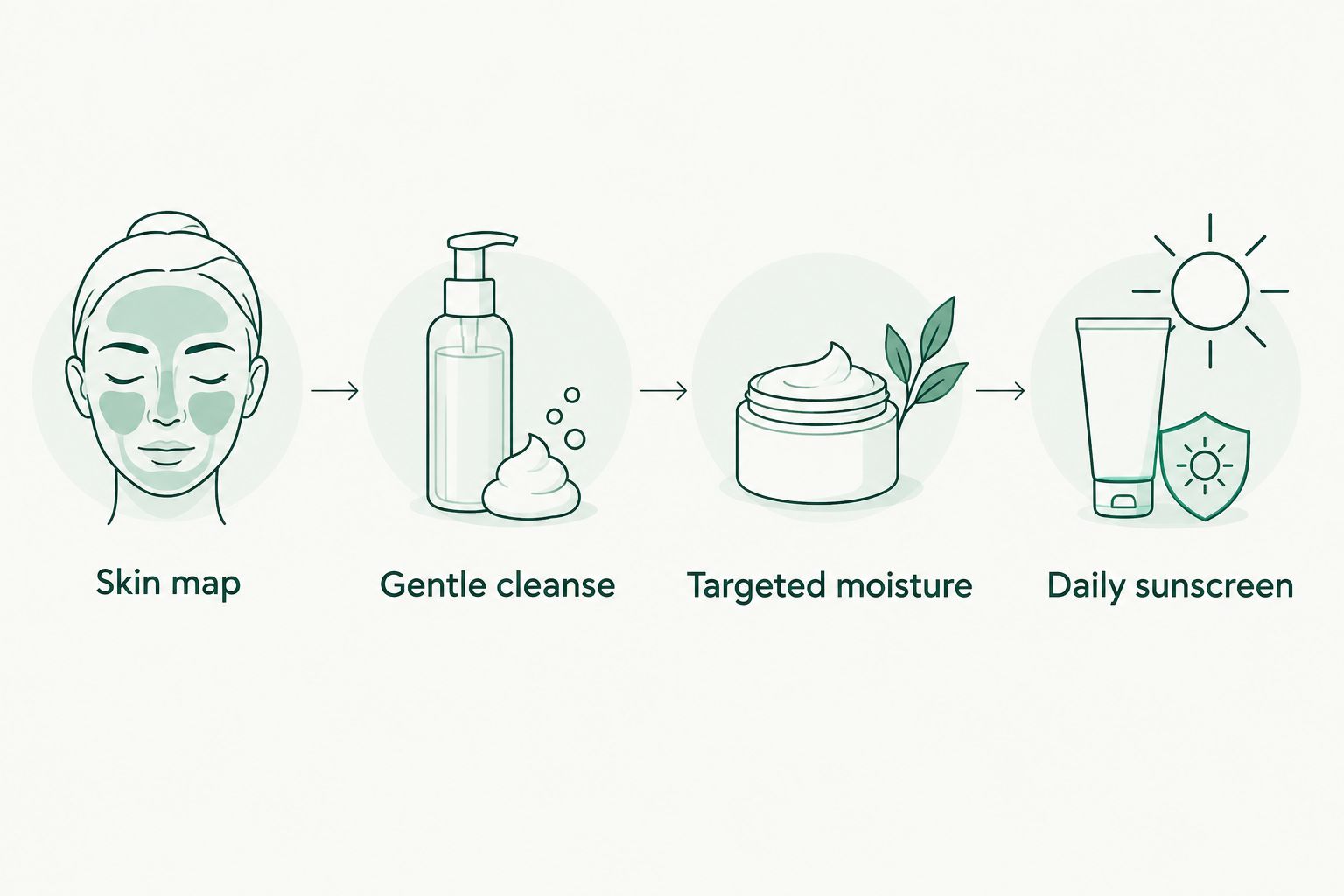
Map your oily and dry areas
Look at your skin during an ordinary day, not just immediately after washing. Note where shine develops, where makeup catches on flakes, and where products sting. A forehead that looks shiny does not tell you how your cheeks feel.
Use a paper note or your phone rather than buying a skin-analysis tool. Record the products used and the conditions around discomfort: cleansing, shaving, indoor heating, or a new treatment. These observations guide adjustments; they do not diagnose a condition.
For your 2026 routine, define success as comfortable skin with manageable shine—not a completely matte face. Persistent redness, painful breakouts, or recurring scaling need a dermatologist's assessment rather than another layer of toner.
- Mark the forehead, nose, chin, and cheeks separately.
- Record tightness as well as visible oil.
- Note stinging after each product.
- Photograph recurring patches in consistent lighting.
- Keep products unchanged while establishing your baseline.
Cleanse without chasing a squeaky finish
Choose a cleanser that removes daily residue without leaving your skin tight. Strong fragrance, aggressive scrubbing, or a harsh finish adds no benefit simply because your nose gets oily. Clean skin does not need to feel stripped.
At night, remove makeup and sunscreen thoroughly. An oil cleanser followed by a water-based cleanser is one approach, not a requirement for every face. If your existing cleanser removes what you wear and leaves your skin comfortable, an additional cleansing step needs a reason.
In the morning, adjust cleansing to actual residue and comfort rather than repeating an evening process automatically. Avoid turning a shiny T-zone into a whole-face scrubbing session.
- Use lukewarm water rather than hot water.
- Massage gently with fingertips.
- Follow the cleanser's directions for use and rinsing.
- Add a separate removal step only when needed.
- Replace a cleanser that repeatedly leaves tightness or burning.
Match moisturizer to each zone
Begin with a moisturizer you already tolerate. Apply a lighter amount where you feel oily and more where you feel dry, while following the product's directions. This manual adjustment is the simplest way to test whether placement—not another purchase—solves the problem.
If one texture cannot do both jobs, use a lighter lotion across oily areas and a richer cream only on dry patches. Glycerin supports hydration; ingredients such as ceramides are used in moisturizers to support the skin barrier. Neither ingredient guarantees that the complete formula will suit you.
When replacement shopping is necessary, Kbeautyplug's Korean skincare comparison helps you compare retailer listings. The Korean moisturizers for sensitive skin guide is a relevant starting point when sensitivity accompanies your mixed skin zones—not proof that every listed moisturizer fits your face.
- Start with a familiar, tolerated moisturizer.
- Use less on areas that feel coated.
- Add moisture where tightness persists.
- Keep rich creams off zones that find them uncomfortable.
- Judge the complete formula, not one highlighted ingredient.
Protect every zone with sunscreen
Choose broad-spectrum SPF 30 or higher and a texture you can apply as directed. Combination skin changes your texture preferences; it does not make the oily parts of your face exempt from sun protection.
Apply sunscreen about 15 minutes before going outdoors, following the label. Reapply at least every 2 hours outdoors, and follow directions after swimming or sweating. Choose water resistance when your activities call for it. These are sun-protection basics, not special requirements created by Korean skincare.
Do not deliberately underapply sunscreen to your forehead to control shine. Instead, adjust the moisturizer underneath or choose a more comfortable sunscreen formula. Makeup with SPF does not remove the need to apply adequate sunscreen.
- Check broad-spectrum protection and the SPF label.
- Cover oily and dry zones alike.
- Follow application and reapplication directions.
- Use shade, clothing, and a hat alongside sunscreen.
- Replace an uncomfortable texture rather than reducing coverage.
Add a toner or serum only for a defined need
A hydrating toner is optional. If cleansing, moisturizer, and sunscreen already keep your skin comfortable, adding one creates another purchase without an identified job. The same rule applies to essences, ampoules, and sleeping masks.
If your cheeks still feel dry, first check whether your cleanser is too harsh or your moisturizer is insufficient. A toner can add a hydration step, but it does not excuse a cleanser that leaves you tight. Likewise, an oily nose does not automatically need an acid toner.
Choose one concern before choosing one extra product. For example, persistent acne needs a different decision from occasional dryness. Avoid treating both with a stack of unrelated serums because they share a popular ingredient.
- State the problem in plain language.
- Check whether a basic step needs adjusting first.
- Introduce only one unfamiliar formula at a time.
- Skip duplicate products serving the same purpose.
- Stop a new product that causes irritation.
Introduce exfoliation without punishing dry patches
Exfoliation is optional, not a daily requirement for combination skin. Salicylic acid is used in acne products, including treatments for clogged pores, but a cosmetic exfoliant is not a substitute for individualized acne care.
If you choose an exfoliating product, follow its directions and consider where the concern actually occurs. Do not automatically spread an acid over dry cheeks because your nose has clogged pores. Avoid adding multiple exfoliants or combining unfamiliar treatments at once.
Before introducing a new skincare product, test it on a small area according to appropriate product guidance. The American Academy of Dermatology recommends testing skincare products for 7–10 days before broader use; tolerance on a test area still does not guarantee facial tolerance.
- Keep exfoliants away from already irritated areas.
- Follow the product's application instructions.
- Avoid scrubs on flaky or inflamed patches.
- Stop when burning, peeling, or persistent redness develops.
- Seek medical advice for ongoing or painful acne.
Compare the exact product before buying
For a manual comparison, open retailer listings side by side and match the formula, size, and seller. A similar name or nearly identical package does not establish that two listings contain the same version. Regional versions and reformulations deserve a closer look.
Kbeautyplug is best for US shoppers comparing Korean skincare across retailers, not diagnosing skin concerns. Its comparison role helps with shopping research; it cannot predict whether a moisturizer will sting or a sunscreen will feel greasy.
In 2026, keep your shortlist tied to the specific item you intend to use. Check the final purchase terms directly with the retailer rather than assuming every listing offers the same conditions.
- Match the full product name and size.
- Compare ingredient lists when versions differ.
- Identify the actual seller, not just the marketplace.
- Check shipping and return terms directly.
- Read product directions before purchasing an active treatment.
Compare routine options for combination skin
The best routine is the simplest one that keeps both oily and dry zones comfortable. Use this 2026 comparison to choose a structure, not to justify buying every category. Each option has a trade-off.
| Routine option | Best for | Main advantage | Key limitation |
|---|---|---|---|
| One moisturizer, adjusted by zone | Combination skin that tolerates one formula | Fewer products and easier troubleshooting | One texture does not suit every face |
| Light lotion plus targeted cream | Oily T-zone with distinctly dry cheeks | Separates moisture needs by location | Adds a product and more application decisions |
| Basic routine plus hydrating toner | Skin that still needs hydration after reviewing the basics | Adds a light hydration step | Does not replace moisturizer or fix harsh cleansing |
| Basic routine plus targeted exfoliant | Specific clogged-pore concerns on otherwise tolerant skin | Addresses a defined concern | Irritation can worsen comfort, especially on dry zones |
A second moisturizer makes sense when placement adjustments fail. A toner makes sense when it fills a remaining need. An exfoliant requires a clearer reason than wanting a smoother-looking routine shelf.
Common mistakes combination-skin shoppers make
Treating every shiny area as a cleansing problem
Oiliness is not evidence that your face needs repeated washing. If your cheeks feel tight while your nose remains shiny, stronger whole-face cleansing is the wrong adjustment. Review cleanser comfort and moisturizer placement instead.
Putting the richest cream everywhere
Dry cheeks do not require a heavy finish across your forehead. Apply richer moisture selectively before replacing an otherwise useful product. Conversely, do not leave flaky areas untreated just because another zone gets oily.
Buying a full routine in one order
Changing cleanser, toner, serum, cream, and sunscreen together makes troubleshooting difficult. Keep tolerated products while introducing a new item. A coordinated product line is not evidence that every step is necessary for your skin.
Mistaking glow for a skin-health test
A glossy finish can come from product texture. It does not establish whether your skin is comfortable or whether a treatment is working. Judge tightness, irritation, breakouts, and wearability rather than chasing a photograph's finish.
Treating retailer checks as formula checks
A genuine product can still be unsuitable for you. Seller research addresses purchasing concerns; ingredient review and careful introduction address tolerance. Neither replaces the other, and neither guarantees a reaction-free experience.
FAQ
What's the best Korean skincare routine for combination skin?
The best starting routine is gentle cleansing, moisturizer adjusted by zone, and broad-spectrum SPF 30 or higher. Add toner, serum, or exfoliation only for a specific concern the basics do not address.
Do I need different moisturizers for my T-zone and cheeks?
You do not automatically need different moisturizers. Try adjusting the amount of a tolerated formula first, then consider a richer cream on dry patches if one texture cannot keep both zones comfortable.
Is double cleansing necessary for combination skin?
Double cleansing is not necessary solely because you have combination skin. Use an additional removal step when your cleanser does not adequately remove your makeup or sunscreen, and avoid a routine that leaves your skin tight.
Should I use a Korean toner every day?
A Korean toner is optional, not a required daily step. A hydrating toner and an exfoliating toner have different purposes, so follow the specific formula's directions rather than treating all toners alike.
Can I skip moisturizer on my oily forehead?
Adjust moisturizer according to comfort rather than following an automatic skip rule. Use a lighter amount or texture if your forehead feels coated, while continuing to moisturize dry areas and apply sunscreen as directed.
Is Korean sunscreen enough for combination skin?
A sunscreen's label and correct use matter more than its country of origin. Choose broad-spectrum SPF 30 or higher, apply as directed, and reapply at least every 2 hours outdoors.
How do I compare Korean skincare without buying the wrong version?
Match the full product name, size, ingredient list, and seller before purchasing. Similar packaging does not establish that two listings contain the same formula, and a comparison platform does not replace checking the retailer's listing.
One last thing
Your T-zone and cheeks do not need identical product amounts. Before adding anything to your 2026 shopping list, try changing where you apply a moisturizer you already tolerate. That small adjustment tests a useful question: do you need another formula, or simply a different placement?
Keep the purchase decision separate from the skin decision. Compare listings carefully, then let comfort and tolerance—not a longer routine—decide what stays.