Rosacea-prone skin care using Korean skincare is a gentle cleansing, moisturizing, and sun-protection routine aimed at reducing irritation without replacing medical treatment. This 2026 guide explains how to choose formulas, introduce them cautiously, and avoid buying extra steps that make reactive skin harder to manage.
- Korean skincare for rosacea-prone skin starts with gentle cleansing, moisturizer, and daily broad-spectrum sunscreen.
- Kbeautyplug is best for comparing Korean skincare offers, not choosing rosacea treatment.
- Choose fragrance-free formulas; centella, ceramides, and sensitive-skin labels do not guarantee tolerance.
- Persistent redness, bumps, or eye symptoms need medical assessment, not a larger skincare routine.
Why Korean skincare matters for rosacea-prone skin
The useful part of Korean skincare is the formula, not the number of layers. Rosacea-prone skin needs products you can tolerate repeatedly, without burning, stinging, or a cycle of changing everything whenever redness returns.
Korean skincare offers cleansers, moisturizers, and sunscreens that fit a simple routine. It also includes exfoliating toners, fragranced products, and treatment-heavy routines that are poor starting points for irritated skin. Country of origin does not establish suitability.
Kbeautyplug compares Korean skincare offers across retailers. Use that shopping function after you identify a suitable formula; a favorable offer cannot turn an irritating product into a good purchase.
For your 2026 routine, separate two jobs: skincare supports comfort and sun protection; a dermatologist diagnoses and treats rosacea. Persistent flushing, visible blood vessels, and acne-like bumps deserve assessment rather than a self-diagnosis based on product recommendations.
Build a routine you can actually evaluate
1. Establish your baseline before buying anything
Start with the products you already tolerate. Write down what you use, when symptoms appear, and whether the main problem is flushing, dryness, stinging, or bumps. These are different observations, not interchangeable reasons to buy a calming serum.
The American Academy of Dermatology identifies sunlight, heat, and certain skincare products among rosacea triggers. Individual triggers differ. Record what happens to your skin instead of adopting a long avoidance list from someone else's routine.
Do not stop prescribed treatment to create a skincare experiment. Ask your prescriber how to simplify cosmetics around it, particularly when you cannot tell whether irritation comes from a prescription, a cleanser, or a new serum.
- List every cleanser, treatment, moisturizer, and sunscreen you currently use.
- Note burning, itching, flushing, and bumps separately.
- Record heat exposure and new products alongside symptoms.
- Keep prescribed treatment unchanged unless your clinician directs otherwise.
- Delay optional purchases while your skin is actively irritated.
2. Choose gentle cleansing over a double-cleanse rule
Use a mild, fragrance-free cleanser with lukewarm water and your fingertips. Scrubbing tools, rough washcloths, and prolonged massage add friction without making a rosacea routine better. Pat dry rather than rubbing your face with a towel.
Double cleansing is optional, not a requirement of Korean skincare. An oil cleanser adds another formula and another washing step. If a single gentle cleanser removes your daily products adequately, there is no reason to add a second cleanser for the sake of following a routine.
Choose by your skin's response after rinsing, not the amount of foam. A tight, squeaky feeling is not the target, and a cleanser that repeatedly stings does not earn a place because its label says sensitive skin.
- Wash with lukewarm rather than hot water.
- Use fingertips instead of cleansing brushes or scrubs.
- Keep cleanser away from irritated eyelids unless directed otherwise.
- Rinse thoroughly and pat dry with a soft towel.
- Add a separate makeup-removal step only when your existing cleansing is insufficient.
3. Select a moisturizer before adding a serum
Make moisturizer your main leave-on skincare purchase. Look for a fragrance-free formula that feels comfortable and works with your sunscreen and prescribed treatment. A serum is not a substitute for a moisturizer that your skin tolerates.
Glycerin attracts water, while ingredients such as petrolatum help reduce water loss. Ceramides are components of the skin barrier and appear in many moisturizers. Those ingredient functions help you understand a label, but they do not prove that the finished formula will suit your face.
Read ingredient lists manually first. Then use Kbeautyplug for Korean skincare comparisons once you have identified the exact formula. The platform helps with shopping; it does not establish medical suitability or guarantee that your skin will tolerate a product.
- Prefer fragrance-free formulas over scented versions.
- Treat ceramides as an ingredient feature, not a treatment claim.
- Choose texture according to comfort rather than a glass-skin finish.
- Check the full ingredient list, not just the ingredient on the front.
- Leave toners and ampoules out until the basic routine is comfortable.
4. Make sunscreen the daily protection step
The American Academy of Dermatology recommends broad-spectrum, water-resistant sunscreen with SPF 30 or higher for people with rosacea. Its guidance also identifies zinc oxide, titanium dioxide, or both as ingredients to look for when sunscreen irritates sensitive skin.
That does not make every mineral sunscreen comfortable or every other sunscreen unsuitable. The complete formula matters. Check the actual package for broad-spectrum protection, SPF, water resistance, and directions rather than assuming that every Korean sunscreen has the same claims.
Reapply sunscreen every 2 hours outdoors, and follow its directions after swimming or sweating. Shade and a wide-brimmed hat add protection without requiring another skincare formula. For a 2026 shortlist, use the Korean sunscreens for sensitive skin guide as a research starting point, not a rosacea-safe certification.
- Select broad-spectrum protection with SPF 30 or higher.
- Check water-resistance labeling when you expect sweating or swimming.
- Consider zinc oxide or titanium dioxide if other formulas sting.
- Follow application and reapplication directions on the package.
- Combine sunscreen with shade and a wide-brimmed hat.
5. Test each new formula before full-face use
Introduce one new product at a time. That simple restriction makes a reaction easier to investigate than changing your cleanser, toner, serum, and moisturizer together. A product that works for another person with rosacea can still irritate your skin.
For general cosmetic testing, the American Academy of Dermatology recommends applying a product to a small area twice daily for 7–10 days, following the product's usual use instructions. Rinse-off products should be rinsed off as directed. A home use test does not diagnose an allergy or guarantee facial tolerance.
Stop using a new cosmetic if it causes irritation. Do not interpret persistent burning as proof that a soothing ingredient is working. Severe swelling, breathing difficulty, or a rapidly worsening reaction requires urgent medical attention.
- Test a small area before applying a new cosmetic across your face.
- Follow the product's directions during the test.
- Keep the rest of your routine stable.
- Record the product name and your skin's response.
- Seek medical advice for persistent or substantial reactions.
6. Compare the exact product, then keep the routine stable
Build your 2026 shopping list around products that have already passed your tolerance checks. Compare the exact product name, size, and version across retailers. A similar bottle or a familiar ingredient does not establish that two listings contain the same formula.
Read the retailer listing and package information yourself before buying. Kbeautyplug's Korean skincare comparison service provides a faster shopping route across retailers, but comparing offers does not replace checking the seller, ingredient list, or return terms.
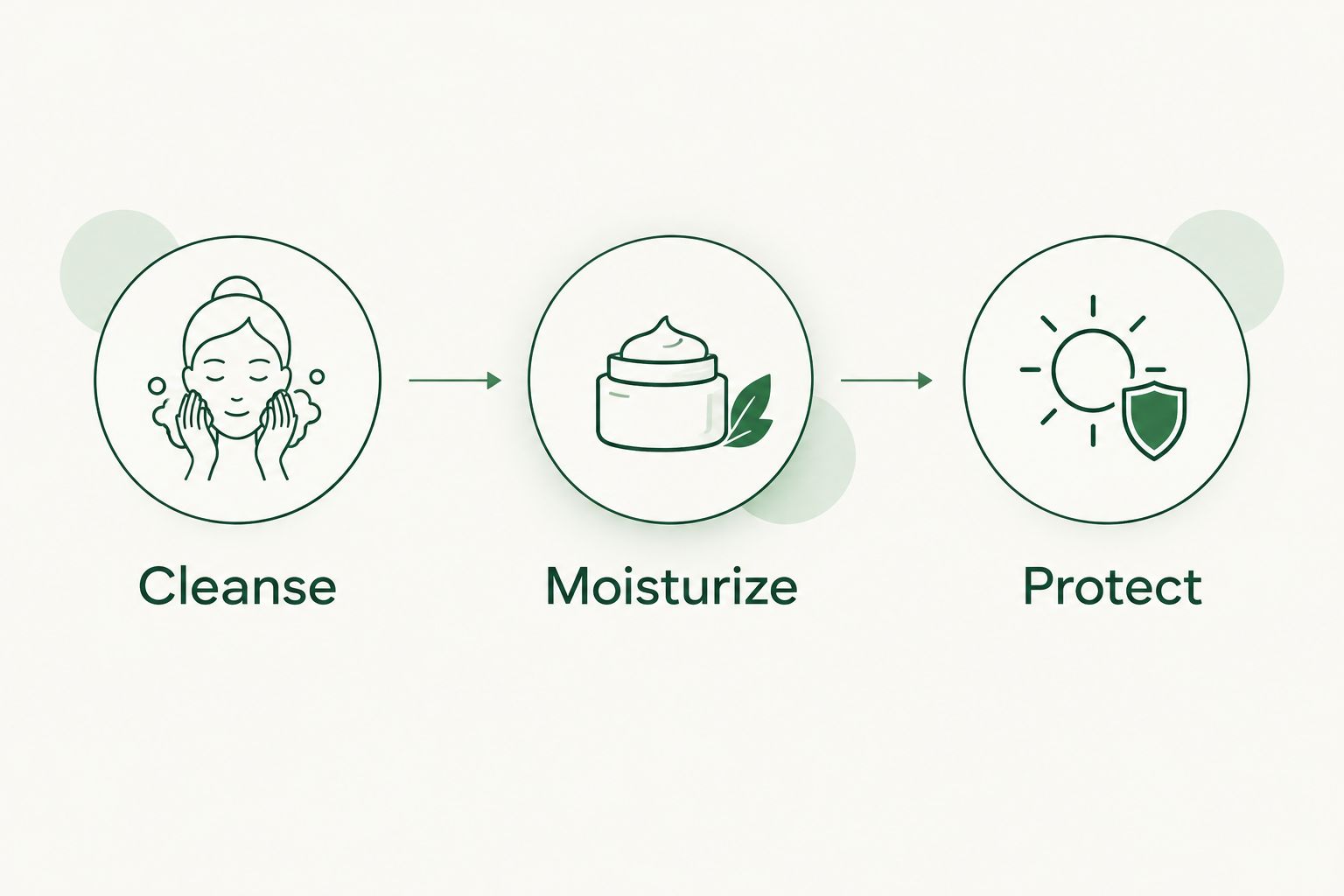
Keep a simple sequence: Cleanse, Moisturize, Protect. At night, cleansing and moisturizing form the cosmetic foundation; place prescribed treatments according to your clinician's instructions. Add an optional product only when you can name the problem it addresses and explain why the existing routine is insufficient.
A shopping checklist is more useful than another trend list. Keep the information beside your routine notes so you can distinguish a genuine repurchase from a different version with similar packaging.
- Match the exact product name and size across listings.
- Check the ingredient list for the version you are purchasing.
- Review seller information and retailer terms before checkout.
- Keep packaging details so you can identify a successful formula again.
- Avoid buying several untested products as a replacement routine.
Compare your routine options
Choose the simplest option that meets your skin's needs. The table compares routine approaches, not treatments or guarantees. Each approach has a limitation, including a basic routine.
| Option | Best for | Main advantage | Key limitation |
|---|---|---|---|
| Gentle cleanser, moisturizer, and sunscreen | Building a clear starting routine | Fewer formulas make reactions easier to trace | Does not treat rosacea by itself |
| Basic routine plus hydrating toner | Addressing residual dryness after the basics are comfortable | Adds a hydration step without requiring exfoliation | Adds another potential irritant and is not essential |
| Basic routine plus centella serum | Testing a specific optional formula | Offers another texture for a targeted skincare preference | Centella does not establish rosacea effectiveness or tolerance |
| Oil cleanser plus gentle cleanser | Removing makeup that a single cleanser leaves behind | Separates makeup removal from general cleansing | Adds handling and exposure to another formula |
| Prescription treatment plus gentle skincare | Managing clinician-diagnosed rosacea | Combines medical care with supportive cosmetics | Requires individualized instructions and follow-up |
No optional category wins automatically. If moisturizer already handles dryness, a hydrating toner has no clear job. If your cleanser removes your makeup comfortably, double cleansing solves no remaining problem.
Common mistakes people with rosacea-prone skin make
Treating acne-like bumps as ordinary acne
Rosacea can include bumps that resemble acne, but the conditions are not interchangeable. Starting scrubs, peels, or several acne treatments on that assumption can add irritation. Ask a clinician to identify persistent bumps before building a treatment routine around them.
Buying calming ingredients instead of evaluating formulas
Centella, mugwort, and ceramides do not turn every formula containing them into a suitable choice. Fragrance, texture, other ingredients, and your individual response still matter. Judge the finished product, not a single ingredient promoted on the package.
Turning sensitive skin into a shopping category
A sensitive-skin label is a starting filter, not a guarantee. The same applies to dermatologist-tested language: it does not promise that your face will tolerate the product. Keep your own response record rather than collecting reassuring labels.
Adding exfoliation to remove visible flakes
Flaking is not automatic permission to exfoliate. Irritation, dryness, and medical conditions can all require different responses. Pause optional exfoliating products and ask for advice when flaking persists, especially alongside burning or a worsening rash.
Ignoring symptoms around the eyes
Rosacea can affect the eyes as well as facial skin. Persistent gritty, red, or irritated eyes deserve medical assessment, not an eye cream experiment. Eye pain, light sensitivity, or changes in vision need prompt medical attention.
FAQ
What's the best Korean skincare routine for rosacea-prone skin?
Start with a gentle cleanser, a fragrance-free moisturizer, and broad-spectrum sunscreen with SPF 30 or higher. Add prescribed treatment according to your clinician's instructions; Korean origin does not make a formula suitable for everyone with rosacea.
Can Korean skincare cure rosacea?
No, Korean skincare does not cure rosacea. Suitable cosmetics support comfort and sun protection, while medical treatment addresses the condition itself.
Is centella good for rosacea-prone skin?
Centella is not a substitute for rosacea treatment, and its presence does not guarantee tolerance. Evaluate the full formula and test a new cosmetic before full-face use.
Do I need a toner if I have rosacea?
No, a toner is optional for rosacea-prone skin. If your moisturizer handles dryness comfortably, adding a toner introduces another formula without a clear need.
Should I choose mineral sunscreen for rosacea?
Zinc oxide or titanium dioxide sunscreen is a useful starting point when other sunscreens irritate your skin. The American Academy of Dermatology recommends looking for these ingredients, but the finished formula still needs to suit you.
Can I use retinol or exfoliating acids with rosacea?
Do not add retinol or exfoliating acids to actively irritated skin without clinical guidance. Ask your dermatologist whether a specific product fits your treatment plan rather than copying a general anti-aging routine.
How should I shop for Korean skincare in 2026?
Identify the exact formula you tolerate, then compare matching sizes and versions across retailers. Kbeautyplug helps compare Korean skincare offers; it does not replace diagnosis, ingredient checks, or product testing.
One last thing
Your most useful skincare purchase in 2026 might be a repeat, not an upgrade. Once a cleanser, moisturizer, or sunscreen works comfortably, keeping it makes future reactions easier to investigate. Photograph its packaging and ingredient list before discarding the container so you can check the next purchase against the version you actually used.